夏目漱石『こころ』に学ぶ——職場で「打ち明けられる関係と信頼」を育てる文学研修 Learning from Natsume Sōseki’s Kokoro: Literature-Based Training for Building Trust and Creating Space for Openness at Work
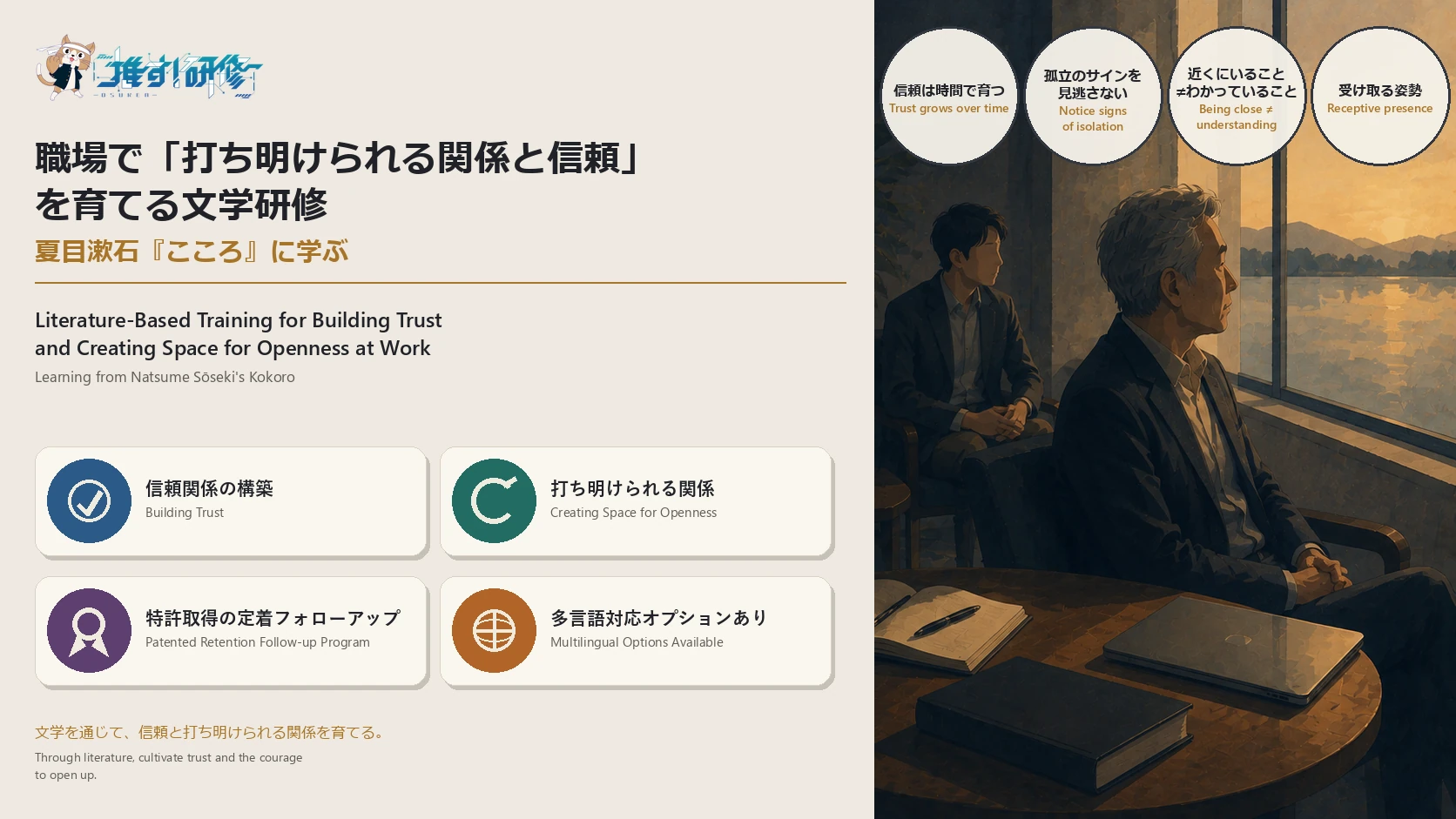
「部下が突然辞表を出してきた。面談でも何も言っていなかったのに」「あの人はいつも明るく見えていたのに、実は抱え込んでいたとは思わなかった」「信頼していたのに、なぜ相談してくれなかったのだろう」——職場でこうした言葉が語られる瞬間、私たちは「近くにいたのに、何も気づけなかった」という取り返しのつかない後悔と向き合います。
“A team member handed in their resignation without any warning — not a word in our last one-on-one.” “She always seemed so upbeat; I had no idea she was carrying all that.” “I thought we had built real trust. Why didn’t they come to me?” — When these words are spoken in a workplace, we are confronted with the irreversible regret of having been close to someone and yet having missed everything.
オスケン株式会社の「Osuken Literary Training(OLT)シリーズ」第3弾で使用するテキストが、夏目漱石の長編小説『こころ』(1914年)です。本記事では、なぜこの作品が「信頼・孤独・打ち明けること」をテーマとする法人研修の素材として優れているのかを解説します。
The third text in Osuken Inc.’s Osuken Literary Training (OLT) Series is Natsume Sōseki’s novel Kokoro (“Heart”, 1914). This article explains why this work stands out as an exceptional text for corporate training on the themes of trust, solitude, and the courage to open up.
目次
『こころ』とはどんな物語か What Is Kokoro?
『こころ』は三部構成の長編小説です。語り手の「私」は鎌倉の海辺で「先生」と出会い、その孤独な人物に強く惹かれていきます。先生は人を信じることを恐れ、社会からも人間関係からも距離を置いて生きています。しかし「私」だけには、いつか過去を語ると約束します。
Kokoro is a novel in three parts. The narrator — referred to simply as “I” — meets a man he calls “Sensei” on a beach in Kamakura and finds himself drawn to this solitary figure. Sensei lives at a deliberate distance from society and human connection, afraid to trust. Yet to this one young man he makes a promise: one day, he will speak of his past.
後半の「先生と遺書」では、先生が書き残した長い手紙が全て引用されます。そこには、学生時代に親友のKを裏切り、その死の一因となった罪の記憶が、克明に記されています。先生は誰にもその秘密を打ち明けられないまま、長年をかけて自分を追い詰め、ついに「私」だけに宛てた遺書に全てを残して生涯を閉じます。
The final section, “Sensei and His Testament,” consists entirely of a long letter he leaves behind. In it, he records with painful precision the memory of how, in his student days, he betrayed his closest friend K — and played a part in K’s death. Unable to speak of this to anyone, Sensei spends decades slowly closing in on himself, and finally leaves everything in a letter addressed to this one young man before ending his life.
この作品が描くのは、極限まで孤独になった人間の内側です。しかし同時に、「誰かに打ち明けたい」という切実な欲求と、「打ち明けることができない」という恐怖が共存する、あらゆる人間関係の深部にある構造を照らし出します。
What the novel depicts is the interior of a person who has reached the furthest extreme of solitude. But it also illuminates a structure that lies at the core of all human relationships: the urgent need to tell someone the truth, coexisting with the terror of what telling might cost.
『こころ』が職場教育のテキストになる理由 Why Kokoro Works as a Text for Corporate Training
本研修では、この作品を通じて参加者に問いかけます。
In this program, participants are invited to reflect on a central question through this work.
「あなたの職場に、先生のような人はいませんか。また、あなた自身が先生のように、誰にも打ち明けられないまま何かを抱えていることはありませんか」
“Is there someone in your workplace who resembles Sensei? And might you yourself, like Sensei, be carrying something you cannot bring yourself to say aloud to anyone?”
先生と「私」の関係をビジネス文脈に置き換えると、現代の職場に直結する4つの示唆が浮かびます。
When the relationship between Sensei and “I” is transposed into a business context, four insights emerge that connect directly to the modern workplace.
示唆① 信頼は「宣言」ではなく「時間」で作られる Insight 1: Trust Is Built Through Time, Not Declarations
先生が「私」に過去を打ち明けたのは、出会いから数年後のことです。それまで「私」は先生の拒絶を何度も経験しながら、それでも離れずにい続けました。職場における信頼関係も、「オープンにしよう」という号令で生まれるものではなく、繰り返しの接触と、受け止めてもらえるという実感の積み重ねによって初めて育まれます。この作品は、信頼とは「構築するもの」ではなく「育つもの」だということを、静かに証言します。
Sensei does not confide his past to “I” until years after their first meeting. In the intervening time, “I” experiences Sensei’s rejection again and again — and still does not leave. Trust in the workplace, too, does not arise from a directive to “be more open.” It grows only through repeated contact and the gradual sense that one will be received without judgment. This novel quietly testifies that trust is not something built — it is something that grows.
示唆② 孤立は「性格」ではなく「経緯」から生まれる Insight 2: Isolation Comes from History, Not Personality
先生が人を遠ざけるのは、生まれつきの気質からではありません。若いころに深く傷ついた経験——叔父による裏切り、そしてKへの罪——が積み重なって、人と関わることへの恐怖が生まれたのです。職場で「打ち解けない」「報告が少ない」「チームに溶け込まない」と評される人の背後には、本人なりの経緯や理由があることが少なくありません。この作品は、孤立しているように見える人を「性格の問題」として処理することの危うさを、深く問いかけます。
Sensei’s distance from others does not stem from some innate character trait. It is the accumulated weight of wounds from his youth — his uncle’s betrayal, and his guilt over K — that gave rise to his fear of closeness. Behind every team member described as “hard to read,” “slow to report,” or “not fitting in” there is always a particular history. This novel raises a profound challenge to the habit of treating isolation as a personality problem.
示唆③ 「近くにいること」と「わかっていること」は別である Insight 3: Being Close Is Not the Same as Understanding
先生の妻・静は、誰よりも先生の傍にいた人物です。しかし彼女は、先生の内側で何が起きているかを最後まで知りません。先生もまた、妻を傷つけまいとして、ついに秘密を打ち明けることができませんでした。職場でも、毎日顔を合わせているから「わかっている」と思い込むことが、最も危険な油断になりえます。日常の接触が、深い理解の代替にはならないことを、この物語は繰り返し示します。
Sensei’s wife, Shizu, is the person who spends the most time beside him. Yet she never comes to know what is happening inside him. And Sensei, unwilling to wound her, never finds it in himself to speak the truth. In the workplace, the assumption that daily contact means genuine understanding can be the most dangerous complacency of all. The story returns again and again to the truth that ordinary familiarity is no substitute for deep understanding.
示唆④ 打ち明けることには「受け取る側の準備」が必要である Insight 4: Disclosure Requires a Listener Who Is Ready
先生が最終的に「私」に遺書を送ったのは、「私」が真剣に耳を傾けようとする人間であることを、長い時間をかけて確認したからです。「話してもらえる関係」は、聴く側がいかに準備できているかによって決まります。1on1面談やメンタリングの場において、部下や後輩が「言えた」と感じる瞬間を作るのは、問いかけの技術よりも、受け取る姿勢そのものです。この作品は、傾聴の本質が「技法」ではなく「存在のあり方」にあることを示しています。
The reason Sensei ultimately sends his letter to “I” is that over a long period of time, he has confirmed that this young man is genuinely prepared to receive what he has to say. Whether a relationship can hold disclosure depends on how ready the listener is. In one-on-one meetings and mentoring conversations, what creates the moment in which a team member or junior colleague feels they can finally speak is not technique — it is the quality of presence the listener brings. This novel reveals that the essence of listening lies not in method, but in how one inhabits the role of the person who receives.
なぜ「文学」を研修に使うのか Why Use Literature in Training?
「文学を読んで、何が変わるのか」という疑問は当然です。ケーススタディやロールプレイングは、具体的な対応方法や判断の型を学ぶのに適しています。一方、文学作品には「正解がない問い」が内包されており、参加者が自分の解釈を持ち、他者の解釈と出会うことで、自分では気づかなかった思考の枠組みが浮かび上がります。これが、通常の研修では得にくい「深い内省」を生む仕組みです。
The question “what can reading literature actually change?” is entirely reasonable. Case studies and role-play are well suited for learning practical responses and patterns of judgment. Literature, on the other hand, contains questions with no single correct answer — and when participants form their own interpretations and encounter the interpretations of others, frameworks of thinking they had never noticed in themselves come to the surface. This generates the kind of deep reflection that conventional training rarely reaches.
また文学は、直接的な自己分析とは異なり、作品を介することで参加者の構えが自然にほぐれ、より本音に近い対話が生まれます。「自分はどうか」を問う前に「先生はどうか」「Kはどうか」を議論することで、職場での孤立や沈黙の構造が、安全な距離を保ちながら言語化されていきます。
Unlike direct self-analysis, engaging with literature naturally softens participants’ guard, and dialogue that comes closer to genuine feeling becomes possible. By first discussing “what about Sensei?” or “what about K?” before asking “what about you?”, the structures of isolation and silence in the workplace begin to find words — at a safe distance.
プログラムの到達目標 Program Objectives
本プログラムの到達目標は、参加者が職場における孤立や沈黙の兆候に気づく力、信頼関係の構築に必要な「受け取る姿勢」を自覚する力、そして「近くにいること」と「わかっていること」の違いを問い続ける力を身につけることです。
The objective of this program is for participants to develop the ability to notice signs of isolation and silence in the workplace, cultivate awareness of the quality of presence required to build genuine trust, and sustain the habit of questioning whether being close to someone truly means understanding them.
プログラム概要 Program Overview
| 項目 Item | 内容 Details |
|---|---|
| 使用テキスト Text | 夏目漱石『こころ』(青空文庫) Kokoro (“Heart”) by Natsume Sōseki (Aozora Bunko) |
| 対象者 Participants | 中間管理職・リーダー層、人事・メンタルヘルス担当者、メンター・相談員(5〜15名) Middle managers, team leaders, HR and mental health professionals, mentors and employee support advisors (5–15 participants) |
| 所要時間 Duration | 半日(3.5時間)〜全日 Half-day (3.5 hrs) to full-day |
| 提供形式 Format | 対面ワークショップ(オンライン対応可) In-person workshop (online delivery available) |
| 多言語対応 Languages | 多言語対応オプションあり(外国籍人材混在チーム向け) Multilingual options available |
| フォローアップ Follow-up | 受講者の理解度に応じた段階的フォローアップを半年以上にわたって実施(特許第7578861号) Patented retention follow-up program spanning more than six months, with intervals tailored to each participant’s level of understanding (Patent No. 7578861) |
テーマは企業の課題に応じて以下の4つから選択・組み合わせが可能です。
The program theme can be selected or combined from the following four options according to your organization’s needs.
- 職場における信頼関係の構築(若手・中堅向け) Building trust in the workplace (for early-career and mid-level employees)
- 孤立のサインを見逃さないマネジメント(管理職向け) Managing without missing the signs of isolation (for managers)
- 傾聴と心理的安全性の実践(管理職・人事向け) Practising active listening and psychological safety (for managers and HR professionals)
- 組織における「打ち明けること」の文化設計(経営幹部・人事責任者向け) Designing an organizational culture where people can speak openly (for executives and HR leaders)
文学研修は、行動変容の本質に向き合う研修である Literary Training Gets to the Heart of Behavioral Change
「文学を使った研修」と聞くと、特殊なプログラムのように聞こえるかもしれません。しかし本質は変わりません。良い研修とは、参加者が自分自身と正直に向き合える場を作ることです。
“Training that uses literature” may sound like something unusual. But the essence does not change. Good training is simply the creation of a space in which participants can face themselves honestly.
先生は「私はもう少し若かったら、あの時打ち明けられたかもしれない」とは言いませんでした。「死ぬ前にたった一人でいいから信用して死にたいと思っている」と言い、その相手として「私」を選びました。職場にも、こうした選択が静かに、しかし確実に起きています。誰かが「この人になら話せる」と感じる関係を、どうすれば築けるのか——この研修はその問いを参加者に持ち帰ってもらうことを目的としています。
Sensei did not say, “Perhaps if I had been younger, I could have spoken sooner.” He said, “Before I die, I want to trust at least one person” — and he chose “I” as that person. In workplaces too, choices like this are happening quietly but with certainty. This program asks what it takes to become someone another person would choose.
お問い合わせ・資料請求 Enquiries and Information Requests
オスケン株式会社では、文学作品を活用した法人向け研修プログラムの設計・運営を支援しています。詳細資料・お見積もりは、下記よりお気軽にお問い合わせください。無料相談(オンライン・対面)も承っております。
Osuken Inc. supports the design and delivery of literary-based corporate training programs. For detailed materials or a quote, please feel free to reach out using the contact details below. Free consultations (online or in person) are also available.
文学研修のご相談・お問い合わせ↓
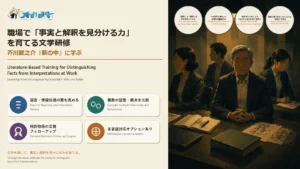
- 芥川龍之介『藪の中』に学ぶ——職場で「事実と解釈を見分ける力」を育てる文学研修 Learning from Akutagawa Ryūnosuke's Yabu no Naka: Literature-Based Training for Distinguishing Facts from Interpretations at Work
- 危険物乙4|酸と塩基・酸化と還元・金属腐食の基礎知識 Class B, Group 4 Hazardous Materials Engineer | Acids and Bases, Oxidation and Reduction, and Metal Corrosion
この記事を書いた人

関連記事
-
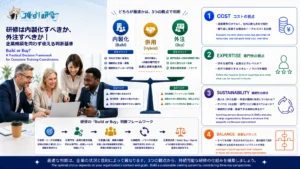
 研修は内製化すべきか、外注すべきか|企業規模を問わず使える判断基準 Build or Buy? A Practical Decision Framework for Corporate Training Coordinators
 -
生成AI×OJT|社員の「使い方」を現場で育てる育成設計の考え方 Generative AI and OJT: How to Build AI Competency Through On-the-Job Learning
-
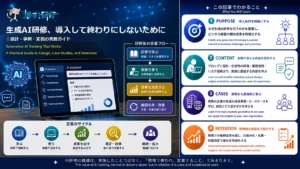
生成AI研修、導入して終わりにしないために|設計・事例・定着の実務ガイド Generative AI Training That Sticks: A Practical Guide to Design, Case Studies, and Retention
-
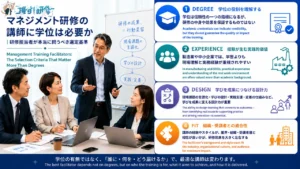
マネジメント研修の講師に学位は必要か|研修担当者が本当に問うべき選定基準 Management Training Facilitators: The Selection Criteria That Matter More Than Degrees
-
芥川龍之介『藪の中』に学ぶ——職場で「事実と解釈を見分ける力」を育てる文学研修 Learning from Akutagawa Ryūnosuke’s Yabu no Naka: Literature-Based Training for Distinguishing Facts from Interpretations at Work
-
森鷗外『最後の一句』に学ぶ——職場で「言うべきことを言える人」を育てる文学研修 Learning from Mori Ōgai’s Saigo no Ikku: A Literary Approach to Developing People Who Speak Up at Work
-
新入社員フォローアップ研修とは? What Is New Employee Follow-Up Training? Purpose, Themes, and Design for HR Professionals
-
研修報告書・レポートの目的と活用法 How to Make the Most of Training Reports: Purpose, Report Design, and Follow-Up