生成AI研修、導入して終わりにしないために|設計・事例・定着の実務ガイド Generative AI Training That Sticks: A Practical Guide to Design, Case Studies, and Retention
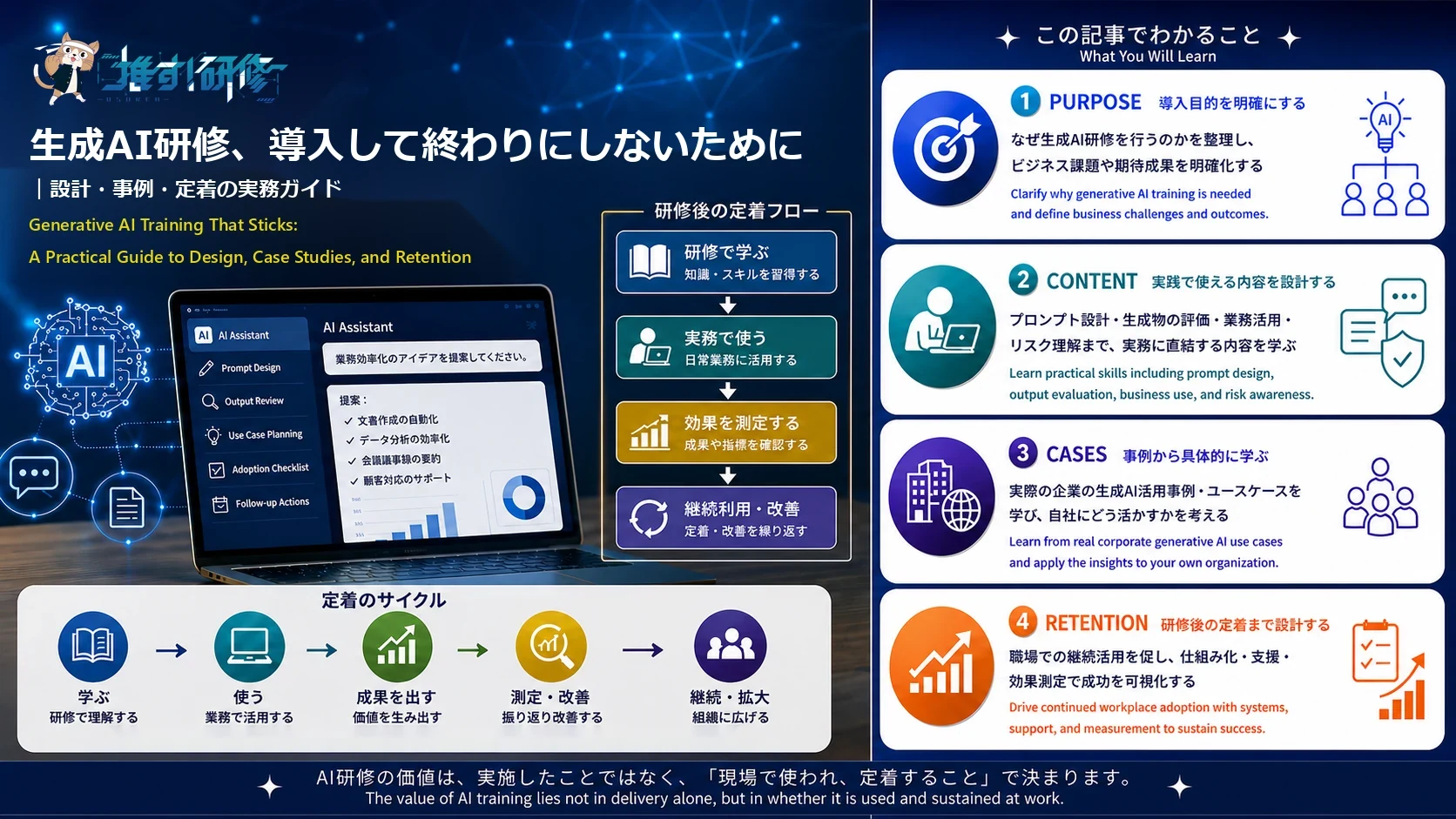
ChatGPTをはじめとする生成AIツールの急速な普及を受けて、「社員にAIを使えるようにしたい」という声が、業種や規模を問わず多くの企業から聞かれるようになりました。法人向けのAI研修・生成AI研修の需要は急速に高まっており、研修会社やIT企業によるプログラムの提供も増えています。しかし、研修を導入する前に立ち止まって考えておくべきことがあります。本記事では、生成AI研修の導入を検討している研修担当者・人事担当者の方に向けて、「何を目的に、何を学ばせるのか」という問いを一緒に整理していきたいと思います。
With the rapid spread of generative AI tools such as ChatGPT, the desire to “help employees start using AI” has become a common refrain across organizations of all sizes and industries. Demand for corporate AI and generative AI training programs has grown quickly, with training providers and technology companies alike expanding their offerings. Before moving ahead with implementation, however, there are some things worth pausing to consider. This article is intended for HR and training coordinators thinking about introducing generative AI training — and aims to work through together the question of “what is the purpose, and what exactly should employees be learning?”
目次
なぜ今、法人向けAI研修の需要が高まっているのか Why Corporate AI Training Is in Such High Demand Right Now
生成AIに関する報道や社会的な関心が高まる中、「自社の社員がAIに乗り遅れているのではないか」という危機感を持つ経営者・担当者は少なくありません。加えて、経済産業省や厚生労働省もDX推進・デジタルスキル底上げの文脈でAIリテラシーの重要性を指摘しており、組織としての対応を求める外部圧力も高まっています。こうした背景から、「とりあえずAI研修を入れておこう」という動機で導入が進むケースも少なくないようです。しかし、研修の目的が曖昧なまま進むと、研修を実施したにもかかわらず現場での活用が進まない、という状況に陥りやすくなります。
As media coverage and public interest in generative AI continue to grow, many business owners and HR coordinators find themselves feeling a sense of urgency — a worry that their employees may be falling behind. On top of this, Japan’s Ministry of Economy, Trade and Industry and Ministry of Health, Labour and Welfare have both highlighted the importance of AI literacy in the context of DX promotion and digital skills development, adding external pressure on organizations to respond. Against this backdrop, it appears that in many cases, AI training is being introduced primarily out of a sense that “we should probably do something about this.” When training proceeds without a clear sense of purpose, however, it tends to produce a familiar outcome: the training is delivered, but meaningful use in the workplace does not follow.
AI研修に求められる内容は「ツール習得」だけではない AI Training Is About More Than Learning to Use the Tools
生成AI研修というと、ChatGPTの操作方法やプロンプトの書き方を学ぶ「ツール習得型」のプログラムが多く提供されています。もちろん、ツールの基本的な使い方を知ることは出発点として必要です。しかし、研修で身につけるべきスキルは、ツールの操作方法だけではありません。業務の中でAIをどの場面で使うか判断する力、AIが生成した情報を批判的に検証する力、そしてAI活用に伴うリスク(情報漏洩・著作権・ハルシネーション等)を理解して適切に対処する力——これらが揃って初めて、研修が業務改善につながります。
When it comes to generative AI training, many of the programs currently available focus on tool proficiency — learning how to use ChatGPT, how to write effective prompts, and so on. Knowing the basics of how to operate the tools is, of course, a necessary starting point. But the skills that employees need to develop through training go well beyond how to use the tools themselves. The ability to judge when and where in their work AI is actually worth using; the ability to critically evaluate what AI generates; and an understanding of the risks that come with AI use — including data security, copyright, and hallucination — and how to respond to them appropriately: it is when all of these come together that training begins to translate into genuine workplace improvement.
また、AIツールは急速に進化しており、研修時点で学んだ操作方法が数か月後には陳腐化している可能性もあります。そのため、特定のツールの使い方を覚えることよりも、「AIとどう向き合い、どう業務に組み込んでいくか」という姿勢や思考の枠組みを育てることのほうが、長期的には重要です。
It is also worth keeping in mind that AI tools are evolving rapidly, and the specific operations taught during a training program may be outdated within months. For this reason, developing the mindset and framework for how to engage with AI and integrate it into day-to-day work tends to be more valuable in the long run than memorizing the steps of any particular tool.
企業規模別に見るAI研修の実際 What AI Training Looks Like Across Different Organization Sizes
生成AI研修の導入事例を企業規模別に見ていくと、大手企業と中小企業では、課題の出発点も、研修の設計も、かなり異なる様相を呈していることがわかります。どちらが優れているという話ではなく、自社の規模や状況に近い事例から学ぶことが、研修設計の現実的な出発点になります。
Looking at generative AI training cases by organization size, it becomes clear that the starting point of the challenge, and the shape of the training itself, differ considerably between large corporations and smaller organizations. This is not a matter of one being better than the other — learning from cases that resemble your own organization’s scale and circumstances is often the most practical starting point for training design.
大手企業の事例①:パナソニック コネクト Large Corporation Case ①: Panasonic Connect
パナソニック コネクトは2023年2月より、国内全社員約11,600人を対象に自社開発のAIアシスタント「ConnectAI」の業務利用を開始しました。導入の目的は「業務生産性向上」「社員のAIスキル向上」「シャドーAI利用リスクの軽減」の三点です。2025年7月発表の公式データによると、2024年のAI活用による業務時間削減効果は年間44.8万時間に達し、前年比2.4倍という成果が報告されています。注目すべきはその背景です。社員のAI活用が「情報を聞く」段階から「作業を頼む」段階へと進化したことが、削減効果の大幅な拡大につながったとされています。ツール導入と並行して社員のスキル向上を継続的に支援する設計が、定着と成果拡大の両方を支えた事例です。(出典:パナソニック コネクト プレスリリース 2025年7月7日)
Panasonic Connect began rolling out its in-house AI assistant “ConnectAI” to all approximately 11,600 domestic employees in February 2023, with three stated goals: improving business productivity, raising employees’ AI skills, and reducing the risk of unsanctioned “shadow AI” use. According to official data published in July 2025, the reduction in working hours attributed to AI use reached 448,000 hours in 2024 — 2.4 times the previous year’s figure. What is particularly worth noting is the dynamic behind this growth: the company attributes the sharp increase to a shift in how employees engage with AI, moving from “asking for information” to “delegating tasks.” The case illustrates how designing for continuous skill development alongside tool deployment can support both sustained adoption and expanding impact. (Source: Panasonic Connect Press Release, July 7, 2025)
大手企業の事例②:NTTデータグループ Large Corporation Case ②: NTT DATA Group
NTTデータグループは2024年10月より、全社員を対象とした生成AI人財育成フレームワークを整備しました。基礎知識を学ぶ「ホワイトベルト」から実践スキルを習得する「イエローベルト」、さらに高度な活用を担う「グリーンベルト」「ブラックベルト」まで、4段階のレベルに応じた体系的な研修プログラムが特徴です。2025年10月時点で実践研修(イエローベルト)の修了者が7万人に達し、当初掲げていた2026年度末までに3万人という目標を大幅に前倒しで達成しました。この成果を受け、同社は2027年度までに全社員約20万人への育成拡大を新たな目標として掲げています。また、本取り組みは2025年8月に国際的な人材育成アワード「Brandon Hall Group Excellence Awards」で学習・人材開発分野の金賞を受賞しています。(出典:NTTデータグループ プレスリリース 2025年10月29日)
NTT DATA Group put in place a generative AI talent development framework covering all employees from October 2024. The program is structured around four proficiency levels — from “Whitebelt” (foundational knowledge) through “Yellowbelt” (practical application) to “Greenbelt” and “Blackbelt” (advanced expertise). By October 2025, the number of employees completing the practical Yellowbelt training had reached 70,000 — far ahead of the original target of 30,000 by the end of fiscal 2026. On the strength of this progress, the company has set a new goal of extending the program to all approximately 200,000 employees globally by fiscal 2027. The initiative was also recognized internationally, receiving a Gold Award in the Learning and Development category at the Brandon Hall Group Excellence Awards in August 2025. (Source: NTT DATA Group Press Release, October 29, 2025)
中小企業の現状:導入率と「何から始めるか」という壁 SMEs: Adoption Rates and the “Where Do We Start?” Challenge
大手企業での取り組みが加速する一方、中小企業では状況がかなり異なります。東京商工リサーチが2025年8月に発表した「生成AIに関するアンケート調査」(有効回答6,645社)によると、生成AIの活用を推進している企業の割合は、大企業43.3%に対して中小企業は23.4%にとどまっており、約20ポイントの差があることが明らかになっています。また、推進していない理由として「専門人材がいない」を挙げた企業が55.1%、「活用する利点・欠点を評価できない」が43.8%に上っており、「何から始めればよいかわからない」「効果が見えない」という課題が、中小企業の導入を阻む主な要因になっていることがわかります。(出典:東京商工リサーチ「生成AIに関するアンケート調査」2025年8月18日)
While large organizations are accelerating their AI training efforts, the picture for smaller organizations looks quite different. According to a survey on generative AI published by Tokyo Shoko Research in August 2025 (valid responses: 6,645 companies), the proportion of companies actively promoting generative AI use stood at 43.3% among large corporations, compared to only 23.4% among small and medium-sized enterprises — a gap of approximately 20 percentage points. Among companies not actively promoting AI adoption, 55.1% cited a lack of specialist personnel, and 43.8% said they were unable to evaluate the benefits and drawbacks — pointing to “not knowing where to start” and “uncertainty about measurable outcomes” as the primary barriers holding smaller organizations back. (Source: Tokyo Shoko Research, “Survey on Generative AI,” August 18, 2025)
こうした状況を受け、独立行政法人中小企業基盤整備機構(中小機構)は2025年度より、中小企業経営者・担当者向けに「生成AIの基本と活用法」をテーマとした研修プログラムを提供しています。自社業務への生成AI導入プランを演習形式で検討するカリキュラムが特徴で、「ツールの操作を覚える」ではなく「自社のどの業務にAIを使えるかを考える」という設計思想が、中小企業向けのAI研修に求められる方向性を示しています。(出典:中小企業基盤整備機構「生成AIの基本と活用法」2025年度研修)
In response to this situation, the Organization for Small and Medium Enterprises and Regional Innovation (SMRJ) has been offering training programs for SME owners and staff on “the basics and practical applications of generative AI” from fiscal year 2025. The curriculum is designed around hands-on exercises in which participants develop a plan for applying generative AI to their own operations. The underlying design philosophy — oriented not toward “learning to operate the tools” but toward “thinking through which parts of our own work AI can connect to” — reflects the direction that AI training for smaller organizations genuinely needs to take. (Source: SMRJ “Generative AI Basics and Applications” Training Program, FY2025)
導入後に問われる「定着」の問題 The Retention Challenge After Implementation
AI研修を実施した企業から聞こえてくる声の一つに、「研修は受けたが、結局ほとんど使っていない」というものがあります。これは、AI研修に限った話ではなく、あらゆる研修に共通する定着の問題です。しかし、AIツールは日々進化しており、研修後に使い続けることで初めてスキルが定着するという性質を持つため、研修後のフォローアップ設計が、AI研修においては特に重要な意味を持ちます。
One of the things often heard from organizations that have delivered AI training is: “employees went through the training, but most of them still aren’t really using it.” This is not a problem unique to AI training — it is the retention challenge that applies to all training programs. But because AI tools evolve continuously and skills only consolidate through ongoing use after training ends, the design of post-training follow-up carries particular weight when it comes to AI programs.
研修後に社員がAIツールを使い続けるためには、いくつかの条件が必要です。まず、「使ってみてよかった」という小さな成功体験を、研修直後に積めるかどうかが鍵になります。研修後に実践課題を設定し、上司が「どうだった?」と声をかける——そのような小さな仕掛けが、習慣化への最初のステップになります。また、社内でAI活用の事例を共有する場をつくることも、周囲の活用状況が見えることでモチベーションを維持しやすくなります。
For employees to keep using AI tools after training ends, certain conditions need to be in place. A key factor is whether participants can accumulate small, positive experiences of actually using the tools in the period immediately following the training. Setting practical assignments after the session, and having managers follow up with a simple “how did it go?” — small mechanisms like these become the first steps toward building a habit. Creating internal spaces for sharing AI use cases can also help, as seeing how colleagues are applying the tools makes it easier to stay motivated.
海外企業の事例:米国・欧州の取り組みから見えるもの International Cases: What We Can Learn from the US and Europe
日本国内の事例と合わせて、米国・欧州の主要企業の取り組みを参照しておくことは、AI研修設計の視野を広げるうえで有益です。規模や業界は異なりますが、「ツール導入と研修を同時に設計する」「学習を体験型・社会的なものにする」「成果測定の指標を事前に定める」という共通の視点が浮かび上がってきます。
Looking beyond Japan to cases from major organizations in the United States and Europe can be a valuable way to broaden the perspective brought to AI training design. While scale and industry context vary considerably, a set of consistent themes emerges: designing training and tool deployment in tandem, making learning experiential and social rather than passive, and defining success metrics before rolling out.
米国:PwC「My AI」プログラム US: PwC’s “My AI” Program
米国の大手コンサルティングファームPwCは、2023年4月に3年間で10億ドルを投じるAI投資計画を発表し、その中核として全米75,000人の社員を対象とした「My AI」と呼ばれるアップスキリングプログラムを展開しました。このプログラムの特徴は、eラーニングなどの従来型の学習経路に加え、社員が生成AIを自由に試せる「プレイグラウンド」の提供や、チームで実際にプロンプトを試しながら学ぶ「プロンプトパーティー」と呼ばれる参加型ワークショップを組み合わせた点にあります。学習を個人の義務ではなく、チームで楽しみながら取り組む体験として設計したことが、95%という高い参加率につながったとされています。また、社内専用の生成AIツール「ChatPwC」を整備し、Microsoftパイロットプログラムでは88%のユーザーが「業務時間の節約になった」と回答しています。(出典:Microsoft Customer Stories「PwC scales GenAI for enterprise with Microsoft Azure AI」)
US consulting giant PwC announced a $1 billion, three-year AI investment in April 2023, with an upskilling program called “My AI” at its center, targeting 75,000 US employees. What distinguished the program was its combination of conventional learning pathways with a “playground” where employees could freely experiment with generative AI, alongside participatory “prompting parties” — team workshops where staff tried out prompts together in real time. Designing learning as a shared, enjoyable team experience rather than an individual obligation is credited with driving the 95% participation rate the firm achieved. PwC also built a secure proprietary AI tool, “ChatPwC,” and in a Microsoft pilot program, 88% of users reported saving time in their work. (Source: Microsoft Customer Stories, “PwC scales GenAI for enterprise with Microsoft Azure AI”)
英国:Lloyds Banking Group「AI Academy」 UK: Lloyds Banking Group’s “AI Academy”
英国の大手金融機関Lloyds Banking Groupは、2026年1月に全社員67,000人を対象とした「AI Academy」を開始しました。インタラクティブモジュール・ポッドキャスト・短期コースなど複数の学習形式を組み合わせ、役割や職位を問わず実践的なAIスキルを習得できる設計が特徴です。幹部層向けには、Cambridge Sparkと連携した80時間の「Leading with AI」プログラムも導入しており、トップ層がAIを深く理解してから現場へ展開するという「上から浸透させる」アプローチをとっています。同社の生成AIへの取り組みは2025年に約5,000万ポンドの価値を生み出したとされており、2026年はさらに1億ポンド超の価値創出を見込んでいます。同社の2026年6月22日付プレスリリースによると、AI Academy開始以来40万件以上のコースが受講され、65,000人以上の社員がAIの責任ある利用に関する研修を修了しています。(出典:Lloyds Banking Group プレスリリース「Lloyds targets more than 1,000 new AI roles」2026年6月22日)
UK financial services giant Lloyds Banking Group launched an “AI Academy” in January 2026, targeting its entire workforce of 67,000 employees. The program combines multiple learning formats — interactive modules, podcasts, and short courses — to make practical AI skills accessible regardless of role or seniority. For senior leaders, the bank also introduced an 80-hour “Leading with AI” program delivered in partnership with Cambridge Spark, reflecting a “top-down diffusion” approach in which leadership builds deep AI understanding before the rollout extends to the wider workforce. The bank’s generative AI efforts delivered approximately £50 million in value in 2025, with over £100 million projected for 2026. According to the company’s press release dated June 22, 2026, more than 400,000 courses have been taken through the AI Academy since its launch, with over 65,000 colleagues completing training on working responsibly with AI. (Source: Lloyds Banking Group Press Release, “Lloyds targets more than 1,000 new AI roles,” June 22, 2026)
これら二つの事例から読み取れる共通点は、「研修の設計思想」が成否を大きく左右するという点です。ツールを与えるだけでは人は動かない。学ぶこと自体を楽しく・意義あるものとして体験できる設計があってこそ、研修は組織に根づいていきます。業界や規模の違いはあれど、この点は日本企業の研修設計にも共通して示唆を持つ観点といえるでしょう。
What stands out across both of these cases is a shared insight: the design philosophy behind training has an outsized effect on whether it succeeds. Giving people access to tools is not enough on its own. It is when learning is designed to be genuinely enjoyable and meaningful in itself that training takes root across an organization. Whatever the differences in industry or scale, this observation carries implications for training design in Japanese organizations as well.
研修担当者が導入前に確認しておきたい五つの問い Five Questions Worth Asking Before You Introduce AI Training
生成AI研修の導入を検討する際に、以下の五つの問いを事前に整理しておくことで、研修の目的と設計が明確になります。「とりあえず導入する」ではなく、「なぜ・何を・どう学ばせるか」を言語化することが、研修投資の効果を高める第一歩になります。
Working through the following five questions before introducing generative AI training can bring clarity to both the purpose and the design of the program. Putting into words “why, what, and how employees should be learning” — rather than simply moving ahead with implementation — is the first step toward making the training investment worthwhile.
「何のためにAI研修を導入するのか」——業務効率化なのか、AIリテラシーの底上げなのか、特定ツールの活用推進なのか。目的が曖昧なまま進むと、研修内容と現場ニーズのズレが生じやすくなります。
“What is the purpose of introducing AI training?” — is it to improve operational efficiency, to raise baseline AI literacy, or to promote the use of a specific tool? When the purpose is unclear from the outset, a mismatch between training content and actual workplace needs tends to follow.
「誰に、何を学ばせるのか」——全社員を対象にするのか、特定の部署・職種に絞るのか。受講者の業務内容やITスキルレベルによって、適切な研修内容は大きく変わります。
“Who is the training for, and what should they be learning?” — is the program intended for the entire organization, or for specific departments or roles? The right training content varies considerably depending on participants’ job functions and existing level of digital skill.
「ツール習得にとどまらない内容になっているか」——AIの活用判断力・リスク理解・批判的検証力が含まれているかどうかを、プログラム選定の際に確認することが重要です。
“Does the program go beyond tool operation?” — when evaluating programs, it is worth checking whether they cover the ability to judge when AI is worth using, an understanding of the associated risks, and the capacity to critically evaluate AI-generated content.
「研修後の定着をどう設計するか」——研修実施後に社員がAIを使い続けられる環境と仕掛けを、研修設計の段階から組み込んでおくことが、研修効果を左右します。
“How will retention after training be designed?” — building into the training design from the start the environment and mechanisms that will help employees continue using AI after the program ends is what ultimately determines whether the training has real impact.
「半年後・一年後に、何が変わっていれば成功といえるか」——研修の効果をどう測るかを事前に定義しておくことで、研修が「実施して終わり」にならない評価の仕組みをつくることができます。
“What would need to have changed in six months or a year for this to be considered a success?” — defining in advance how training effectiveness will be measured makes it possible to build an evaluation structure that ensures the training does not simply end at delivery.
おわりに:「AIを使える社員」より「AIと共に考えられる社員」へ Closing: Beyond “Employees Who Can Use AI” — Toward Employees Who Can Think Alongside It
生成AI研修の目的は、ツールを操作できる社員をつくることではなく、AIの特性を理解したうえで、自分の業務判断の中にAIを適切に組み込める社員を育てることにあると考えています。そのためには、操作の習得だけでなく、AIと向き合う思考の枠組みを育てる研修設計が求められます。
The goal of generative AI training is not to produce employees who can operate the tools — it is to develop employees who understand how AI works and can integrate it appropriately into their own judgment and decision-making. Achieving that requires training design that cultivates not just operational familiarity, but a framework for thinking alongside AI.
急いで導入することよりも、「何のために・誰に・何を・どう学ばせ、その後どう定着させるか」を丁寧に設計することが、AI研修への投資を組織の実力へとつなげていく、現実的な道筋になると考えられます。
Rather than rushing to implement, taking the time to carefully design “why, for whom, what, and how employees will learn — and how that learning will be sustained afterward” is arguably the most realistic path to turning an AI training investment into lasting organizational capability.
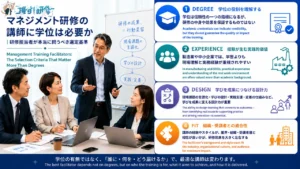
- マネジメント研修の講師に学位は必要か|研修担当者が本当に問うべき選定基準 Management Training Facilitators: The Selection Criteria That Matter More Than Degrees
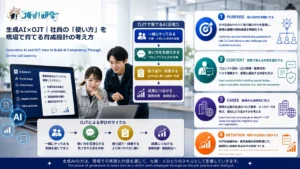
- 生成AI×OJT|社員の「使い方」を現場で育てる育成設計の考え方 Generative AI and OJT: How to Build AI Competency Through On-the-Job Learning
この記事を書いた人

関連記事
-
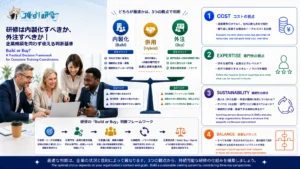
 研修は内製化すべきか、外注すべきか|企業規模を問わず使える判断基準 Build or Buy? A Practical Decision Framework for Corporate Training Coordinators
 -
生成AI×OJT|社員の「使い方」を現場で育てる育成設計の考え方 Generative AI and OJT: How to Build AI Competency Through On-the-Job Learning
-
マネジメント研修の講師に学位は必要か|研修担当者が本当に問うべき選定基準 Management Training Facilitators: The Selection Criteria That Matter More Than Degrees
-
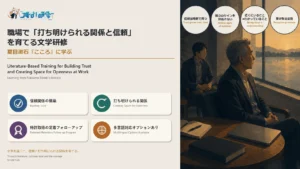
夏目漱石『こころ』に学ぶ——職場で「打ち明けられる関係と信頼」を育てる文学研修 Learning from Natsume Sōseki’s Kokoro: Literature-Based Training for Building Trust and Creating Space for Openness at Work
-
芥川龍之介『藪の中』に学ぶ——職場で「事実と解釈を見分ける力」を育てる文学研修 Learning from Akutagawa Ryūnosuke’s Yabu no Naka: Literature-Based Training for Distinguishing Facts from Interpretations at Work
-
森鷗外『最後の一句』に学ぶ——職場で「言うべきことを言える人」を育てる文学研修 Learning from Mori Ōgai’s Saigo no Ikku: A Literary Approach to Developing People Who Speak Up at Work
-
新入社員フォローアップ研修とは? What Is New Employee Follow-Up Training? Purpose, Themes, and Design for HR Professionals
-
研修報告書・レポートの目的と活用法 How to Make the Most of Training Reports: Purpose, Report Design, and Follow-Up