QC3|QCストーリー(問題解決型の8手順・課題達成型の9手順)の違いと使い分けをわかりやすく解説 QC3 | QC Story: 8-Step Problem-Solving vs. 9-Step Task-Achievement Explained
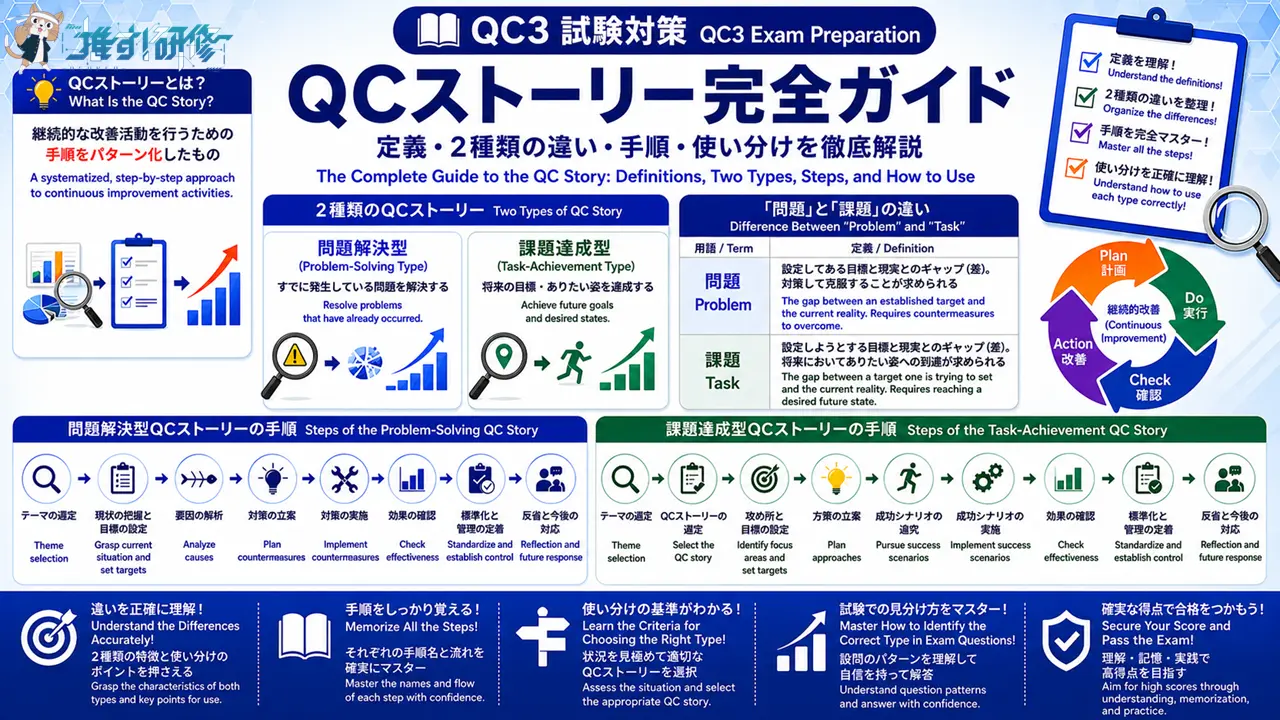
QC3の試験において、「QCストーリー」は「管理の方法」分野の中心テーマです。問題解決型と課題達成型の2種類があり、それぞれの手順と使い分けを正確に覚えることが高得点につながります。本記事では、QCストーリーの定義・2種類の違い・各手順の詳細・試験での見分け方まで、試験合格に必要な知識を体系的にわかりやすく解説します。
In the QC3 exam, the “QC Story” is the central topic in the area of management methods. There are two types — the problem-solving QC story and the task-achievement QC story — and accurately memorizing the steps and knowing when to use each type leads directly to higher scores. This article provides a systematic explanation of everything you need to pass the exam: the definition of the QC story, the differences between the two types, the details of each step, and how to distinguish between them in exam questions.
目次
QCストーリーとは何か What Is the QC Story?
QCストーリーとは、継続的な改善活動を行うための手順をパターン化したものです。品質管理における問題解決や課題達成のプロセスを、誰もが同じように進められるよう体系化した手法です。QCストーリーには、問題解決型と課題達成型の2種類があります。試験では、それぞれの手順名と順番、および2種類の使い分けが問われます。
The QC Story is a systematized, step-by-step approach to continuous improvement activities. It is a method that organizes the process of problem-solving or task achievement in quality management so that anyone can follow the same procedure. There are two types of QC story: the problem-solving type and the task-achievement type. In the exam, you will be tested on the name and order of steps for each type, and on knowing when to use each.
「問題」と「課題」の違いを押さえる Understanding the Difference Between “Problem” and “Task”
2種類のQCストーリーを正しく使い分けるには、「問題」と「課題」の定義の違いを理解することが不可欠です。試験では、この違いをそのまま問う問題も出題されています。
To correctly distinguish between the two types of QC story, it is essential to understand the difference in definition between “problem” and “task.” Exam questions directly testing this distinction appear regularly.
| 用語 / Term | 定義 / Definition |
|---|---|
| 問題(もんだい) Problem | 設定してある目標と現実とのギャップ(差)。対策して克服することが求められる The gap between an established target and the current reality. Requires countermeasures to overcome |
| 課題(かだい) Task | 設定しようとする目標と現実とのギャップ(差)。将来においてありたい姿への到達が求められる The gap between a target one is trying to set and the current reality. Requires reaching a desired future state |
一言で整理すると、問題は「今すでに発生している問題を解決する」、課題は「将来ありたい姿・新たに設定しようとする目標に向かって進む」というイメージです。この違いが、2つのQCストーリーの選択基準に直結します。
To summarize simply: a problem involves solving an issue that has already occurred; a task involves moving toward a desired future state — a goal one is newly trying to set. This distinction directly determines which type of QC story to use.
問題解決型QCストーリーの8手順 The Eight Steps of the Problem-Solving QC Story
問題解決型QCストーリーは、すでに発生している問題(悪化した工程の状態や不具合など)を解決するための手順です。現状を詳しく調べ、問題の真の原因を突き止めたうえで対策を打つことが特徴です。手順は以下の8つです。
The problem-solving QC story is a procedure for resolving problems that have already occurred, such as a deteriorated process condition or a defect. It is characterized by thoroughly investigating the current situation and identifying the true cause before taking countermeasures. The procedure consists of the following eight steps.
| 手順 / Step | 手順名 / Step Name | 実施のポイント / Key Action |
|---|---|---|
| 1 | テーマの選定 Theme selection | 客観的なデータに基づいて解決すべき問題を明確にし、重要性・緊急性・解決コストなどを総合的に判断してテーマを選ぶ Clarify the problem to be solved based on objective data; select the theme by comprehensively evaluating importance, urgency, and cost |
| 2 | 現状の把握と目標の設定 Grasping the current situation and setting targets | 三現主義に基づき現状を調査・分析し、具体的な数値で目標値と達成期限を設定する Investigate and analyze the current situation based on the three-realities principle; set specific numerical targets and deadlines |
| 3 | 要因の解析 Analyzing causes | 特性要因図などを用いて特性と要因の因果関係を系統的に整理し、真の原因を探る Systematically organize cause-and-effect relationships between characteristics and factors using tools such as a cause-and-effect diagram; identify the true cause |
| 4 | 対策の立案 Planning countermeasures | 解析で明らかになった要因に対し、対策のアイデアを出して具体化を検討し、5W1Hを明確にした実施計画を立てる Generate countermeasure ideas for the identified causes, develop them concretely, and create an implementation plan with 5W1H clarified |
| 5 | 対策の実施 Implementing countermeasures | 実施計画に基づいて対策を実行し、効果が大きいと期待できるものから重点指向で取り組む Execute countermeasures according to the implementation plan; address them in priority order based on expected effectiveness |
| 6 | 効果の確認 Confirming effectiveness | 対策前後のパレート図などを比較して効果を確認し、目標に対する達成度を評価する Compare data before and after countermeasures (e.g., Pareto charts) to confirm effectiveness; evaluate achievement against targets |
| 7 | 標準化と管理の定着 Standardization and management consolidation | 効果が認められた対策を業務方法に取り入れて標準化し、管理の定着を図る Incorporate effective countermeasures into work procedures, standardize them, and ensure they are embedded in ongoing management |
| 8 | 反省と今後の対応 Reflection and future response | 改善の進め方を振り返り、未解決の問題への対処と次のテーマ選定につなげる Reflect on the improvement process; address any remaining issues and connect findings to the selection of the next theme |
課題達成型QCストーリーの9手順 The Nine Steps of the Task-Achievement QC Story
課題達成型QCストーリーは、これまでに経験のない新たな課題に対応するとき、または現状を大きく改善する必要があるときに使います。従来の制約を乗り越え、革新的なアイデアを創出することが重視されます。手順は以下の9つです。
The task-achievement QC story is used when dealing with an entirely new challenge for which there is no precedent, or when a major improvement of the current situation is required. It emphasizes overcoming existing constraints and generating innovative ideas. The procedure consists of the following nine steps.
| 手順 / Step | 手順名 / Step Name | 実施のポイント / Key Action |
|---|---|---|
| 1 | テーマの選定 Theme selection | 取り組むべき課題を絞り込み、テーマを決定する Narrow down the tasks to be addressed and determine the theme |
| 2 | QCストーリーの選定 Selecting the QC story type | 取り上げた課題が課題達成型に適しているかを確認する Confirm that the identified task is suited to the task-achievement type |
| 3 | 攻め所と目標の設定 Identifying focus areas and setting targets | 課題に対する攻め所を明確にし、達成すべき目標を設定する Clarify the focus areas for addressing the task; set the targets to be achieved |
| 4 | 方策の立案 Formulating strategies | 方策のアイデアを列挙し、絞り込む List and narrow down strategic ideas |
| 5 | 成功シナリオの追究 Pursuing the success scenario | シナリオを検討し、期待効果を予測して障害・副作用を予め排除したうえで最適策を選定する Examine scenarios, predict expected effects, eliminate obstacles and side effects in advance, and select the optimal strategy |
| 6 | 成功シナリオの実施 Implementing the success scenario | 選定した最適策を実施する Implement the selected optimal strategy |
| 7 | 効果の確認 Confirming effectiveness | 対策結果を確認し、目標値と比較して成果(有形・無形)を把握する Confirm results, compare against target values, and grasp tangible and intangible outcomes |
| 8 | 標準化と管理の定着 Standardization and management consolidation | 標準を制定・改訂し、管理の方法を決めて関係者に周知する Establish or revise standards, determine management methods, and communicate to all stakeholders |
| 9 | 反省と今後の対応 Reflection and future response | 達成された程度と未達成部分を把握し、今後の課題を明確にする Assess the extent of achievement and identify unresolved areas; clarify future tasks |
2種類のQCストーリーを比較する Comparing the Two QC Story Types
試験では、2種類のQCストーリーの手順を比較して問う問題が頻出です。以下の比較表を使って、共通点と相違点を整理しましょう。
A common exam question type involves comparing the steps of the two QC story types. Use the comparison table below to organize the similarities and differences.
| 手順 / Step | 問題解決型 / Problem-Solving | 課題達成型 / Task-Achievement |
|---|---|---|
| 1 | テーマの選定 Theme selection | テーマの選定 Theme selection |
| 2 | 現状の把握と目標の設定 Grasping the current situation and setting targets | QCストーリーの選定 Selecting the QC story type |
| 3 | 要因の解析 Analyzing causes | 攻め所と目標の設定 Identifying focus areas and setting targets |
| 4 | 対策の立案 Planning countermeasures | 方策の立案 Formulating strategies |
| 5 | 対策の実施 Implementing countermeasures | 成功シナリオの追究 Pursuing the success scenario |
| 6 | 効果の確認 Confirming effectiveness | 成功シナリオの実施 Implementing the success scenario |
| 7 | 標準化と管理の定着 Standardization and management consolidation | 効果の確認 Confirming effectiveness |
| 8 | 反省と今後の対応 Reflection and future response | 標準化と管理の定着 Standardization and management consolidation |
| 9 | ― | 反省と今後の対応 Reflection and future response |
重要ポイント / Key Point
2種類に共通するのは「テーマの選定」「効果の確認」「標準化と管理の定着」「反省と今後の対応」の4つです。一方、問題解決型の「現状の把握と目標の設定」「要因の解析」は現状分析・原因追求に重点を置き、課題達成型の「攻め所と目標の設定」「成功シナリオの追究」は将来の目標達成・最適策の探索に重点を置いている点が大きな違いです。
The four steps common to both types are: theme selection, confirming effectiveness, standardization and management consolidation, and reflection and future response. The key difference is that the problem-solving type emphasizes current-situation analysis and cause identification (through “grasping the current situation and setting targets” and “analyzing causes”), while the task-achievement type focuses on achieving future goals through exploring optimal strategies (through “identifying focus areas and setting targets” and “pursuing the success scenario”).
試験直前チェック Key Points to Remember
- QCストーリーの定義 継続的な改善活動の手順をパターン化したもの。問題解決型と課題達成型の2種類がある
Definition of QC Story — A systematized pattern of steps for continuous improvement. Two types exist: problem-solving and task-achievement - 問題と課題の違い 問題=設定済みの目標と現実のギャップ(今すでに発生)、課題=将来ありたい姿・新たに設定しようとする目標と現実のギャップ
Problem vs. task — Problem = gap between an established target and current reality (already occurring); Task = gap between a desired future state / a newly intended target and the current reality - 問題解決型の8手順 ①テーマの選定→②現状の把握と目標の設定→③要因の解析→④対策の立案→⑤対策の実施→⑥効果の確認→⑦標準化と管理の定着→⑧反省と今後の対応
Eight steps of problem-solving type — ①Theme selection→②Grasping current situation and setting targets→③Analyzing causes→④Planning countermeasures→⑤Implementing countermeasures→⑥Confirming effectiveness→⑦Standardization and management consolidation→⑧Reflection and future response - 課題達成型の9手順 ①テーマの選定→②QCストーリーの選定→③攻め所と目標の設定→④方策の立案→⑤成功シナリオの追究→⑥成功シナリオの実施→⑦効果の確認→⑧標準化と管理の定着→⑨反省と今後の対応
Nine steps of task-achievement type — ①Theme selection→②Selecting the QC story type→③Identifying focus areas and setting targets→④Formulating strategies→⑤Pursuing the success scenario→⑥Implementing the success scenario→⑦Confirming effectiveness→⑧Standardization and management consolidation→⑨Reflection and future response - 使い分けのポイント すでに発生している問題(不具合・悪化した工程)には問題解決型、未経験の新課題や現状を大きく変える革新的な取り組みには課題達成型を使う
Choosing the right type — Use the problem-solving type for problems that have already occurred (defects, deteriorated processes); use the task-achievement type for unprecedented new challenges or innovative initiatives requiring major change - 共通する手順 「テーマの選定」「効果の確認」「標準化と管理の定着」「反省と今後の対応」の4手順は2種類に共通する
Common steps — The following four steps appear in both types: theme selection; confirming effectiveness; standardization and management consolidation; reflection and future response
練習問題 QCストーリーの理解を確認しよう Practice Questions: Test Your Understanding of QC Stories
ここまで学んだ内容を確認するため、試験形式の練習問題に挑戦してみましょう。解答と解説は各問題の直下に記載しています。
To review what you have learned, try the following exam-style practice questions. The answer and explanation for each question are provided directly below it.
問題1 Question 1
問題解決型QCストーリーと課題達成型QCストーリーに関する次の記述のうち、正しいものはどれか。
Which of the following statements about the problem-solving QC story and the task-achievement QC story is correct?
- 問題解決型QCストーリーでは、テーマの選定の次に「攻め所と目標の設定」を行う。
In the problem-solving QC story, “identifying focus areas and setting targets” is performed immediately after theme selection. - 課題達成型QCストーリーは、現状分析と要因の解析を中心とした手順で構成されている。
The task-achievement QC story is structured around current-situation analysis and cause analysis as its central steps. - 問題とは設定してある目標と現実とのギャップであり、課題とは現状と将来においてありたい姿とのギャップである。
A problem is the gap between an established target and the current reality, while a task is the gap between the current state and a desired future state. - 「標準化と管理の定着」は課題達成型QCストーリーにのみ含まれる手順であり、問題解決型には存在しない。
“Standardization and management consolidation” is a step found only in the task-achievement QC story and does not appear in the problem-solving type.
解答:3 Answer: 3
選択肢3が正しい記述です。問題は「設定してある目標(現在の目標)と現実とのギャップ」であり対策して克服するものです。課題は「設定しようとする目標(将来ありたい姿への新たな目標)と現実とのギャップ」であり将来のありたい姿への到達を目指すものです。この定義の違いが2つのQCストーリーの選択基準の根拠となります。選択肢1は誤りです。問題解決型QCストーリーでは、テーマの選定の次に行うのは「現状の把握と目標の設定」です。「攻め所と目標の設定」は課題達成型の手順3です。選択肢2は誤りです。現状分析と要因の解析を中心とするのは問題解決型QCストーリーです。課題達成型では「攻め所と目標の設定」や「成功シナリオの追究」が中心となります。選択肢4は誤りです。「標準化と管理の定着」は問題解決型・課題達成型の両方に含まれる共通の手順です。
Option 3 is correct. A problem is the gap between an already-established target and the current reality, requiring countermeasures to overcome. A task is the gap between a target one is trying to set (a desired future state) and the current reality, requiring the achievement of that future state. This difference in definition is the basis for choosing between the two QC story types. Option 1 is incorrect: in the problem-solving QC story, the step immediately following theme selection is “grasping the current situation and setting targets” — “identifying focus areas and setting targets” is step 3 of the task-achievement type. Option 2 is incorrect: emphasis on current-situation analysis and cause analysis is a feature of the problem-solving type; the task-achievement type centers on “identifying focus areas and setting targets” and “pursuing the success scenario.” Option 4 is incorrect: “standardization and management consolidation” is a common step that appears in both the problem-solving and task-achievement QC story types.
問題2 Question 2
次の手順のうち、課題達成型QCストーリーにのみ含まれ、問題解決型QCストーリーには含まれないものはどれか。
Which of the following steps is included only in the task-achievement QC story and is not part of the problem-solving QC story?
- テーマの選定
Theme selection - 効果の確認
Confirming effectiveness - 成功シナリオの追究
Pursuing the success scenario - 反省と今後の対応
Reflection and future response
解答:3 Answer: 3
選択肢3が正しい答えです。「成功シナリオの追究」は課題達成型QCストーリーの手順5であり、シナリオの検討・期待効果の予測・障害の排除・最適策の選定を行うステップです。問題解決型には含まれません。選択肢1の「テーマの選定」は問題解決型・課題達成型ともに手順1として共通しています。選択肢2の「効果の確認」も両タイプに共通する手順です(問題解決型では手順6、課題達成型では手順7)。選択肢4の「反省と今後の対応」も両タイプの最終手順として共通しています(問題解決型の手順8、課題達成型の手順9)。
Option 3 is correct. “Pursuing the success scenario” is step 5 of the task-achievement QC story, in which scenarios are examined, expected effects are predicted, obstacles are eliminated in advance, and the optimal strategy is selected. This step does not appear in the problem-solving type. Option 1, “theme selection,” is common to both types as step 1. Option 2, “confirming effectiveness,” also appears in both types (step 6 in the problem-solving type; step 7 in the task-achievement type). Option 4, “reflection and future response,” is the final step common to both types (step 8 in the problem-solving type; step 9 in the task-achievement type).
問題3 Question 3
ある工場で、これまで安定して稼働していた生産ラインにおいて、ここ数か月で不良品の発生率が急増するという問題が生じている。製造担当者はこの問題に対処するため、QCストーリーを活用して改善活動を進めることにした。この状況に最も適しているQCストーリーはどれか。
In a factory, a production line that had been operating stably has experienced a sharp increase in the defect rate over the past few months. The production team has decided to use a QC story approach to address this situation. Which QC story is most appropriate?
- 課題達成型QCストーリーを使う。なぜなら、不良率の削減という新たな目標の達成を目指すからである。
Use the task-achievement QC story, because the goal is to achieve a new target of reducing the defect rate. - 問題解決型QCストーリーを使う。なぜなら、すでに発生している問題(不良品の急増)を解決するためであり、現状分析と原因追求が必要だからである。
Use the problem-solving QC story, because the purpose is to resolve a problem that has already occurred (a surge in defects), requiring current-situation analysis and cause identification. - 問題解決型と課題達成型の両方を同時に使う。なぜなら、不良品の発生は問題でもあり課題でもあるからである。
Use both the problem-solving and task-achievement types simultaneously, because the occurrence of defects constitutes both a problem and a task. - 状況だけでは判断できない。QCストーリーは問題の種類に関係なく、どちらを使ってもよい。
It is impossible to judge from the situation alone. Either type of QC story may be used regardless of the nature of the problem.
解答:2 Answer: 2
選択肢2が正しい答えです。「ここ数か月で不良品の発生率が急増している」という状況は、設定してある目標(正常な不良率の水準)と現実との間にギャップが生じている「問題」に当てはまります。問題解決型QCストーリーは、まさにこうした「すでに発生している問題」を解決するための手順であり、現状把握・要因の解析・対策の立案と実施という流れが適切です。選択肢1は誤りです。課題達成型は未経験の新しい課題や従来の制約を乗り越える革新的な取り組みに適した手順です。既発生の問題に対して課題達成型を使うことは適切ではありません。選択肢3は誤りです。まず「問題」なのか「課題」なのかを見極めてから適切なタイプを選択することが基本であり、この設問では既に発生している問題への対応が求められているため、問題解決型を選ぶのが最も適切です。選択肢4は誤りです。QCストーリーの2種類には明確な使い分けの基準があります。問題(既発生の状態)には問題解決型、課題(将来の目標達成)には課題達成型を選びます。
Option 2 is correct. The situation — “the defect rate has surged sharply over the past few months” — fits the definition of a problem: a gap has arisen between an established target (the normal defect rate level) and the current reality. The problem-solving QC story is precisely designed for resolving such already-occurring problems, making the sequence of grasping the current situation, analyzing causes, and planning and implementing countermeasures the appropriate approach. Option 1 is incorrect: the task-achievement type is suited to unprecedented new challenges and innovative initiatives that overcome existing constraints — it is not appropriate for an already-occurring problem such as a surge in defects. Option 3 is incorrect: the fundamental approach is to first determine whether the situation involves a “problem” or a “task” and then select the appropriate type; since this scenario calls for addressing an already-occurring problem, the problem-solving type is the most appropriate choice. Option 4 is incorrect: there are clear criteria for choosing between the two types — the problem-solving type is for problems (situations that have already occurred), and the task-achievement type is for tasks (achieving future goals).
- 危険物乙4|保安距離と保有空地の対象施設・数値基準をわかりやすく解説 Class B Group 4 Hazardous Materials Engineer | Safety Distances and Open Space Requirements Explained
- 危険物乙4|単体・化合物・混合物と状態変化の基礎知識 Class B, Group 4 Hazardous Materials Engineer | Simple Substances, Compounds, Mixtures, and Changes of State
この記事を書いた人

関連記事
-
 QC3|品質の概念・QC的ものの見方・工程管理・小集団活動・QMSの基礎知識をわかりやすく解説 QC3 | Quality Concepts, the QC Way of Thinking, Process Management, Small Group Activities, and QMS Explained
 -
QC3|プロセス保証・方針管理・日常管理の基礎知識をわかりやすく解説 QC3 | Process Assurance, Policy Management, and Daily Management Explained
-
QC3|相関係数の計算方法・性質・使用上の注意点をわかりやすく解説 QC3 | Correlation Coefficient: Calculation, Properties, and Key Cautions Explained
-
QC3|管理図の考え方とX̄-R管理図の計算方法をわかりやすく解説 QC3 | Control Charts and X̄-R Chart Calculations Explained
-
QC3|工程能力指数 Cp・Cpkの計算方法と評価基準 QC3 | Process Capability Index: Cp and Cpk Calculation and Evaluation Criteria
-
QC3|QC7つ道具(2) ヒストグラム・散布図・チェックシート・グラフの使い方 QC3 | The 7 QC Tools (Part 2): How to Use Histograms, Scatter Diagrams, Check Sheets, and Graphs
-
QC3|QC7つ道具(1)層別・パレート図・特性要因図の使い方 QC3 | The 7 QC Tools (Part 1): How to Use Stratification, Pareto Charts, and Cause-and-Effect Diagrams
-
QC3の難易度は?合格率・勉強時間・他の資格との比較で徹底解説 How Difficult Is the QC3 Exam? Pass Rates, Study Time, and Comparison with Other Certifications