QC3の難易度は?合格率・勉強時間・他の資格との比較で徹底解説 How Difficult Is the QC3 Exam? Pass Rates, Study Time, and Comparison with Other Certifications
QC3は、製造業で働く方にとって取得しておきたい資格の一つです。しかし、「統計的手法」や「計算問題」と聞くと、難しそうに感じる方も多いのではないでしょうか。
QC3 is one of the qualifications that those working in manufacturing would benefit from obtaining. However, many people find it daunting when they hear terms such as “statistical methods” and “calculation questions.”
実際のところ、QC3の難易度はどの程度なのでしょうか?合格率や必要な勉強時間、他の資格との比較から、その実態を明らかにします。
So how difficult is QC3 in practice? This article reveals the reality through pass rate data, estimated study hours, and comparisons with other qualifications.
この記事でわかること:
What you will learn from this article:
- QC3の合格率と難易度の実態
The reality of QC3 pass rates and difficulty - 合格に必要な勉強時間の目安
Estimated study hours needed to pass - 危険物乙4や簿記3級など、他資格との難易度比較
Difficulty comparisons with other qualifications such as the Class B, Group 4 Hazardous Materials Engineer exam and Bookkeeping Level 3 - 難易度を下げる具体的な学習戦略
Concrete study strategies to make passing more achievable - 外国人労働者にとっての難易度と対策方法
Difficulty for foreign workers and how to address it
目次
QC3の合格率は50〜60%|品質管理の入門資格として取得しやすい QC3 Pass Rate: 50–60% | An Accessible Entry-Level Quality Management Qualification
最新の合格率データと推移 Latest Pass Rate Data and Trends
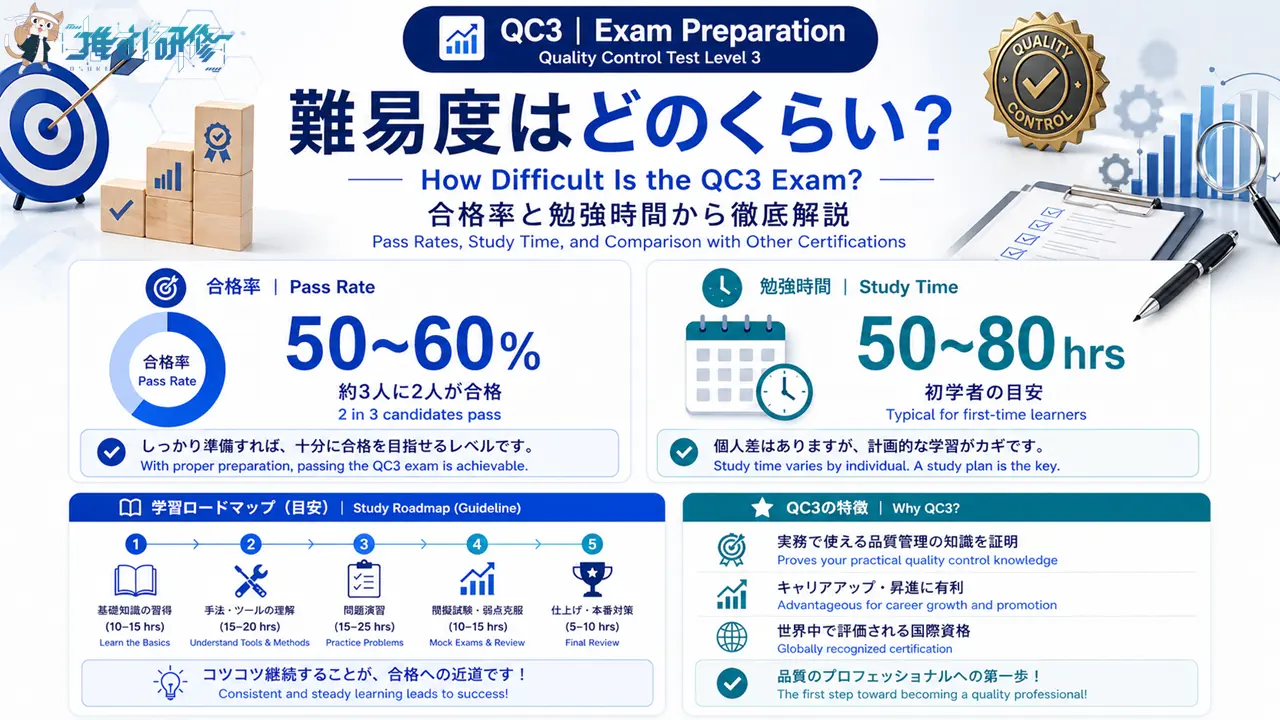
QC3の合格率は、年度によって若干の変動はあるものの、概ね50〜60%で推移しています。この数字は、受験者の約半数が合格できる水準であり、国家資格や専門資格と比較すると比較的取得しやすい部類に入ります。
The QC3 pass rate has generally remained in the range of 50–60%, with some variation from year to year. This figure means that approximately half of all candidates pass, placing QC3 in the more accessible category when compared to national qualifications and professional certifications.
検定試験は年2回実施されており、製造業を中心に多くの方が受験しています。日本規格協会の公表データ(第38回・2024年9月実施時点)によれば、品質管理の検定試験(全級合計)の累計受検者数は約141万人となっており、その中でも3級は最も受験者数が多い級です。
The examination is held twice a year and attracts a large number of candidates, particularly from the manufacturing sector. According to data published by the Japanese Standards Association (as of the 38th sitting, held in September 2024), the cumulative total number of candidates across all levels has reached approximately 1.41 million, with Level 3 accounting for the largest share.
第38回試験(2024年9月実施)では、3級の受検者数は22,194人で、全体の受検者数(37,084人)の約60%を占めています。年2回実施されることから、3級の年間受検者数は4〜5万人規模で推移していると推定されます。(出典:「第38回(2024年9月)品質管理検定実施概要報告」|日本規格協会グループ)
In the 38th sitting (September 2024), Level 3 attracted 22,194 candidates, accounting for approximately 60% of the total (37,084). Given that the exam is held twice a year, the estimated annual Level 3 candidate count is in the range of 40,000–50,000. (Source: “38th Quality Management Examination Implementation Summary Report (September 2024)” | Japanese Standards Association Group)
他の級(QC2・QC4)との合格率比較 Pass Rate Comparison with Other Levels (QC2 and QC4)
| 級 / Level | 合格率の目安 / Approx. Pass Rate | 難易度 / Difficulty |
|---|---|---|
| 4級 / Level 4 | 約85% / Approx. 85% | 入門レベル / Introductory |
| 3級(QC3)/ Level 3 (QC3) | 約50〜60% / Approx. 50–60% | 基礎レベル / Foundation |
| 2級 / Level 2 | 約25〜30% / Approx. 25–30% | 実践レベル / Intermediate |
| 1級 / Level 1 | 約5〜10% / Approx. 5–10% | 指導者レベル / Expert/Instructor |
4級に比べると合格率は下がりますが、2級・1級と比較すれば圧倒的に合格しやすい水準です。品質管理の基礎知識を証明する資格として、多くの製造業企業が推奨しています。
While the pass rate is lower than Level 4, it is considerably more achievable than Levels 2 and 1. As a qualification that certifies foundational knowledge of quality management, it is recommended by many manufacturing companies.
合格率が比較的高い理由 Why the Pass Rate Is Relatively High
QC3の合格率が50〜60%と比較的高い理由として、以下の点が挙げられます。
The following factors explain why QC3 maintains a relatively high pass rate of 50–60%.
- 基本的な内容が中心:統計的手法の基礎や、品質管理の基本用語が主な出題範囲
Fundamentals-focused content: The main scope covers the basics of statistical methods and key quality management terminology. - 計算問題のパターンが限られている:頻出問題を繰り返し演習すれば対応可能
Limited calculation patterns: Repeated practice with frequently tested question types is sufficient to prepare. - マークシート方式:記述式ではないため、消去法が使える
Multiple-choice format: Unlike written exams, the process of elimination can be used effectively. - 公式テキストと過去問で対応可能:独学でも合格を目指せる環境が整っている
Official textbooks and past papers are sufficient: The resources available make self-study a viable path to passing.
試験科目別の難易度|手法分野と実践分野が合否を分ける Difficulty by Exam Subject | The Methods Domain and the Practice Domain
QC3の試験は、大きく「手法分野」と「実践分野」の2つに分かれています。それぞれの特徴と難易度を見ていきましょう。
The QC3 exam is broadly divided into two domains: the Methods Domain and the Practice Domain. Let us examine the characteristics and difficulty level of each.
手法分野:統計的手法の基礎理解が必要 Methods Domain: A Foundation in Statistical Methods Is Required
手法分野では、以下のような統計的手法が出題されます。
The Methods Domain covers statistical methods such as the following.
- データの取り方とまとめ方(平均値、中央値、範囲など)
How to collect and summarize data (mean, median, range, etc.) - QC七つ道具(パレート図、特性要因図、チェックシート、ヒストグラム、散布図、グラフ、管理図)
The QC Seven Tools (Pareto chart, cause-and-effect diagram, check sheet, histogram, scatter diagram, graph, control chart) - 新QC七つ道具の基本概念
Basic concepts of the New QC Seven Tools - 統計的方法の基礎(標準偏差、正規分布など)
Fundamentals of statistical methods (standard deviation, normal distribution, etc.)
難易度のポイント:
Key difficulty considerations:
統計的手法は、理系出身者や数学が得意な方にとっては比較的取り組みやすい内容です。一方、文系出身者や数学に苦手意識がある方は、標準偏差や管理図の計算問題で苦戦する傾向があります。
Statistical methods are relatively approachable for candidates with a science background or strong mathematical ability. On the other hand, candidates from non-science backgrounds or those who struggle with mathematics tend to find calculation questions involving standard deviation and control charts particularly challenging.
ただし、高度な数学知識は不要で、中学〜高校レベルの数学で対応可能です。公式を理解し、繰り返し演習すれば十分に得点できます。
That said, advanced mathematical knowledge is not required — junior to senior high school level mathematics is sufficient. Understanding the formulas and practicing repeatedly will enable candidates to score adequately.
実践分野:品質管理の基本用語と考え方 Practice Domain: Basic Quality Management Terminology and Concepts
実践分野では、品質管理の基本的な考え方や用語が出題されます。
The Practice Domain covers fundamental quality management concepts and terminology.
- 品質管理の基本(QC的ものの見方・考え方、品質の概念など)
Fundamentals of quality management (the QC way of thinking, the concept of quality, etc.) - 改善の進め方(PDCAサイクル、問題解決の手順)
How to drive improvement (PDCA cycle, problem-solving procedures) - 品質保証と標準化
Quality assurance and standardization - 検査の基礎知識
Fundamentals of inspection - 小集団活動の基本
Basics of small group activities
難易度のポイント:
Key difficulty considerations:
実践分野は、製造業での実務経験がある方にとっては馴染みのある内容です。現場で「なぜなぜ分析」や「5S活動」を経験していれば、感覚的に理解できる問題が多く含まれています。
The Practice Domain covers material that will feel familiar to those with hands-on experience in manufacturing. Candidates who have worked with “5 Whys analysis” or “5S activities” on the shop floor will find many of the questions intuitively understandable.
一方、学生や製造業未経験者は、用語の暗記が中心となるため、テキストをしっかり読み込む必要があります。
On the other hand, students and those without manufacturing experience will need to read the textbook thoroughly, as their preparation will rely heavily on memorizing terminology.
計算問題への対応が鍵 Handling Calculation Questions Is the Key
QC3の合否を分けるポイントは、計算問題への対応力です。
The factor that most determines whether candidates pass or fail QC3 is their ability to handle calculation questions.
手法分野では以下のような計算問題が頻出します。
The following types of calculation questions appear frequently in the Methods Domain.
- 平均値・標準偏差の計算
Calculating mean and standard deviation - 管理図の管理限界線の算出
Calculating control limits for control charts - 工程能力指数の計算
Calculating the process capability index - 相関係数の読み取り
Reading and interpreting correlation coefficients
これらは電卓使用(※CBT試験に移行後は、各テストセンターPCシステム内の所定の電卓を使用。持ち込みは不可)が認められているため、公式さえ覚えていれば確実に得点できます。逆に、計算問題を捨ててしまうと合格ラインに届かない可能性が高まります。
Calculators are permitted for these questions (note: following the transition to CBT format, candidates must use the calculator provided within the test center’s PC system — personal calculators are not allowed). As long as you know the formulas, these questions can be answered with certainty. Conversely, giving up on calculation questions significantly increases the risk of falling short of the passing mark.
対策:過去問集を繰り返し解き、計算パターンに慣れることが最も効果的です。
Strategy: The most effective approach is to work through past exam papers repeatedly and become thoroughly familiar with the calculation patterns.
合格に必要な勉強時間は?初学者は50〜80時間が目安 How Many Study Hours Are Needed? First-Time Learners Should Plan for 50–80 Hours
QC3の合格に必要な勉強時間は、受験者の背景によって大きく異なります。一般的な目安は以下の通りです。
The study hours required to pass QC3 vary considerably depending on each candidate’s background. The following table provides general guidelines.
| 受験者のタイプ / Candidate Type | 必要な勉強時間 / Estimated Study Hours |
|---|---|
| 製造業経験あり・理系 / Manufacturing experience, science background | 30〜50時間 / 30–50 hours |
| 製造業経験あり・文系 / Manufacturing experience, non-science background | 50〜70時間 / 50–70 hours |
| 製造業未経験・理系 / No manufacturing experience, science background | 50〜70時間 / 50–70 hours |
| 製造業未経験・文系 / No manufacturing experience, non-science background | 60〜80時間 / 60–80 hours |
理系・文系による勉強時間の違い Differences in Study Time Between Science and Non-Science Backgrounds
理系出身者の場合:
For candidates with a science background:
統計学や数学の基礎知識があるため、手法分野の理解が早く進みます。標準偏差や正規分布といった概念も、大学の授業で触れたことがある方が多く、公式の暗記と演習に集中できます。
A foundation in statistics and mathematics allows these candidates to progress quickly through the Methods Domain. Many will already have encountered concepts such as standard deviation and normal distribution in university coursework, enabling them to focus directly on memorizing formulas and practicing questions.
実践分野についても、論理的思考力を活かして体系的に理解できるため、比較的短期間での合格が可能です。
Their logical thinking skills also enable them to approach the Practice Domain systematically, making it possible to pass within a relatively short timeframe.
文系出身者の場合:
For candidates from non-science backgrounds:
統計的手法に初めて触れる方が多く、計算問題への苦手意識が勉強時間を増やす要因になります。特に標準偏差の計算や管理図の読み取りには時間をかける必要があります。
Many of these candidates will be encountering statistical methods for the first time, and a lack of confidence with calculation questions tends to increase the overall study time required. In particular, extra time should be allocated to standard deviation calculations and reading control charts.
ただし、実践分野は暗記中心で対応できるため、文系の得意分野とも言えます。バランスよく学習すれば、十分に合格圏内に到達できます。
That said, the Practice Domain can be handled primarily through memorization, which tends to suit non-science candidates well. A balanced approach to study is entirely sufficient to reach the passing standard.
製造業経験の有無で変わる難易度 How Manufacturing Experience Changes the Difficulty
製造業経験者の場合:
For candidates with manufacturing experience:
現場で「QC活動」「改善活動」「5S」などに携わった経験があれば、実践分野の内容がすぐに理解できます。特に以下のような実務経験は大きなアドバンテージになります。
Candidates who have been involved in QC activities, improvement initiatives, or 5S on the shop floor will find the Practice Domain immediately understandable. In particular, the following types of experience provide a significant advantage.
- QCサークル活動への参加 / Participation in QC circle activities
- 不良品の原因分析(なぜなぜ分析、特性要因図の作成) / Defect cause analysis (5 Whys analysis, creating cause-and-effect diagrams)
- 工程管理や検査業務の経験 / Experience in process management or inspection work
- 改善提案制度への参加 / Participation in improvement suggestion schemes
実務経験があれば、実践分野の7〜8割は「知っている内容」として処理できるため、手法分野の学習に時間を集中できます。
With relevant practical experience, 70–80% of the Practice Domain will feel like familiar territory, allowing candidates to concentrate their study time on the Methods Domain.
製造業未経験者の場合:
For candidates without manufacturing experience:
実践分野の用語や考え方が初めてのものばかりとなるため、テキストの精読が必要です。ただし、内容自体は難解ではなく、PDCAサイクルや品質保証の基本概念など、ビジネス全般に通じる内容も多いため、社会人経験があれば理解しやすいでしょう。
For these candidates, most of the terminology and concepts in the Practice Domain will be entirely new, making careful reading of the textbook essential. That said, the material is not inherently difficult — much of it, including the PDCA cycle and fundamental quality assurance concepts, is broadly applicable to business in general, making it accessible to those with any professional background.
短期合格者の勉強時間の実例 Real Examples of Study Hours from Short-Term Passers
実際に短期間で合格した方の勉強時間の例を紹介します。
Here are real examples of study hours from candidates who passed within a short period.
事例1:製造業経験者・理系(合格)
Case 1: Manufacturing experience, science background (Pass)
- 勉強期間:1か月 / Study period: 1 month
- 総勉強時間:約40時間 / Total study hours: approx. 40 hours
- 学習方法:テキスト1周+過去問集3回繰り返し
Study method: One full read of the textbook + three rounds of past exam papers - 得点:手法75点、実践80点 / Scores: Methods 75, Practice 80
事例2:製造業未経験・文系(合格)
Case 2: No manufacturing experience, non-science background (Pass)
- 勉強期間:2か月 / Study period: 2 months
- 総勉強時間:約70時間 / Total study hours: approx. 70 hours
- 学習方法:テキスト2周+計算問題集1冊+過去問集5回繰り返し
Study method: Two full reads of the textbook + one calculation workbook + five rounds of past exam papers - 得点:手法68点、実践72点 / Scores: Methods 68, Practice 72
短期合格のポイントは、過去問の繰り返し演習です。テキストを完璧に理解しようとするよりも、問題を解きながら必要な知識を補強していく方が効率的です。
The key to passing in a short time is repeated practice with past exam papers. Rather than trying to achieve a perfect understanding of the textbook, it is far more efficient to build the necessary knowledge as you work through questions.
他の資格との難易度比較|QC3はどのくらい難しい? Difficulty Compared to Other Qualifications | Where Does QC3 Sit?
他の資格とも比較してみましょう。
Let us compare QC3 against other qualifications.
| 資格 / Qualification | 合格率 / Pass Rate | 勉強時間 / Study Hours | 難易度 / Difficulty |
|---|---|---|---|
| QC3 | 50~60% | 50~80時間 / 50–80 hrs | やや易~普通 / Relatively easy to moderate |
| 日商簿記3級 / Nissho Bookkeeping Level 3 | 統一試験:30~35% ネット試験:40%前後 Paper-based: 30–35% CBT: approx. 40% | 100~150時間 / 100–150 hrs | 普通 / Moderate |
| FP3級 / FP Level 3 | 学科80%台、実技50~80%(実施団体により異なる) Written: 80%+, Practical: 50–80% (varies by body) | 30~50時間 / 30–50 hrs | 易 / Easy |
| 第二種電気工事士 / Second-Class Electrician | 筆記60%前後、技能70%前後 Written: approx. 60%, Skills: approx. 70% | 筆記30時間 / Written: 30 hrs | 筆記のみならやや易、実技含めるとやや高 Relatively easy (written only); somewhat harder including skills test |
日商簿記3級と比較すると、QC3の方が勉強時間は少なく済み、合格率も高い傾向にあります。簿記3級は仕訳の理解と演習に時間がかかるため、難易度はQC3よりもやや高めです(出典:簿記受験者データ|日本商工会議所)。
Compared to Nissho Bookkeeping Level 3, QC3 requires fewer study hours and tends to have a higher pass rate. Bookkeeping Level 3 demands considerable time for understanding and practicing journal entries, making it somewhat more difficult than QC3. (Source: Bookkeeping Candidate Data | Japan Chamber of Commerce and Industry)
FP3級は学科試験の合格率が80%台と非常に高く、3級資格の中では最も取得しやすい部類に入ります。ただし、実施団体(日本FP協会・きんざい)によって実技試験の合格率に差があります(出典:FP技能士の取得者数及び試験結果データ|NPO法人日本FP協会、CBT試験結果2025年4月~2025年9月実施|一般社団法人金融財政事情研究会)。
FP Level 3 has a written exam pass rate exceeding 80%, placing it among the most accessible Level 3 qualifications. However, pass rates for the practical exam vary depending on the administering body (Japan FP Association or Kinzai). (Sources: FP Technician Candidate and Exam Results Data | NPO Japan FP Association; CBT Exam Results April–September 2025 | Institute for Financial Affairs)
第二種電気工事士は筆記試験のみであればQC3と同程度の難易度ですが、配線作業などの技能試験(実技)対策が必須となります。実技試験の合格率は70%前後と比較的高いものの、実際に手を動かして練習する時間が必要なため、総合的な難易度はQC3よりやや高めと言えます(出典:第二種電気工事士試験の試験結果と推移|一般財団法人電気技術者試験センター)。
For the written exam alone, the Second-Class Electrician exam is comparable in difficulty to QC3. However, preparation for the skills test — which involves hands-on wiring work — is essential. While the skills test pass rate of approximately 70% is relatively high, the time needed for practical training means the overall difficulty is somewhat greater than QC3. (Source: Second-Class Electrician Exam Results and Trends | Electrical Technology Examination Center)
難易度が高いと感じる3つの要因と対策 3 Factors That Make QC3 Feel Harder — and How to Address Them
QC3が難しいと感じる主な要因と、それぞれの対策を解説します。
Here are the main factors that make QC3 feel difficult, along with strategies to address each one.
①統計用語の理解|標準偏差・管理図などの基礎知識 Factor 1: Understanding Statistical Terminology | Standard Deviation, Control Charts, and More
難しいと感じるポイント:
Why it feels difficult:
- 標準偏差、分散、正規分布といった統計用語が初見で理解しにくい
Statistical terms such as standard deviation, variance, and normal distribution are difficult to grasp on first encounter. - 用語の定義を暗記しても、計算問題で使いこなせない
Memorizing definitions does not automatically translate into the ability to apply them in calculation questions. - 管理図の見方や管理限界線の意味が分かりにくい
Reading control charts and understanding the meaning of control limits can be confusing.
対策:
Strategies:
- 用語の定義だけでなく、「何のために使うのか」を理解する
Go beyond memorizing definitions — understand the purpose each term serves. - 図表やグラフを見ながら視覚的に理解する
Build understanding visually by studying diagrams and charts. - 実際の現場・職場での活用例を調べて、具体的なイメージを持つ
Research real-world applications in the workplace to form concrete mental images. - 公式は丸暗記ではなく、導出過程を一度確認してから覚える
Rather than rote memorization, check how each formula is derived before committing it to memory.
特に標準偏差は、「データのばらつきを数値化したもの」という本質を理解すれば、計算問題への応用が容易になります。
For standard deviation in particular, grasping the core concept — that it is a numerical measure of how spread out data values are — makes it considerably easier to apply in calculation questions.
②計算問題への苦手意識|公式の理解と演習が必須 Factor 2: Anxiety About Calculation Questions | Understanding Formulas and Practicing Is Essential
難しいと感じるポイント:
Why it feels difficult:
- 公式が多く、どの場面でどの公式を使うか分からない
There are many formulas, and it is unclear which to use in which situation. - 電卓の使い方に慣れていないと時間がかかる
Unfamiliarity with using a calculator can cost valuable time. - 計算ミスで失点してしまう
Arithmetic errors lead to lost marks.
対策:
Strategies:
- 頻出の計算パターンを5〜10種類に絞って繰り返し演習する
Focus on 5–10 of the most frequently tested calculation patterns and practice them repeatedly. - 電卓の√(ルート)機能やメモリ機能に慣れておく
Become familiar with the square root (√) and memory functions on the calculator. - 計算問題は「公式→代入→計算」の3ステップで解く習慣をつける
Develop the habit of solving calculation questions in three steps: identify the formula → substitute values → calculate. - 過去問で間違えた計算問題は、解き直しを3回以上行う
For any calculation question answered incorrectly in past papers, redo it at least three times.
計算問題は配点が高いため、ここを克服できれば合格がグッと近づきます。文系出身者でも、パターン学習で十分に対応可能です。
Calculation questions carry significant marks, so mastering them brings a pass within much closer reach. Even candidates from non-science backgrounds can handle them fully through pattern-based practice.
③試験範囲の広さ|QC七つ道具から新QC七つ道具まで Factor 3: The Breadth of the Syllabus | From the QC Seven Tools to the New QC Seven Tools
難しいと感じるポイント:
Why it feels difficult:
- QC七つ道具(パレート図、特性要因図、チェックシート、ヒストグラム、散布図、グラフ、管理図)の使い分けが複雑
Knowing when to use each of the QC Seven Tools (Pareto chart, cause-and-effect diagram, check sheet, histogram, scatter diagram, graph, control chart) is complex. - 新QC七つ道具(親和図法、連関図法、系統図法など)も出題される
The New QC Seven Tools (affinity diagram, relations diagram, tree diagram, etc.) also appear in the exam. - 実践分野では品質保証、検査、標準化など、幅広い知識が求められる
The Practice Domain demands broad knowledge spanning quality assurance, inspection, standardization, and more.
対策:
Strategies:
- まずはQC七つ道具を確実にマスターする(新QC七つ道具は基本概念のみでOK)
Master the QC Seven Tools thoroughly first — basic concepts only are sufficient for the New QC Seven Tools. - 各ツールの「使用目的」と「作成方法」を整理してまとめる
Organize and summarize the “purpose” and “how to create” for each tool. - 実践分野は過去問で頻出テーマを把握し、そこから優先的に学習する
Use past papers to identify the most frequently tested themes in the Practice Domain and prioritize those. - 全範囲を完璧にしようとせず、7割得点を目標に効率的に学習する
Rather than aiming to cover every topic perfectly, study efficiently with a target of achieving 70% of the total marks.
試験範囲は広いですが、出題頻度には明確な偏りがあります。過去問分析で頻出分野を特定し、そこに集中することで効率的に得点できます。
While the syllabus is broad, there are clear patterns in how frequently different topics appear. Identifying the high-frequency areas through past paper analysis and concentrating on those allows candidates to score efficiently.
難易度を下げる合格戦略|押さえるべきポイント Strategies to Make Passing More Achievable | Key Points to Keep in Mind
QC3の難易度を下げ、確実に合格するための戦略を紹介します。
Here are strategies for reducing the perceived difficulty of QC3 and passing with confidence.
問題演習を中心に学習する Center Your Study Around Practice Questions
QC3の学習で最も効果的なのは、過去問と練習問題を繰り返し解くことです。
The most effective approach to studying for QC3 is working through past papers and practice questions repeatedly.
推奨する学習の流れ:
Recommended study flow:
- テキストを1周読む(完璧に理解しようとしない)
Read the textbook once from cover to cover (without trying to achieve perfect understanding). - 過去問を1回分解いてみる(最初は正答率が低くてもOK)
Attempt one set of past exam questions (a low correct answer rate at the start is perfectly fine). - 間違えた問題の解説を読み、該当箇所のテキストを見直す
Read the explanation for every incorrect answer and review the corresponding section in the textbook. - 同じ過去問を2〜3回繰り返し、正答率90%以上を目指す
Repeat the same past paper 2–3 times, aiming for a correct answer rate of 90% or above. - 別の年度の過去問でも同じプロセスを繰り返す
Repeat the same process with past papers from different years.
この方法なら、「必要な知識だけ」を効率的に身につけられます。テキストを最初から最後まで完璧に暗記しようとすると、時間がかかりすぎて挫折の原因になります。
This approach allows candidates to build only the knowledge they actually need, in an efficient manner. Attempting to memorize the entire textbook perfectly from start to finish is a common cause of giving up due to the time it requires.
頻出分野に絞って効率化 Focus on High-Frequency Topics for Greater Efficiency
QC3の出題には、明確な頻出分野があります。以下の分野を優先的に学習しましょう。
QC3 has clearly identifiable high-frequency topic areas. Prioritize the following when studying.
手法分野の頻出項目:
High-frequency topics in the Methods Domain:
- データのまとめ方(平均値、範囲、標準偏差)
Summarizing data (mean, range, standard deviation) - ヒストグラムの作成と読み取り
Creating and reading histograms - 管理図の種類と管理限界線の計算
Types of control charts and calculating control limits - パレート図の作成と活用
Creating and using Pareto charts - 散布図と相関
Scatter diagrams and correlation
実践分野の頻出項目:
High-frequency topics in the Practice Domain:
- 品質の定義と品質管理の基本
Definition of quality and fundamentals of quality management - PDCAサイクル
The PDCA cycle - QC的ものの見方・考え方
The QC way of thinking - 検査の分類と抜き取り検査
Types of inspection and sampling inspection - 標準化と標準の種類
Standardization and types of standards
これらの頻出分野だけで全体の70%程度をカバーできます。まずはここを確実にし、余裕があれば他の分野にも手を広げましょう。
These high-frequency areas alone account for approximately 70% of the total exam content. Secure these first, then extend your coverage to other areas if time allows.
計算問題を早めに克服する Tackle Calculation Questions Early
計算問題への苦手意識を早めに払拭することが、合格への近道です。
Overcoming any anxiety about calculation questions as early as possible is the most direct path to passing.
計算問題克服の3ステップ:
Three steps to mastering calculation questions:
ステップ1:基本公式を5つ覚える
Step 1: Memorize five core formulas
- 平均値の計算 / Calculating the mean
- 範囲の計算 / Calculating the range
- 標準偏差の計算 / Calculating standard deviation
- 管理限界線の計算(X̄-R管理図) / Calculating control limits (X̄-R control chart)
- 工程能力指数(Cp)の計算 / Calculating the process capability index (Cp)
ステップ2:例題を10問解く
Step 2: Work through 10 example questions
公式テキストや問題集の例題を、解答を見ずに自力で解いてみます。最初は時間がかかっても構いません。
Attempt the example questions in the official textbook or workbook without looking at the answers. Taking time at this stage is perfectly fine.
ステップ3:過去問で実戦演習
Step 3: Practice with past exam questions under exam conditions
過去問の計算問題を時間を計って解きます。1問3〜5分を目安に、スピードアップを図ります。
Work through past exam calculation questions with a timer, aiming to complete each question within 3–5 minutes to build speed.
計算問題は「慣れ」で確実に得点できるようになります。最初の2週間で集中的に取り組めば、その後の学習が格段に楽になります。
Calculation questions are the type that become reliably scoreable through familiarity. Intensive focus during the first two weeks will make all subsequent study considerably easier.
外国人労働者にとっての難易度|専門用語の壁をどう乗り越えるか Difficulty for Foreign Workers | How to Overcome the Terminology Barrier
外国人労働者の方にとって、QC3の難易度は日本人以上に高くなります。その理由と対策を解説します。
For foreign workers, the difficulty of QC3 is even greater than it is for Japanese candidates. Here is an explanation of why, and how to address it.
試験は日本語のみ|統計用語が最大の難関 The Exam Is Japanese-Only | Statistical Terminology Is the Biggest Hurdle
QC3の試験は、日本語のみで実施されます。そのため、以下のような困難があります。
The QC3 exam is conducted entirely in Japanese, which presents the following challenges.
- 専門用語の理解:「標準偏差」「工程能力」「特性要因図」など、日本語でも難しい用語を理解する必要がある
Understanding specialist terminology: Terms such as 標準偏差 (standard deviation), 工程能力 (process capability), and 特性要因図 (cause-and-effect diagram) are difficult even in Japanese. - 問題文の読解:長文の問題文を正確に読み取る日本語力が求められる
Reading comprehension: The ability to read and accurately interpret lengthy Japanese question texts is required. - 計算問題の指示理解:「平均値を求めよ」「管理限界線を算出せよ」などの指示を正確に理解する必要がある
Understanding calculation instructions: Instructions such as 平均値を求めよ (calculate the mean) and 管理限界線を算出せよ (calculate the control limits) must be understood precisely.
特に統計用語は、日常会話では使わない専門用語のため、日本語能力試験(JLPT)でN2やN1に合格していても、QC3の用語が理解できないケースがあります。
Statistical terminology in particular consists of specialist terms not used in everyday conversation. As a result, even candidates who have passed JLPT N2 or N1 may find themselves unable to understand the QC3-specific vocabulary.
母語での理解→日本語での受験という二段階学習 A Two-Stage Learning Approach: Understand in Your Native Language, Then Sit the Exam in Japanese
外国人労働者の方が効率的にQC3に合格するには、母語で概念を理解してから、日本語で受験するという二段階学習が有効です。
The most efficient path for foreign workers to pass QC3 is the two-stage learning approach: building conceptual understanding in your native language first, then sitting the exam in Japanese.
二段階学習の流れ:
Two-stage learning flow:
第1段階:母語で品質管理の基礎を学ぶ
Stage 1: Learn the fundamentals of quality management in your native language
- はじめに母語で、統計的手法の基本概念を理解する
Begin by building a thorough understanding of basic statistical concepts in your native language. - 「標準偏差とは何か」「なぜ管理図を使うのか」を母語でしっかり理解する
Gain a solid grasp of questions like “What is standard deviation?” and “Why do we use control charts?” in your native language. - 計算問題の解き方も、母語の解説で学ぶ
Learn how to solve calculation questions using explanations in your native language.
第2段階:日本語の用語と問題形式に慣れる
Stage 2: Become familiar with Japanese terminology and exam question formats
- 母語で理解した内容を、日本語の用語と対応させる
Match the concepts understood in your native language to the corresponding Japanese terminology. - 日本語の過去問を解き、問題文の読解に慣れる
Work through Japanese-language past exam papers to build familiarity with reading question texts. - 日本語で計算問題を解く練習をする
Practice solving calculation questions in Japanese.
この方法なら、「日本語が分からないから内容も分からない」という状態を避けられます。母語で概念を理解していれば、日本語の用語を覚えるだけで済むため、学習効率が大幅に向上します。
This approach avoids the situation where “not understanding Japanese” also means “not understanding the content.” With the concepts already understood in your native language, all that remains is to memorize the Japanese terminology — dramatically improving learning efficiency.
多言語対応教材による支援 Support Through Multilingual Study Materials
オスケン株式会社では、外国人労働者の方のQC3合格を支援するため、AIを活用した多言語対応教材を提供しています。
To support foreign workers in passing QC3, Osuken Inc. offers multilingual study materials powered by AI.
弊社の教材の特長:
Key features of our materials:
- 実務経験に基づいた解説:製造業の現場経験を持つ講師が、実例を交えて分かりやすく解説します
Explanations grounded in real-world experience: Our instructors bring hands-on manufacturing experience, delivering clear explanations with practical examples. - 計算問題の徹底演習:計算問題のパターンを繰り返し練習できる教材で、確実に得点力を高めます
Thorough calculation question practice: Our materials allow repeated practice with calculation question patterns, building reliable scoring ability. - 日本語⇔母語の用語対照表:重要な専門用語を日本語と母語で対照できる用語集を提供します
Japanese ↔ native language terminology tables: We provide glossaries listing key specialist terms in both Japanese and the learner’s native language side by side.
外国人労働者の方にとって、QC3の難易度は決して低くありませんが、適切な教材と学習方法を選べば、十分に合格可能です。母語での理解を土台にして、日本語での受験に臨むことが成功の鍵です。
For foreign workers, the difficulty of QC3 is by no means low — but with the right materials and study approach, passing is entirely achievable. Building understanding in your native language as a foundation, then approaching the Japanese-language exam on that basis, is the key to success.
まとめ:難易度は比較的低めだが、計算問題の対策が重要 Summary: Difficulty Is Relatively Low, but Preparation for Calculation Questions Is Essential
QC3の難易度について、重要なポイントを整理します。
Here is a summary of the key points regarding QC3 difficulty.
難易度のまとめ:
Difficulty summary:
- 合格率は50〜60%で、比較的取得しやすい資格
With a pass rate of 50–60%, QC3 is a relatively accessible qualification. - 必要な勉強時間は50〜80時間(製造業経験や理系/文系で変動)
Required study hours are 50–80 (varying with manufacturing experience and academic background). - 危険物乙4や日商簿記3級と比較しても、難易度は同等かやや易しい
Compared to the Class B, Group 4 Hazardous Materials Engineer exam and Nissho Bookkeeping Level 3, QC3 is of similar or slightly lower difficulty. - 計算問題への対応が合否を分ける最大のポイント
The ability to handle calculation questions is the single most decisive factor in passing or failing. - 外国人労働者の方は母語での理解→日本語受験の二段階学習が有効
For foreign workers, the two-stage approach of building understanding in their native language before sitting the Japanese-language exam is highly effective.
合格のための3つのポイント:
Three key points for passing:
- 過去問中心の学習:テキストの完璧な理解よりも、問題演習を繰り返す
Past-paper-centered study: Prioritize repeated practice with questions over achieving perfect textbook understanding. - 計算問題の早期克服:公式5つを覚えて、パターン演習で慣れる
Early mastery of calculation questions: Memorize five core formulas and build familiarity through pattern-based practice. - 頻出分野に集中:全範囲を網羅せず、7割得点を目標に効率化
Focus on high-frequency topics: Rather than covering every topic, study efficiently with a target of 70% of the total marks.
QC3は、計画的に学習すれば確実に合格できる資格です。統計的手法への苦手意識を早めに克服し、過去問演習を繰り返せば、初学者でも十分に合格圏内に到達できます。
QC3 is a qualification that any candidate can pass with a structured study plan. Overcoming any reluctance towards statistical methods early on and working through past exam papers repeatedly will bring even first-time learners well within the passing range.
製造業でのキャリアアップや、品質管理の基礎知識の証明として、ぜひQC3の取得にチャレンジしてみてください。
Whether for career advancement in manufacturing or as proof of foundational quality management knowledge, we encourage you to take on the challenge of obtaining QC3.
- 危険物乙4の難易度は?合格率・勉強時間・他の資格との比較で徹底解説 How Difficult Is the Class B, Group 4 Hazardous Materials Engineer Exam? Pass Rates, Study Time, and Comparison with Other Certifications
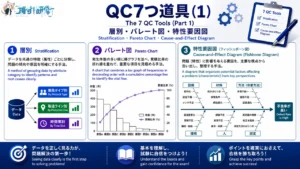
- QC3|QC7つ道具(1)層別・パレート図・特性要因図の使い方 QC Level 3 | The 7 QC Tools (Part 1): How to Use Stratification, Pareto Charts, and Cause-and-Effect Diagrams
この記事を書いた人

関連記事
-
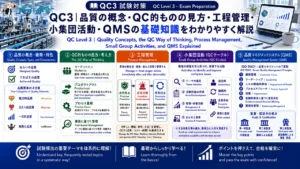
 QC3|品質の概念・QC的ものの見方・工程管理・小集団活動・QMSの基礎知識をわかりやすく解説 QC Level 3 | Quality Concepts, the QC Way of Thinking, Process Management, Small Group Activities, and QMS Explained
 -
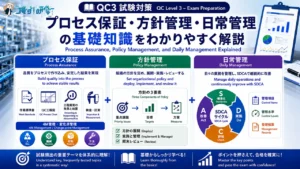
QC3|プロセス保証・方針管理・日常管理の基礎知識をわかりやすく解説 QC Level 3 | Process Assurance, Policy Management, and Daily Management Explained
-
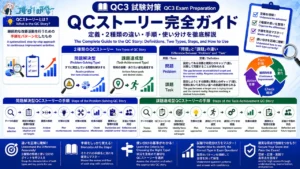
QC3|QCストーリー(問題解決型の8手順・課題達成型の9手順)の違いと使い分けをわかりやすく解説 QC Level 3 | QC Story: 8-Step Problem-Solving vs. 9-Step Task-Achievement Explained
-
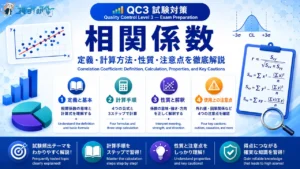
QC3|相関係数の計算方法・性質・使用上の注意点をわかりやすく解説 QC Level 3 | Correlation Coefficient: Calculation, Properties, and Key Cautions Explained
-
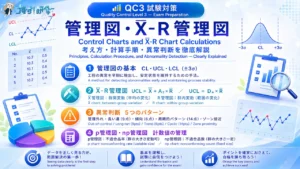
QC3|管理図の考え方とX̄-R管理図の計算方法をわかりやすく解説 QC Level 3 | Control Charts and X̄-R Chart Calculations Explained
-
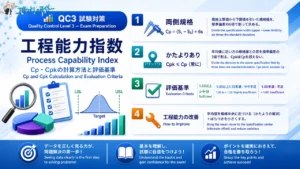
QC3|工程能力指数 Cp・Cpkの計算方法と評価基準 QC Level 3 | Process Capability Index: Cp and Cpk Calculation and Evaluation Criteria
-
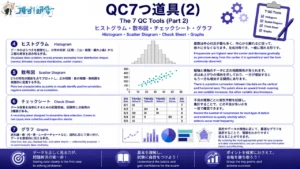
QC3|QC7つ道具(2) ヒストグラム・散布図・チェックシート・グラフの使い方 QC Level 3 | The 7 QC Tools (Part 2): How to Use Histograms, Scatter Diagrams, Check Sheets, and Graphs
-
QC3|QC7つ道具(1)層別・パレート図・特性要因図の使い方 QC Level 3 | The 7 QC Tools (Part 1): How to Use Stratification, Pareto Charts, and Cause-and-Effect Diagrams