階層別研修とは?人事担当者・経営者が押さえるべき目的・階層区分・設計の要点を徹底解説 What Is Level-Based Training? Purpose, Level Structure, and Design Principles for HR and Business Leaders
「新入社員研修は毎年実施しているが、中堅社員や管理職になってからの育成が後手に回っている」「研修はやっているのに、社員が階層ごとに求められる役割を果たせていない」——そのような課題を感じている人事教育担当者・経営者の方は少なくありません。
“We run new hire training every year, but development for mid-level employees and managers always seems to lag behind.” “We offer training, but employees still struggle to step into the roles expected of them at each level.” These are concerns that resonate with many HR professionals and business leaders across Japan.
その根本的な原因の多くは、研修の「量」ではなく「体系の欠如」にあります。個々の研修がどれほど質の高いものであっても、階層間のつながりが設計されていなければ、育成は「点」の集合にとどまり、組織全体の能力向上には結びつきません。
In most cases, the root cause lies not in the quantity of training offered, but in the absence of a coherent system. No matter how high the quality of individual programs, if the connections between levels are left undesigned, development remains a collection of isolated “dots” — and never translates into sustained organizational capability improvement.
本記事では、人事教育担当者・経営者・経営層の方を対象に、階層別研修の本質的な目的・階層区分の考え方・各階層の研修内容・設計の要点を、実務に直結する視点から解説します。
This article is written for HR professionals, managers, and executives. It covers the essential purpose, level structure, training content by level, and design principles of level-based training — structured development programs aligned to each organizational level — all from a perspective grounded in practical application.
目次
階層別研修とは——場当たり的な育成から「体系」へ Level-Based Training: From Ad Hoc Development to a Structured System
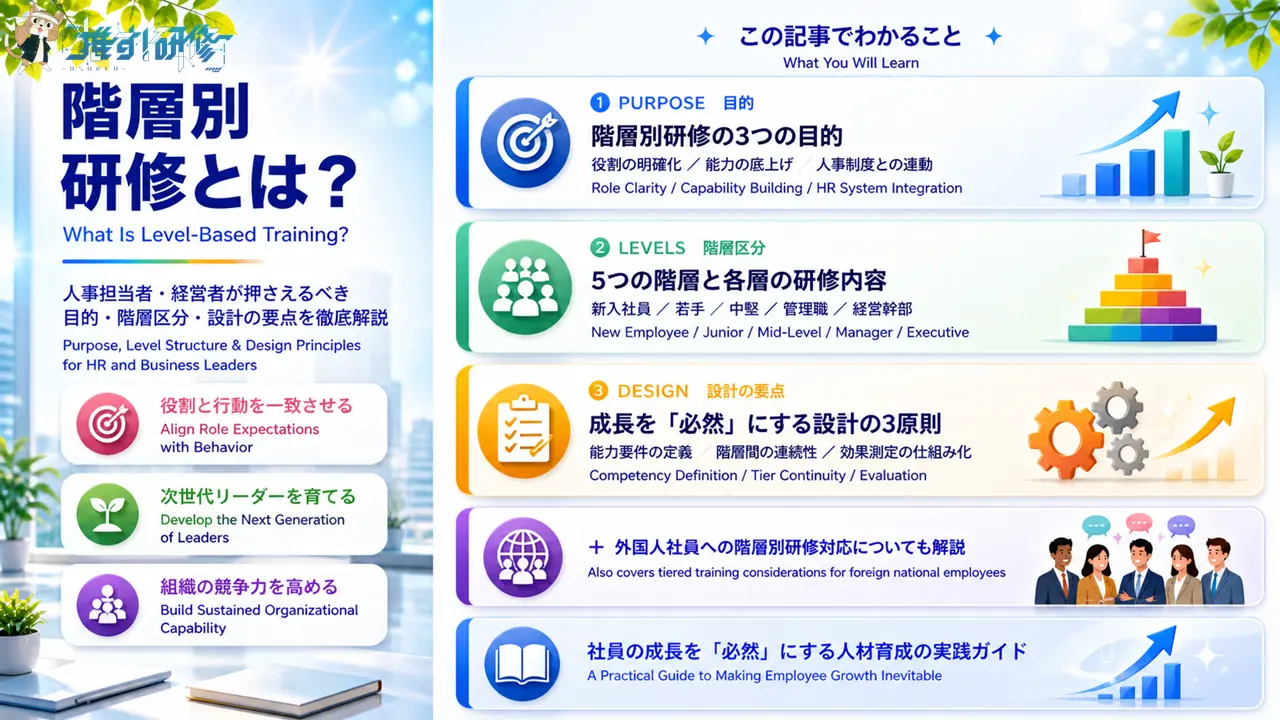
階層別研修とは、社員の職位・役割・キャリアステージに応じて、それぞれが習得すべき知識・スキル・マインドセットを体系的に提供する教育プログラムの総称です。新入社員・若手・中堅・管理職・経営幹部といった階層ごとに、求められる能力と研修内容が異なります。
Level-based training refers to a suite of educational programs that systematically delivers the knowledge, skills, and mindset appropriate to each employee’s role, seniority, and career stage. The competencies required — and therefore the training content — differ meaningfully at each level: new hires, junior employees, mid-level staff, managers, and senior executives each have distinct development needs that cannot be addressed by a one-size-fits-all program.
ここで問うべき重要な問いがあります。「自社の社員は、階層が上がるにつれて、求められる役割の変化を正確に理解できているか」——この問いに自信を持って「はい」と答えられる組織は、実際には多くありません。役割の変化に対する認識のギャップが埋められないまま昇格が繰り返されると、現場では「名ばかり管理職」「機能しない中堅」という問題が生まれ、組織の推進力が徐々に失われていきます。
There is an important question worth asking here: “Do our employees clearly understand how the demands of their role change as they advance through the organization?” In practice, very few organizations can answer this with confidence. When the gap between perceived and actual role expectations goes unaddressed across successive promotions, the result is a workforce of managers who manage in name only and mid-level employees who never fully contribute — and the organization’s forward momentum quietly erodes.
階層別研修の本質は、社員の成長を「偶発」ではなく「必然」にする仕組みを組織に埋め込むことです。個々の研修を「点」ではなく「線」としてつなぎ、各ステージで何を学び、何ができるようになるべきかを組織として明示することが、人材育成を戦略的に機能させる出発点となります。
The essence of level-based training is to embed a system that makes employee growth not accidental, but inevitable. By connecting individual programs as a continuous line rather than isolated dots, and by clearly defining as an organization what should be learned and demonstrated at each stage, you create the starting point for people development that functions as genuine strategy — not merely good intention.
階層別研修の3つの目的 The Three Core Purposes of Level-Based Training
階層別研修を導入・整備する目的は、単に「各階層に研修を提供すること」ではありません。組織全体の視点で見たとき、以下の3つの目的が中核をなします。これらを曖昧にしたまま研修体系を設計しても、現場での効果は期待できません。
The purpose of implementing level-based training is not simply to “provide training at each level.” Viewed from an organizational perspective, three core purposes lie at its heart. Designing a training framework without clearly articulating these purposes first will almost always result in programs that fail to deliver real results in the field.
① 役割・責任の明確化と行動の一致 Aligning Behavior with Role and Responsibility
階層が上がるにつれて、社員に求められる役割と責任は質的に変化します。「業務を正確にこなす」から「チームの成果に責任を持つ」へ、さらに「組織の方向性を定める」へと、求められる思考と行動の軸が大きく転換します。この転換を「自然に起きるもの」として放置することは、組織にとって最も高コストな誤りの一つです。階層別研修は、各ステージで求められる行動基準を明確にし、役割と実際の行動を意識的に一致させるための場として機能します。
As employees advance, the nature of what is expected of them changes qualitatively — from “executing tasks accurately” to “owning team outcomes,” and ultimately to “setting organizational direction.” The underlying frame of thinking and action shifts fundamentally at each transition. Leaving these transitions to happen naturally — or assuming they will happen on their own — is one of the most costly organizational mistakes a company can make. Level-based training functions as the deliberate mechanism for clarifying behavioral standards at each stage and ensuring that actual behavior aligns with role expectations.
② 組織全体の能力底上げと次世代リーダーの育成 Raising Overall Capability and Developing the Next Generation of Leaders
組織の競争力は、一部の優秀な人材だけでなく、全階層の社員が自分の役割で確実に機能することによって支えられています。階層別研修を体系的に整備することで、各階層の社員が次のステージに進むための準備を計画的に行えるようになります。特に中堅社員から管理職への移行は、多くの企業で「最も機能しにくい育成の空白地帯」とされており、ここへの先行投資が組織の中長期的な競争力を左右します。「優秀なプレイヤーが優秀なマネージャーになるとは限らない」という現実を、育成体系の中に正面から組み込むことが求められます。
Organizational competitiveness is sustained not by a handful of high performers, but by employees at every level reliably functioning in their respective roles. A well-structured level-based training system enables employees at every level to systematically prepare for the next stage of their career. In particular, the transition from mid-level employee to manager is widely recognized as the most underserved developmental gap in many organizations — and proactive investment here has an outsized impact on long-term competitive capability. The reality that “an excellent individual contributor does not automatically become an excellent manager” must be built squarely into the development framework, not acknowledged after the fact.
③ 人事評価・等級制度との連動 Integration with Performance Evaluation and Grade Systems
階層別研修が最も効果を発揮するのは、人事評価制度・等級制度・昇格要件と連動して設計されているときです。研修が「受ければ終わり」のイベントではなく、「この階層で求められる能力を証明するプロセス」として位置づけられるとき、受講者の主体性と学習の質は大幅に向上します。逆に、研修と人事制度が切り離されている組織では、研修は「義務的に参加するもの」という位置づけに陥りやすく、投資対効果が著しく低下します。
Level-based training delivers its greatest impact when it is designed in deliberate alignment with performance evaluation systems, grade structures, and promotion criteria. When training is positioned not as an event to be attended and forgotten, but as a process for demonstrating the competencies required at a given level, participant ownership and learning quality improve significantly. Conversely, in organizations where training and HR systems operate in silos, training tends to be experienced as an obligation rather than an opportunity — and return on investment drops sharply as a result.
階層区分の考え方と各階層の研修内容 How to Structure Levels and What to Cover at Each One
階層の区分方法は企業規模・業種・組織構造によって異なりますが、一般的には以下の5階層が基本モデルとして用いられます。ただし、重要なのは「何階層にするか」ではなく、自社の等級制度・役職体系と対応させた「自社版の階層定義」を明確にしたうえで設計することです。外部の標準モデルをそのまま流用しても、自社の実態と乖離した研修体系になるリスクがあります。
The number and definition of levels varies by company size, industry, and organizational structure, but the following five-level model is commonly used as a starting framework. The critical point, however, is not “how many levels to use” but rather designing from a clearly defined, company-specific level structure that maps onto your own grade system and job titles. Importing an external standard model without adaptation risks producing a training framework that is technically coherent but disconnected from your organization’s actual reality.
① 新入社員層 New Employee Level
ビジネスマナー・企業理念・コンプライアンス・業務基礎力の習得が中心です。この段階での最大のテーマは知識の伝達ではなく、「学生から社会人へのマインドセット転換」を意識的に促すことにあります。この転換が遅れると、配属後の職場摩擦や早期離職の温床となります。新入社員研修の詳細については、「新入社員研修とは?」をあわせてご参照ください。
The focus at this level is on business etiquette, company philosophy, compliance, and foundational job skills. The central theme, however, is not knowledge transfer — it is deliberately facilitating the mindset shift from student to working professional. When this transition is delayed, it becomes a breeding ground for workplace friction and early turnover after deployment. For a full discussion of this level, please refer to our article “What Is New Employee Training?”
② 若手・一般社員層 Junior / Individual Contributor Level
入社2〜5年目前後の社員を対象とする段階です。業務の自律的な遂行能力の強化、専門スキルの深化、チーム内での主体的な貢献が求められます。この時期に注意すべきは、「できる仕事をこなす」ことへの安住です。自分の業務範囲を超えて考え、組織の課題を自分ごととして捉える視野の拡大を促すことが、この階層の研修設計において最も重要な問いです。この段階での育成の質が、中堅・管理職への移行をスムーズにするかどうかを大きく左右します。
This level targets employees roughly two to five years into their careers. The focus is on autonomous task execution, deepening specialist skills, and making proactive contributions within the team. The key risk to address at this stage is the tendency to settle into competent execution of familiar tasks. Expanding employees’ perspective beyond their immediate scope — helping them see organizational challenges as their own — is the most important design question at this level. The quality of development here directly determines how smoothly the transition to mid-level and management roles proceeds.
③ 中堅社員層 Mid-Level Employee Level
多くの企業で「育成の空白地帯」になりやすい層です。後輩指導・プロジェクトリード・部門横断的な業務への関与が増える一方で、「自分はまだプレイヤーだ」という意識から抜け出せない社員が少なくありません。「プレイヤーとしての優秀さ」と「リーダーとしての資質」は別の能力であり、この転換を意識的に促さない限り、組織の中核を担う人材は育ちません。OJT指導スキル・ファシリテーション・問題解決力・後輩へのフィードバック技術などが主要テーマとなります。
This is the level most at risk of becoming an underserved developmental gap. As these employees take on junior staff coaching, project leadership, and cross-functional responsibilities, many still struggle to move beyond the self-perception of “I’m still an individual contributor.” Being an excellent individual contributor and being an effective leader are fundamentally different capabilities — and without deliberately facilitating this transition, the organization will simply not produce the core talent it needs. Key development areas include OJT coaching skills, facilitation, structured problem-solving, and the ability to deliver developmental feedback to junior colleagues.
④ 管理職層 Manager Level
チームの成果に責任を持ち、部下の育成・動機づけ・評価を担う階層です。管理職研修において最も根本的なテーマは、「自分が成果を出す」から「チームとして成果を出す」への思考の転換を、行動レベルで定着させることです。この転換が頭の理解にとどまり、行動に落ちていない管理職が多い組織では、現場のパフォーマンスは構造的に上がりません。1on1・目標管理・フィードバック・ハラスメント防止・労務管理の実務スキルに加え、心理的安全性の確保、多様なメンバーとのコミュニケーション能力が不可欠です。
Managers are accountable for team outcomes and responsible for developing, motivating, and evaluating their direct reports. The most fundamental theme of management-level training is embedding the shift from “I deliver results” to “my team delivers results” at the level of observable, consistent behavior — not merely conceptual understanding. In organizations where managers have grasped this shift intellectually but have not translated it into daily action, field performance is structurally constrained. Alongside practical skills in one-on-ones, goal management, feedback, harassment prevention, and labor management, the ability to build psychological safety and communicate effectively across diverse team members is non-negotiable.
⑤ 経営幹部・上級管理職層 Senior Management / Executive Level
経営戦略・組織設計・意思決定・リスクマネジメントなど、組織全体を俯瞰した視点が求められる階層です。この階層では、知識の習得よりも「自社の経営課題を素材とした思考の鍛錬」が有効であり、外部の経営幹部向けプログラムや異業種交流、アクションラーニング形式の取り組みが実践的な成長につながります。また、次の管理職層を育てる「育成者としての経営幹部」という視点を持つことが、組織の世代的な再生産を支える鍵となります。
This level demands a bird’s-eye view of the organization, spanning strategic planning, organizational design, decision-making, and risk management. At this level, sharpening thinking through the organization’s own live business challenges is more valuable than knowledge acquisition per se. External executive development programs, cross-industry exchange, and action learning formats directly tied to real strategic questions deliver the most meaningful growth. Equally important is cultivating the identity of “executive as developer of the next generation of managers” — the key to ensuring the organization’s sustained leadership pipeline.
階層別研修の設計の要点 Key Design Principles for Level-Based Training
階層別研修は「体系が存在すること」自体が目的ではありません。実際に現場の行動変容と業務成果につながる体系を設計するために、担当者として押さえておくべき要点を以下に示します。
Having a level-based training framework in place is not an end in itself. Below are the key design principles that HR and training professionals must internalize to build a system that genuinely translates into behavior change and business results in the field.
各階層の「求められる能力」を行動レベルで言語化してから設計を始める。「管理職にはリーダーシップが必要」という抽象的な定義では研修は設計できません。「週次の1on1で部下の課題を引き出し、翌週までに具体的な行動計画を合意できる」というレベルまで落とし込んで初めて、研修内容・評価基準・フォローアップの設計が可能になります。能力要件の解像度が低いほど、研修は「やった気」で終わります。
Define required competencies at the behavioral level before designing content. “Managers need leadership” is too abstract to design training from. Only when you drill down to the level of “can draw out a direct report’s key challenges in a weekly one-on-one and reach agreement on a concrete action plan by the following week” does it become possible to design training content, evaluation criteria, and follow-up. The lower the resolution of your competency requirements, the more likely training will end as a “we did it” event with nothing to show for it.
階層間の「学びの連続性」を意識して設計する。各階層の研修が「独立したプログラム」で終わらないよう、前の階層で学んだことを次の階層で発展させるストーリーラインを設計することが重要です。たとえば、若手研修で自己理解とコミュニケーション基礎を学び、中堅研修でそれをファシリテーションと他者支援に発展させ、管理職研修で1on1と評価面談に応用する——という形で、学びが積み重なる体系を意識的に設計しましょう。この連続性こそが、階層別研修を「バラバラな研修の集合」から「成長の設計図」へと変えます。
Design with deliberate continuity of learning across levels. It is essential to design a narrative thread that builds on what was learned at the previous level, rather than treating each program as a standalone event. For example: self-awareness and communication fundamentals at the junior level → expanded into facilitation and peer support at the mid-level → applied to one-on-ones and performance conversations at the management level. This deliberate continuity is what transforms a collection of disconnected programs into a genuine blueprint for growth.
効果測定を「研修直後のアンケート」で終わらせない。受講後の満足度は、研修の品質の一側面を反映するに過ぎません。本当に問うべきは、「研修を受けた社員の行動は変わったか」「その変化は業務成果に表れているか」です。1か月後・3か月後…のフォローアップデータとの照合によって、行動変容・業務成果への影響を継続的に確認する仕組みを組み込みましょう。特に管理職研修では、部下からの多面的なフィードバックを活用した効果測定が、より実態に即した評価を可能にします。
Don’t let evaluation end with a post-session satisfaction survey. Post-training satisfaction reflects only one dimension of program quality. The questions that actually matter are: “Has the behavior of employees who attended the training changed?” and “Is that change showing up in business results?” Build in a system for continuously tracking behavior change and outcomes by cross-referencing follow-up data collected at intervals such as one month, three months, and beyond. For management-level training in particular, multi-source feedback from direct reports enables a far more accurate picture of real-world impact than self-reported satisfaction alone.
外国人社員への階層別研修対応 Level-Based Training Considerations for Foreign National Employees
技能実習制度の廃止と育成就労制度への移行(2027年施行予定)、および特定技能制度の拡充を背景に、製造業・物流・食品産業を中心に外国籍社員が増加しています。注目すべきは、外国人社員が組織内での階層を上がるケースが現実に増えてきているという点です。「外国人社員は現場作業員」という前提で設計された育成体系は、すでに実態と乖離し始めており、早急な見直しが求められています。
Against the backdrop of the abolition of the Technical Intern Training Program and the transition to the new Ikusei Shuro (Specified Skilled Worker Development) system — scheduled to take effect in April 2027 — as well as the ongoing expansion of the Specified Skilled Worker program, companies in manufacturing, logistics, and the food industry are increasingly welcoming foreign national employees. What deserves attention is that foreign nationals are increasingly advancing within organizational hierarchies. Development frameworks built on the assumption that “foreign national employees are frontline workers” are already diverging from operational reality — and the need for revision is urgent.
実務上有効な対応策として、研修テキストのバイリンガル化、階層ごとの能力要件の多言語対訳表の整備、外国人社員向けのメンター制度との連動が挙げられます。外国人社員を「育成対象の例外」ではなく「組織の戦力」として位置づけることが、多様な人材が活躍できる組織づくりの本質であり、日本の製造業・サービス業が直面する人材課題への実践的な解答の一つです。
Practical measures include bilingual training materials, multilingual competency requirement reference guides for each level, and integration with mentorship programs designed for foreign national staff. Positioning foreign national employees not as exceptions to development planning, but as core contributors to organizational capability, is both the essence of building an organization where diverse talent can thrive, and one of the most practical answers to the workforce challenges now facing Japanese manufacturing and service industries.
オスケン株式会社では、製造業・食品業・物流業などの職場で働く外国人労働者・外国籍社員向けに、多言語対応研修を提供しています。日本人・外国人社員を問わず、階層別研修プログラムの設計・運営管理全般についてもお気軽にご相談ください。
Osuken Inc. provides multilingual training programs for foreign national employees working in manufacturing, food service, logistics, and related industries. We also support the design and operational management of level-based training programs for all employees — regardless of nationality. Please do not hesitate to reach out for any training-related enquiries.
まとめ——階層別研修は「体系」ではなく「成長の必然性」をつくる仕組み Summary: Level-Based Training as a System That Makes Growth Inevitable
階層別研修は、適切に設計・運営されることで、役割の明確化・能力の底上げ・次世代リーダーの育成という3つの経営課題に体系的に応える力を持っています。しかしその真の価値は、「体系があること」ではなく、「社員が自分の成長ステージを自覚し、次の役割に向けて主体的に動き始める組織文化を生み出すこと」にあります。
When properly designed and managed, level-based training has the power to systematically address three core business challenges: clarifying roles, raising overall capability, and developing the next generation of leaders. But its true value lies not in the existence of a framework, but in the organizational culture it generates — one in which employees are aware of their own growth stage and begin to move proactively toward the demands of the next role.
人事教育担当者・経営者にとって問うべきは、「各階層に研修があるか」ではなく、「自社の社員は、次のステージで何が求められるかを知っているか。そしてそれに向けて今、何をすべきかを理解しているか」です。この問いに「はい」と答えられる組織をつくることが、階層別研修の最終的なゴールです。
The question HR professionals and executives should be asking is not “do we have training at every level?” but rather: “Do our employees know what will be expected of them at the next stage — and do they understand what they need to be doing right now to get there?” Building an organization that can answer “yes” to that question is the ultimate goal of level-based training.
研修は「実施して終わり」ではありません。各階層の研修を設計・実施・フォローアップ・効果測定というサイクルでつなぎ、社員の成長を「偶発」ではなく「必然」にする体系を構築することが、階層別研修を真の「人材育成投資」として機能させる道です。
Training does not end when the session closes. Connecting each level’s programs through the cycle of design, delivery, follow-up, and evaluation — and building a system that makes employee growth not accidental but inevitable — is what transforms level-based training into a genuine, high-return investment in your people.
- 新入社員研修とは?人事担当者・経営者が押さえるべき目的・種類・設計の要点を徹底解説 What Is New Employee Training? Purpose, Types, and Design Principles for HR and Business Leaders
- マネジメント研修とは?人事担当者・経営者が押さえるべき目的・研修内容・設計の要点を徹底解説 What Is Management Training? Purpose, Core Content, and Design Principles for HR and Business Leaders
この記事を書いた人

関連記事
-
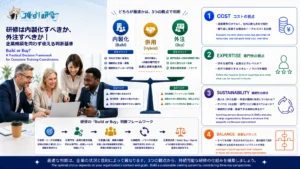
 研修は内製化すべきか、外注すべきか|企業規模を問わず使える判断基準 Build or Buy? A Practical Decision Framework for Corporate Training Coordinators
 -
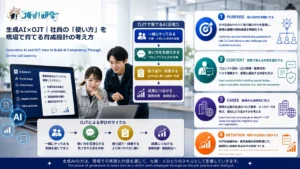
生成AI×OJT|社員の「使い方」を現場で育てる育成設計の考え方 Generative AI and OJT: How to Build AI Competency Through On-the-Job Learning
-
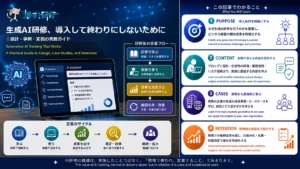
生成AI研修、導入して終わりにしないために|設計・事例・定着の実務ガイド Generative AI Training That Sticks: A Practical Guide to Design, Case Studies, and Retention
-
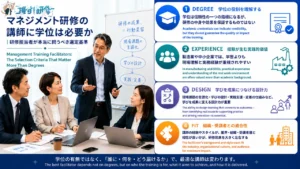
マネジメント研修の講師に学位は必要か|研修担当者が本当に問うべき選定基準 Management Training Facilitators: The Selection Criteria That Matter More Than Degrees
-
夏目漱石『こころ』に学ぶ——職場で「打ち明けられる関係と信頼」を育てる文学研修 Learning from Natsume Sōseki’s Kokoro: Literature-Based Training for Building Trust and Creating Space for Openness at Work
-
芥川龍之介『藪の中』に学ぶ——職場で「事実と解釈を見分ける力」を育てる文学研修 Learning from Akutagawa Ryūnosuke’s Yabu no Naka: Literature-Based Training for Distinguishing Facts from Interpretations at Work
-
森鷗外『最後の一句』に学ぶ——職場で「言うべきことを言える人」を育てる文学研修 Learning from Mori Ōgai’s Saigo no Ikku: A Literary Approach to Developing People Who Speak Up at Work
-
新入社員フォローアップ研修とは? What Is New Employee Follow-Up Training? Purpose, Themes, and Design for HR Professionals