新入社員研修とは?人事担当者・経営者が押さえるべき目的・種類・設計の要点を徹底解説 What Is New Employee Training? Purpose, Types, and Design Principles for HR and Business Leaders
「研修を実施しているのに、新入社員がなかなか職場に定着しない」「毎年同じ研修を繰り返しているが、本当に効果が出ているのかわからない」——そのような課題を感じている人事教育担当者・経営者の方は少なくありません。
“We run training every year, but new hires still struggle to settle in.” “We keep delivering the same program — but is it actually working?” These are concerns shared by many HR professionals and business leaders across Japan.
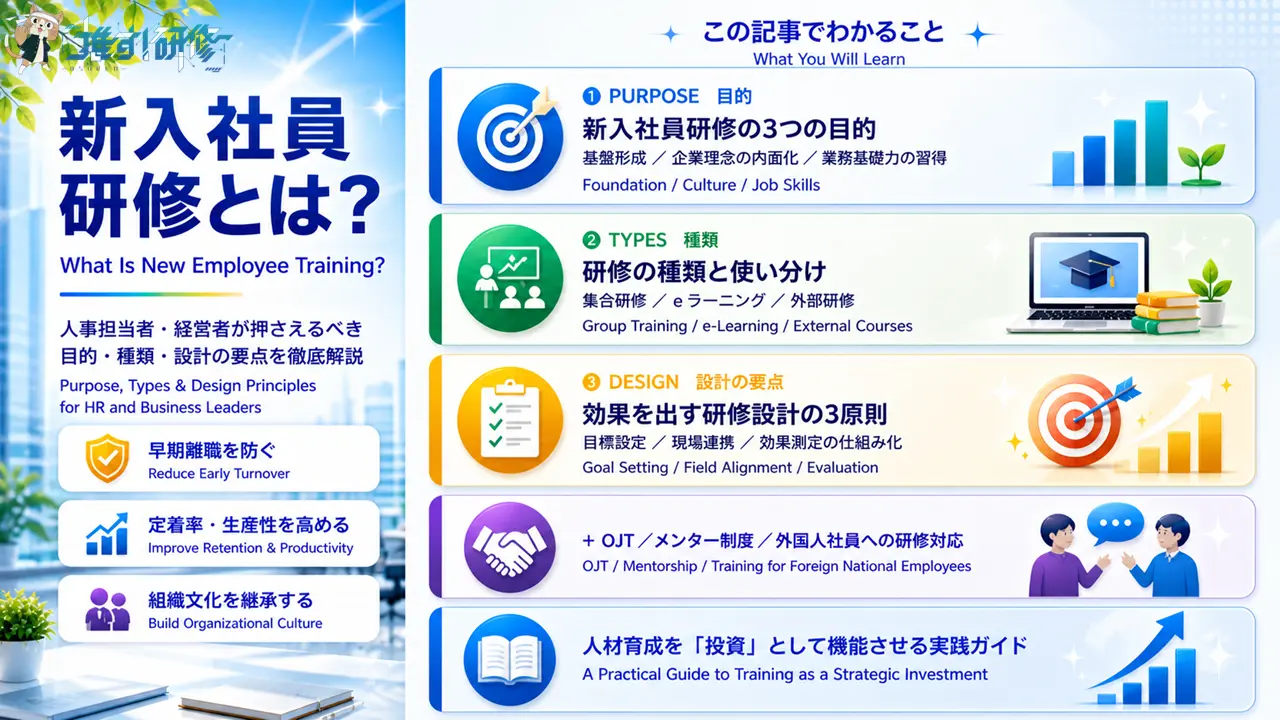
新入社員研修は、単なる「入社時の儀式」ではありません。正しく設計・運営された研修は、早期離職の抑制、職場定着率の向上、そして組織の中長期的な成長に直結する、最も投資対効果の高い人材育成施策の一つです。
New employee training is not simply an onboarding ritual. When properly designed and executed, it is one of the highest-ROI people development initiatives available — directly reducing early turnover, improving retention, and driving long-term organizational growth.
本記事では、人事教育担当者・経営者・経営層の方を対象に、新入社員研修の本質的な目的・種類・設計の要点・外国人社員への対応を、実務に直結する視点から解説します。
This article is written for HR professionals, managers, and executives. It covers the essential purpose, types, design principles, and cross-cultural considerations of new employee training — all from a perspective grounded in practical application.
目次
新入社員研修とは——「コスト」ではなく「投資」 New Employee Training: An Investment, Not a Cost
新入社員研修とは、新たに採用した社員が職場で自立して業務を遂行できるよう、知識・スキル・マインドセットを計画的に習得させるための教育プログラムです。
New employee training is a structured educational program designed to equip newly hired staff with the knowledge, skills, and mindset they need to perform their roles independently in the workplace.
厚生労働省「新規学卒就職者の離職状況」によると、新規大卒就職者の就職後3年以内離職率は33〜35%前後で推移しており、入社した社員の3人に1人が3年以内に離職している状況が続いています。(出典:厚生労働省「新規学卒者の離職状況」)採用コストや教育コストを考えると、1名の早期離職が企業に与える損失は、その社員の年収の数倍に達するとも言われます。研修への投資を惜しんだ結果として離職が増えることは、企業にとって最も避けるべきリスクの一つです。
According to the Ministry of Health, Labour and Welfare’s “Survey on the Turnover Status of New School Graduates,” the three-year turnover rate for new university graduates has consistently hovered between 33% and 35% — meaning roughly one in three new hires leaves within three years of joining. (Source: MHLW, “Turnover Status of New School Graduates”) When recruitment and onboarding costs are factored in, the cost of a single early departure is estimated to reach several times that employee’s annual salary. Early turnover driven by underinvestment in training is one of the most preventable — and costly — risks a company faces.
研修を「費用」として捉えるのではなく、定着率・生産性・組織文化の形成に効いてくる中長期的な投資として位置づけることが、戦略的な人材育成の出発点です。
Reframing training as a long-term investment in retention, productivity, and organizational culture — rather than a line-item cost — is the starting point for strategic people development.
新入社員研修の3つの目的 The Three Core Purposes of New Employee Training
研修の設計・改善を担う立場として、まず「何のために研修を行うのか」を組織内で明確に共有しておくことが重要です。目的が曖昧なまま実施される研修は、現場への定着も効果測定も難しくなります。
For those responsible for designing or improving training programs, the first step is to ensure that “why we run this training” is clearly shared across the organization. When training is delivered without a well-defined purpose, both on-the-job application and meaningful evaluation become difficult.
① ビジネスパーソンとしての基盤形成 Building the Foundation of Professional Conduct
挨拶・敬語・報告・連絡・相談(ほうれんそう)といったビジネスマナーの習得は、研修の基礎です。しかしより重要なのは、「学生」から「社会人」へのマインドセットの転換を、入社直後の段階で意識的に促すことです。この転換が遅れると、現場配属後のトラブルや摩擦の原因になります。
Teaching business etiquette — greetings, honorific language, and the reporting-communicating-consulting framework known as hourensou — is a training fundamental. But of greater importance is deliberately facilitating the mindset shift from “student” to “professional” in the immediate post-joining period. When this shift is delayed, it becomes a source of friction and conflict after employees are assigned to their departments.
② 企業理念・コンプライアンスの内面化 Internalizing Company Philosophy and Compliance
経営理念・ビジョン・行動指針を「暗記させる」のではなく、「なぜこの会社はこの理念を持つのか」を腹落ちさせることが、組織文化の継承と一体感の醸成につながります。また、就業規則・ハラスメント防止・情報セキュリティなどのコンプライアンス教育は、入社初日から義務となる重要事項であり、トラブル予防の観点からも手を抜けない領域です。
Rather than having employees memorize the company’s philosophy, the goal is to help them genuinely understand why the organization holds those values — the foundation for transmitting culture and building a sense of belonging. Compliance education covering employment regulations, harassment prevention, and information security is mandatory from day one, and is an area that cannot be treated lightly from a risk management perspective.
③ 配属後の即戦力化に向けた業務基礎力の習得 Developing Baseline Skills for Productive Deployment
各職種・部門で求められる専門知識・技術の基礎を、配属前の段階で習得させることが目標です。製造業であれば安全管理・品質管理・設備の基礎知識、事務職であれば会計・IT・文書作成スキルなどが該当します。配属直後に「何もわからない状態」をなくすことが、現場の受け入れ負担の軽減と新入社員の自己効力感向上の両方に寄与します。
The goal is to equip new employees with the foundational knowledge and skills their role demands before they are assigned to a department. In manufacturing this may include safety, quality control, and equipment basics; in office roles, accounting, IT literacy, and document skills. Eliminating the “I have no idea what I’m doing” experience from day one in the field both reduces the burden on receiving departments and strengthens new employees’ sense of self-efficacy.
新入社員研修の種類と使い分け Types of New Employee Training and How to Use Them
研修形態はそれぞれ特性が異なります。担当者として重要なのは、「何を学ばせたいか」「誰に」「どのタイミングで」に応じた最適な組み合わせを設計することです。なお、OJTおよびメンター制度は研修プログラムそのものとは性質が異なるため、後述の独立した項目として解説します。
Each training format has its own characteristics and strengths. What matters most for those responsible for program design is selecting and combining formats based on “what needs to be learned,” “by whom,” and “at what point in the onboarding journey.” Note that OJT and mentorship programs differ in nature from formal training and are addressed separately in the sections below.
集合研修 Group Training (Classroom-Style)
全新入社員が一堂に集まり、社内講師(必要に応じて社外の専門講師を招へいする場合もあり)が一斉に指導する形態です。社内講師が登壇することで自社の理念・文化・業務知識と直結した研修が実現できる一方、コンプライアンス・メンタルヘルス・ビジネスマナーなど専門性の高い分野では、社外講師を活用することで研修の質と客観性を高めることもできます。同期同士のつながりを生む「仲間意識の醸成」という副次的効果も、定着率向上の観点から見逃せません。
All new employees gather together to receive instruction simultaneously from in-house trainers — with external specialist instructors brought in as needed. Having internal trainers deliver sessions ensures the content stays closely connected to the company’s own philosophy, culture, and operations. At the same time, for areas requiring specialist expertise — such as compliance, mental health, or business etiquette — bringing in external instructors raises both the quality and objectivity of the training. The secondary effect of building cohort bonds — a sense of “we’re in this together” — is also a meaningful contributor to retention that should not be overlooked.
e-ラーニング e-Learning (Online Self-Study)
PCやスマートフォンを通じてオンラインで学習する形態です。コンプライアンス・情報セキュリティ・法令知識など、全社員に均質なインプットが求められる内容に特に有効です。受講記録・進捗管理が自動化できる点も、担当者の管理負担軽減につながります。
Employees learn through online platforms accessible via PC or smartphone. This format is especially effective for content that requires consistent, uniform delivery to all staff — such as compliance, information security, and regulatory knowledge. Automated tracking and progress monitoring also reduce the administrative burden on training coordinators.
外部研修・公開講座 External Training / Open Enrollment Courses
外部の研修会社や教育機関のプログラムに参加させる形態です。自社内では提供しにくい専門知識の習得に加え、他社の同期社員との交流が、新入社員に「社会人としての視野の広がり」をもたらす効果があります。ただし費用対効果の検証と、受講後の学びの現場への橋渡しが担当者の腕の見せどころです。
New employees attend programs run by external providers or educational institutions. In addition to accessing specialized expertise unavailable in-house, the experience of connecting with peers from other companies can meaningfully broaden a new hire’s perspective as a working professional. The training coordinator’s value lies in verifying ROI and ensuring that external learning is effectively translated back into the workplace.
OJT(職場内訓練)——研修後の配属先で始まる実践育成 OJT — On-the-Job Training: Practical Development After Deployment
OJTは、新入社員研修の実施方法ではなく、研修終了後に配属先職場で行われる、実務を通じた育成プロセスです。先輩社員や上司が実際の業務を通じて指導し、集合研修で習得した知識・スキルを現場で実践・定着させる役割を担います。研修とOJTは「インプット」と「実践」という意味で、相互に補完し合う関係にあります。
OJT is not one of the methods used to deliver new employee training. Rather, it is a practical development process that takes place in the assigned workplace after formal training has concluded. Senior employees and supervisors guide new hires through actual work, helping them apply and embed the knowledge and skills acquired during group training. In this sense, training and OJT complement each other — the former provides the input, the latter the practice.
ただし、OJTの品質は指導する側のスキルや意識に左右されやすいという課題があります。OJT担当者への事前研修・育成ガイドの整備が、OJT全体の品質を底上げします。なお、通常は社内で完結するOJTについても、社外講師を活用してOJT担当者の指導スキルそのものを底上げする「OJT促進研修」を導入する企業も増えています。新入社員研修の設計段階から、OJTへの円滑な移行を見据えた準備をしておくことが重要です。
One important caveat: OJT quality is highly dependent on the skill and commitment of the person doing the coaching. Investing in OJT coordinator training and providing structured coaching guides significantly raises the floor of OJT quality across the organization. It is also worth noting that while OJT typically takes place entirely in-house, a growing number of companies are bringing in external instructors to deliver dedicated “OJT facilitation training” — programs specifically designed to strengthen the coaching skills of OJT coordinators themselves. It is important to plan for a smooth handoff from formal training to OJT from the very beginning of the program design process.
メンター制度——研修を補完するサポート体制 Mentorship Program: A Complementary Support Structure
メンター制度は、集合研修やe-ラーニングといった研修プログラムそのものではなく、研修で学んだことを職場に定着させるための「補完的なサポート体制」として位置づけるのが適切です。特定の先輩社員(メンター)が新入社員を個別に支援し、業務上の疑問だけでなく、職場への適応や精神的なフォローも担います。研修では教えきれない「現場のリアル」を丁寧に橋渡しする役割を果たします。
A mentorship program is best understood not as a training program in itself, but as a complementary support structure that helps new employees anchor what they have learned in training into their daily work. A designated senior employee (the mentor) provides individualized support — addressing not only job-related questions but also workplace adjustment and emotional well-being. The mentor serves as a bridge to the “real workplace” that formal training alone cannot fully convey.
早期離職の背景には「職場に相談できる人がいない」という孤立感が挙げられることが多く、メンター制度はその予防策として高い効果を発揮します。研修プログラムの設計と並行して、メンター制度の整備も検討することをお勧めします。
A common driver of early turnover is the feeling of isolation — “there’s no one I can talk to here.” A mentorship program is one of the most effective preventive measures against this. We recommend considering the development of a mentorship framework alongside the design of your formal training program.
研修設計の要点——「実施すること」が目的にならないために Designing Training That Actually Works
多くの企業で見られる失敗パターンは、「研修を実施すること」自体が目的化してしまうことです。担当者として押さえておくべき設計上の要点を以下に示します。
One of the most common failure patterns in corporate training is when “running the program” becomes the end goal in itself. Below are the key design principles that HR and training professionals need to keep front of mind.
ゴールを行動レベルで定義する。「研修後、受講者にどのような行動の変化を期待するか」を具体的に言語化してから設計を始めることが、効果的な研修の大前提です。「ビジネスマナーを理解させる」ではなく、「研修翌日から、社内外のメール文面に敬語を正しく使える状態にする」というレベルで目標を設定しましょう。
Define goals at the level of behavior. The prerequisite for any effective training is to articulate in concrete terms what behavioral change is expected from participants after the program. Rather than “ensure they understand business etiquette,” set a goal such as “by the day after training, participants can use appropriate honorific language in all internal and external written communication.”
現場の管理職を設計段階から巻き込む。研修内容を人事部門だけで完結させると、現場への橋渡しが機能しません。OJT担当者や配属先の管理職と事前に研修内容・目標を共有し、配属後のフォローアップの役割分担まで設計段階で合意しておくことが重要です。
Involve on-site managers from the design stage. When training is designed entirely within HR, the connection to the field rarely functions as intended. Share training content and objectives with OJT coordinators and receiving managers in advance, and reach agreement on the division of post-deployment follow-up responsibilities while the program is still being designed.
効果測定を「研修直後のアンケート」で終わらせない。満足度調査だけでは研修の真の効果は見えません。1か月後・3か月後…のフォローアップデータとの照合によって、行動変容・業務成果への影響を継続的に確認する仕組みを組み込みましょう。
Don’t let evaluation end with a post-session satisfaction survey. Satisfaction scores alone reveal very little about actual training impact. Build in a system for continuously tracking behavior change and business outcomes by cross-referencing follow-up data collected at intervals such as one month, three months, and beyond.
外国人新入社員への研修対応——多様な職場での実践課題 Training Foreign National New Employees: A Practical Priority
技能実習制度の見直しや特定技能制度の拡充を背景に、製造業・物流・食品産業を中心に、外国籍の新入社員を迎える企業が増加しています。日本語能力が十分でない段階の社員に、日本語のみの研修資料でそのまま対応しようとすることは、教育の空白を生むリスクがあります。
Against the backdrop of reforms to the technical intern training system and the expansion of the Specified Skilled Worker program, companies in manufacturing, logistics, and the food industry are increasingly welcoming foreign national employees. Delivering training solely in Japanese to employees who have not yet reached sufficient proficiency creates a risk of critical learning gaps.
実務上有効な対応策として、以下が挙げられます。
The following are practical measures that have proven effective in the field.
対訳形式の研修資料の整備。日本語と母語(または英語)を並記したバイリンガル教材を用意することで、知識の正確な定着と、指導者側の説明負担の軽減が同時に実現できます。
Bilingual training materials. Providing materials in Japanese alongside the employee’s native language (or English) simultaneously ensures accurate knowledge retention and reduces the explanatory burden on instructors.
業務専門用語のバイリンガル解説。特に安全・品質・設備に関わる専門用語は、意味の誤解が重大な事故につながる恐れがあります。重要用語は日本語・英語・その他必要言語で対照表を作成し、OJT担当者と新入社員が共通の言語基盤を持てるよう整備することが求められます。
Bilingual glossaries for job-specific terminology. In particular, technical terms related to safety, quality, and equipment carry a risk of serious accidents if misunderstood. Building bilingual or multilingual reference glossaries — and ensuring that both OJT coordinators and new employees share a common terminological foundation — is a critical safeguard.
オスケン株式会社では、製造業・食品業・物流業などの職場で働く外国人労働者・外国籍社員向けに、多言語対応研修を提供しています。外国人社員の受け入れ体制整備についてはお気軽にご相談ください。日本人・外国人社員を問わず、研修プログラムの設計・運営管理全般についてもお気軽にご相談ください。
Osuken Inc. provides multilingual training programs for foreign national employees working in manufacturing, food service, logistics, and related industries. Please feel free to contact us about building a structured onboarding and training framework for your foreign national workforce. We also support the design and operational management of training programs for Japanese national employees — please do not hesitate to reach out for any training-related enquiries.
まとめ——研修は「やって終わり」ではなく、組織の競争力をつくる仕組み Summary: Training as a System for Building Organizational Strength
新入社員研修は、適切に設計・運営されることで、早期離職の防止・現場への早期貢献・組織文化の継承という3つの経営課題に同時に応える力を持っています。人事教育担当者・経営者にとって重要なのは、「今年も研修をやった」という実績ではなく、「研修を通じて、組織がどう変わったか」を問い続けることです。
When properly designed and managed, new employee training has the power to address three core business challenges simultaneously: preventing early turnover, accelerating on-the-job contribution, and transmitting organizational culture. For HR professionals and executives, what matters is not the fact that “training was delivered again this year,” but the discipline of continuously asking: “How has our organization changed as a result of this training?”
研修は「実施して終わり」ではありません。設計・実施・フォローアップ・効果測定というサイクルを組織に根づかせることが、新入社員研修を真の「人材育成投資」として機能させる道です。
Training does not end when the session closes. Embedding the cycle of design, delivery, follow-up, and evaluation into your organization is what transforms new employee training into a genuine, high-return investment in your people.
- ITパスポート試験|開発技術の基礎知識とソフトウェア開発モデル IT Passport Exam | Development Technology: Fundamentals and Software Development Models
- 階層別研修とは?人事担当者・経営者が押さえるべき目的・階層区分・設計の要点を徹底解説 What Is Level-Based Training? Purpose, Level Structure, and Design Principles for HR and Business Leaders
この記事を書いた人

関連記事
-
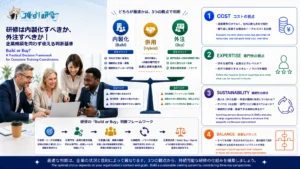
 研修は内製化すべきか、外注すべきか|企業規模を問わず使える判断基準 Build or Buy? A Practical Decision Framework for Corporate Training Coordinators
 -
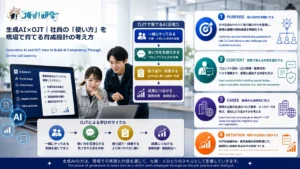
生成AI×OJT|社員の「使い方」を現場で育てる育成設計の考え方 Generative AI and OJT: How to Build AI Competency Through On-the-Job Learning
-
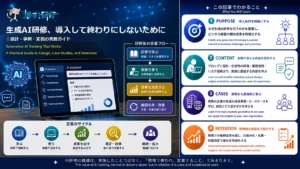
生成AI研修、導入して終わりにしないために|設計・事例・定着の実務ガイド Generative AI Training That Sticks: A Practical Guide to Design, Case Studies, and Retention
-
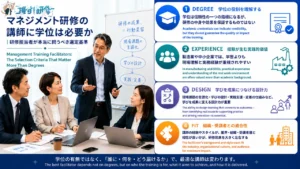
マネジメント研修の講師に学位は必要か|研修担当者が本当に問うべき選定基準 Management Training Facilitators: The Selection Criteria That Matter More Than Degrees
-
夏目漱石『こころ』に学ぶ——職場で「打ち明けられる関係と信頼」を育てる文学研修 Learning from Natsume Sōseki’s Kokoro: Literature-Based Training for Building Trust and Creating Space for Openness at Work
-
芥川龍之介『藪の中』に学ぶ——職場で「事実と解釈を見分ける力」を育てる文学研修 Learning from Akutagawa Ryūnosuke’s Yabu no Naka: Literature-Based Training for Distinguishing Facts from Interpretations at Work
-
森鷗外『最後の一句』に学ぶ——職場で「言うべきことを言える人」を育てる文学研修 Learning from Mori Ōgai’s Saigo no Ikku: A Literary Approach to Developing People Who Speak Up at Work
-
新入社員フォローアップ研修とは? What Is New Employee Follow-Up Training? Purpose, Themes, and Design for HR Professionals