マネジメント研修の講師に学位は必要か|研修担当者が本当に問うべき選定基準 Management Training Facilitators: The Selection Criteria That Matter More Than Degrees
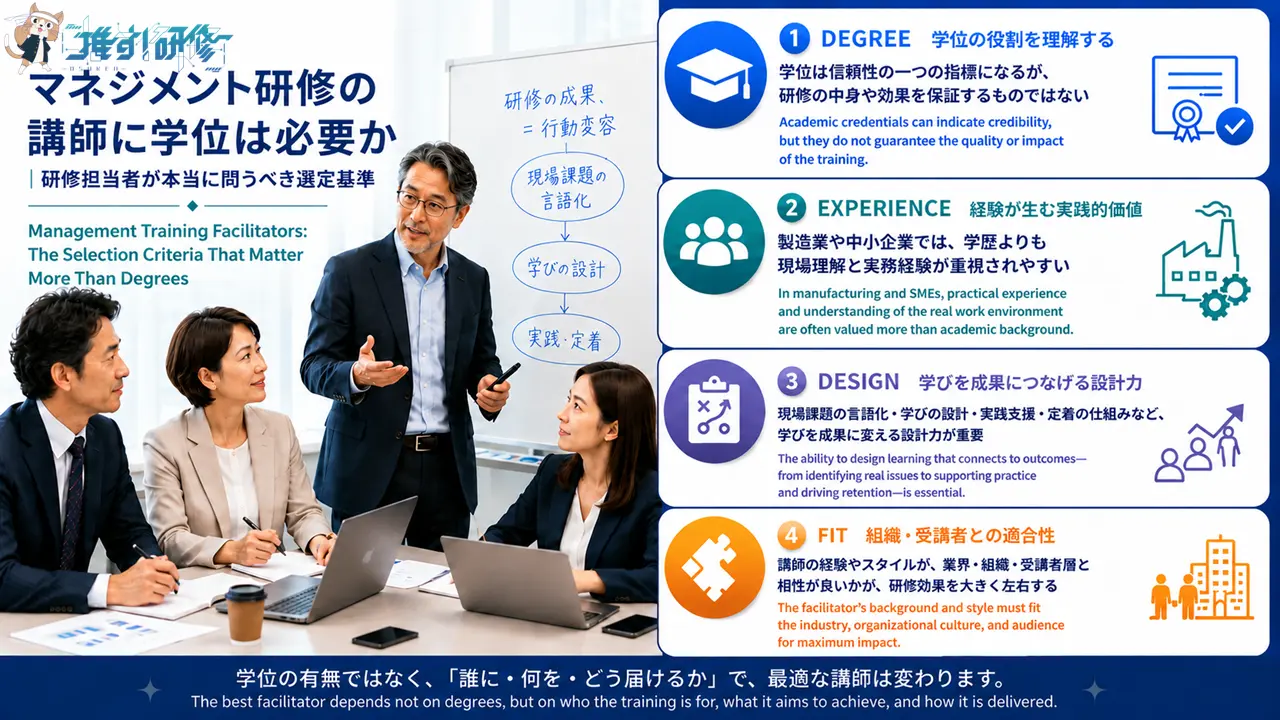
マネジメント研修の講師を選ぶとき、「MBAを持っているか」「博士号があるか」を最初の判断基準にする担当者は少なくありません。学位は目に見える指標であり、選定の根拠として説明しやすいという事情もあるでしょう。しかし、学位の有無は、講師が優れた研修をデリバーできるかどうかを、本当に保証するのでしょうか。本記事では、この問いを「必要か不要か」という二項対立で片づけるのではなく、研修担当者が実際の選定場面で役立てられる視点を一緒に考えていきたいと思います。
When selecting a facilitator for management training, it is not uncommon for the first question to be “do they hold an MBA?” or “do they have a doctoral degree?” Academic qualifications are a visible indicator, and they offer something concrete to point to when justifying a selection decision. But does a degree — or the absence of one — truly guarantee that a facilitator will deliver effective training? Rather than settling this question with a simple “necessary” or “unnecessary,” this article aims to explore, together with those who plan and commission training, a set of perspectives that can be genuinely useful in the selection process.
目次
学位が果たす役割を整理する What Academic Qualifications Actually Do
経営系の大学院修了資格、とりわけMBAは、体系的な知識の習得を示す指標として一定の機能を果たします。理論的な裏付けを持つ講師は、断片的な経験談に終始せず、汎用性のある枠組みで内容を構造化し、受講者が応用しやすい形で届けることができます。特に、グローバル展開を視野に入れた研修や、大企業の幹部層を対象としたプログラムでは、学位が対外的な信頼性として機能する場面があることも事実です。
A graduate-level business qualification — an MBA in particular — serves as a meaningful indicator that the holder has worked through a structured body of knowledge. A facilitator grounded in theory is less likely to rely on anecdotal experience alone, and more likely to frame content in ways that participants can apply broadly. It is also true that in programs targeting senior leadership in large organizations, or in training designed with a global dimension in mind, academic credentials can function as a form of external credibility.
ただし、学位はあくまで「入口での信頼性のショートカット」であり、研修の中身そのものを保証するものではありません。「体系的に学んだことがある」という証明と、「その知識を受講者に効果的に伝え、行動変容を引き出せる」ということは、別の話です。学位という静的な属性が、研修という動的な実践の質を自動的に担保してくれるわけではないことは、意識しておく価値があります。
At the same time, a degree is, in the end, a shortcut to credibility at the point of selection — not a guarantee of what happens inside the training room. The ability to demonstrate structured learning is one thing; the ability to convey that knowledge effectively and prompt genuine behavior change in participants is something else. It is worth keeping in mind that a static credential does not automatically assure the quality of what is, by nature, a dynamic and relational practice.
学位がなくても信頼性が成立するケース When Credibility Holds Without a Degree
現場経験が圧倒的に豊富な講師、あるいは独自のメソッドを体系化している講師は、学位がなくても十分な説得力を持ちます。特に日本国内の製造業や中小企業向けの研修では、学歴そのものよりも、「現場を知っているか」「自社の実情に即して話せるか」が重視される場面も少なくありません。管理職としての実務を長年にわたって経験し、組織の現実を深く知っている講師の言葉は、受講者にとって「自分たちの話をしてくれている」という感覚を生みやすく、それ自体が研修効果を支える大きな要素になります。
Facilitators with an extensive background of hands-on experience, or those who have systematized their own original methodology, can hold more than enough credibility without a formal degree. In training for manufacturing companies and small-to-medium enterprises within Japan in particular, practical questions such as whether the facilitator understands the shop floor and can speak to the company’s specific reality often carry more weight than academic background. When a facilitator has spent years in managerial practice and understands the realities of organizational life from the inside, participants are more likely to feel that “this person is talking about something real to us” — and that sense of relevance is itself a significant contributor to training effectiveness.
「誰に・何を・どう届けるか」で判断軸が変わる The Criteria Shift Depending on Context
学位の価値は絶対的なものではなく、文脈によって相対的に変わるものです。大企業の経営幹部向けプログラムや、グローバルな文脈での研修では、学位が信頼性の担保として機能しやすい。一方、現場のリーダー層や中小企業のマネジャーを対象とした研修では、講師の実務経験と研修設計力のほうが効果に直結しやすいことが多い。つまり、同じ「優れた講師」であっても、誰に・何を・どのように届けるかという文脈次第で、その強みが活きるかどうかは変わってきます。
The value of an academic qualification is not absolute — it shifts depending on context. For programs targeting senior executives in large organizations, or for training delivered in a global setting, credentials tend to function more readily as a form of assurance. For programs aimed at frontline leaders or managers in smaller companies, however, the facilitator’s practical experience and training design capability are more likely to translate directly into impact. In other words, even among facilitators who are genuinely skilled, whether their particular strengths come to life depends on who the training is for, what it is trying to accomplish, and how it is structured.
いかに高名な講師でも「文脈適合性」がある Even the Most Renowned Facilitators Need the Right Context
ここが、この問いを考えるうえで最も見落とされやすい論点かもしれません。学位の有無や実績の豊富さとは別次元の問題として、研修展開時の講師の年齢、出身業界、そしてクライアント企業の文化・組織風土との相性が、研修効果を大きく左右することがあります。どれほど評価の高い講師であっても、受講者層との世代的な距離が合わなければ場が温まらないことがある。出身業界が大きく異なれば、事例の解像度や職場観の前提にズレが生じやすい。特定のマネジメントスタイルを体現している講師が、それとは異なる組織文化を持つ企業に入ったとき、受講者との間に見えにくい摩擦が生まれることもあります。
This may be the point most easily overlooked when thinking through this question. Separate from the question of qualifications or depth of experience, the facilitator’s age at the time of delivery, their industry background, and the degree of fit with the client organization’s culture and working environment can significantly influence how effective the training turns out to be. Even a highly regarded facilitator may find it difficult to warm the room if the generational distance from participants is too wide. When industry backgrounds differ substantially, the assumptions behind examples and working norms can quietly diverge. And when a facilitator who embodies a particular management style enters an organization with a different culture, subtle friction can emerge between them and the participants — friction that is easy to miss until it is already shaping the room.
これは「講師の質」の問題ではなく、「マッチングの質」の問題です。優れた研修をデリバーできるかどうかは、講師単体の属性によって決まるのではなく、講師とクライアント・受講者の組み合わせによって決まる部分が大きい。このことは、研修担当者が講師を選定する際に、履歴書や実績リストだけを見ていては見えてこない視点です。
This is not a question of facilitator quality — it is a question of match quality. Whether excellent training gets delivered depends less on the attributes of the facilitator alone, and more on the combination of facilitator, client organization, and the people in the room. This is a dimension that is difficult to see when the selection process focuses only on a résumé or a list of past engagements.
研修担当者が本当に問うべき四つの視点 Four Questions Worth Asking in the Selection Process
ここまでの議論を踏まえると、研修担当者が講師選定の場面で本当に問うべきは、「この講師は学位を持っているか」ではないかもしれません。以下の四つの問いは、属性の確認ではなく、実際の研修効果に近づくための問いとして機能します。
Reflecting on everything discussed above, the most important question for a training coordinator to ask in the selection process may not be “does this facilitator hold a degree?” The four questions below are not about checking credentials — they are questions designed to get closer to what will actually make the training work.
「この講師は、自社の現場課題を言語化できるか」——業界や組織の文脈を読み取り、受講者が日々直面している問題を自分の言葉で語れるかどうか。これは、事前のヒアリングや打ち合わせの場で見えてくることが多いものです。
“Can this facilitator put our workplace challenges into words?” — whether they can read the context of the industry and organization, and speak to the problems participants face day to day in their own words. This is something that often becomes visible in an initial briefing or preliminary discussion.
「提供プログラムに再現性と定着の仕組みがあるか」——一回きりの「気づき体験」で終わらず、研修後の職場での実践へとつながる設計になっているかどうか。たとえば、事前課題・研修後の振り返りシート・上司との対話設計・フォローアップ面談などが用意されているかを確認することが、一つの手がかりになります。研修の効果は、研修室を出た後にこそ問われます。
“Does the program have a structure for reproducibility and retention?” — whether it is designed not as a one-time experience of insight, but as something that connects to practice back in the workplace after the session ends. It can be helpful to check, for example, whether the program includes pre-work assignments, post-training reflection sheets, structured dialogue with direct managers, or follow-up sessions. The real test of training effectiveness comes after participants leave the room.
「理論と実務の両方を行き来できるか」——理論だけでは現場に刺さらず、経験談だけでは汎用性がない。受講者の具体的な場面に理論を着地させ、かつ個別事例を普遍的な学びへと引き上げる往復運動ができるかどうかが、研修の深さを決めます。
“Can they move fluidly between theory and practice?” — theory alone rarely lands in the workplace, and personal experience alone lacks transferability. The depth of a training program is shaped by the facilitator’s ability to ground theory in participants’ concrete situations, and to lift individual cases into broader, applicable learning.
「自社の文化・業界・受講者層と噛み合うか」——これが、先に述べた「マッチングの質」に直結する問いです。試験的に短時間のセッションを依頼してみる、あるいは同業他社での登壇実績を確認してみるといった方法が、この問いに答えを出す手がかりになることがあります。
“Is there a genuine fit with our organization’s culture, industry, and participant profile?” — this question goes directly to the “match quality” discussed earlier. Commissioning a short trial session, or looking into the facilitator’s experience with organizations in the same sector, can sometimes provide useful early answers.
おわりに:「学位があるか」より「届くか」 Closing: Less “Do They Have a Degree?” More “Will It Land?”
学位は、講師を選ぶ際の重要な参考情報の一つです。ただし、それだけで研修の質を判断できるものではありません。大切なのは、学位という静的な属性ではなく、「この研修が、この受講者に、この組織の文脈の中で、本当に届くか」という動的な問いに正直に向き合うことではないでしょうか。
Academic qualifications are one reference point among others in selecting a facilitator — perhaps neither more nor less than that. What matters most may not be a static credential, but rather the willingness to honestly engage with a more dynamic question: “will this training genuinely reach these participants, in the context of this organization?”
研修への投資が、参加者の行動変容と組織の成長に確かにつながっていくために、担当者として問い続けられる視点を持つこと——それ自体が、研修設計の質を少しずつ高めていく力になると考えています。
By continuing to ask these questions, training coordinators can better connect training investment to real behavior change and organizational growth. That ongoing orientation, we believe, is what gradually raises the quality of how training is designed and commissioned.
- ITパスポート試験|データベースの基礎知識と頻出問題 IT Passport Exam | Database: Fundamentals and Frequently Tested Topics
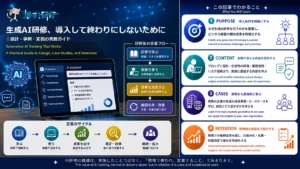
- 生成AI研修、導入して終わりにしないために|設計・事例・定着の実務ガイド Generative AI Training That Sticks: A Practical Guide to Design, Case Studies, and Retention
この記事を書いた人

関連記事
-
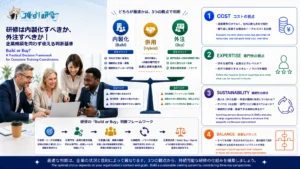
 研修は内製化すべきか、外注すべきか|企業規模を問わず使える判断基準 Build or Buy? A Practical Decision Framework for Corporate Training Coordinators
 -
生成AI×OJT|社員の「使い方」を現場で育てる育成設計の考え方 Generative AI and OJT: How to Build AI Competency Through On-the-Job Learning
-
生成AI研修、導入して終わりにしないために|設計・事例・定着の実務ガイド Generative AI Training That Sticks: A Practical Guide to Design, Case Studies, and Retention
-
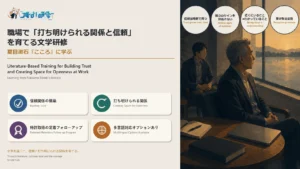
夏目漱石『こころ』に学ぶ——職場で「打ち明けられる関係と信頼」を育てる文学研修 Learning from Natsume Sōseki’s Kokoro: Literature-Based Training for Building Trust and Creating Space for Openness at Work
-
芥川龍之介『藪の中』に学ぶ——職場で「事実と解釈を見分ける力」を育てる文学研修 Learning from Akutagawa Ryūnosuke’s Yabu no Naka: Literature-Based Training for Distinguishing Facts from Interpretations at Work
-
森鷗外『最後の一句』に学ぶ——職場で「言うべきことを言える人」を育てる文学研修 Learning from Mori Ōgai’s Saigo no Ikku: A Literary Approach to Developing People Who Speak Up at Work
-
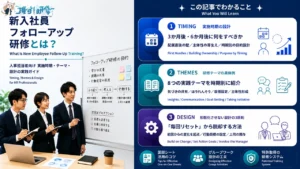
新入社員フォローアップ研修とは? What Is New Employee Follow-Up Training? Purpose, Themes, and Design for HR Professionals
-
研修報告書・レポートの目的と活用法 How to Make the Most of Training Reports: Purpose, Report Design, and Follow-Up