新入社員フォローアップ研修とは? What Is New Employee Follow-Up Training? Purpose, Themes, and Design for HR Professionals
「入社時の研修は充実しているのに、配属後の新入社員の様子がなかなか見えてこない」「フォローアップ研修を実施しているが、毎回似たような内容になっていて手応えが感じられない」——そのような悩みを抱えている人事教育担当者の方は少なくありません。
“Our onboarding program is solid, but once new hires are deployed, it becomes hard to see how they’re really doing.” “We run follow-up training, but it ends up feeling the same every year, and it’s hard to tell whether it’s making a difference.” These are concerns shared by many HR and training professionals.
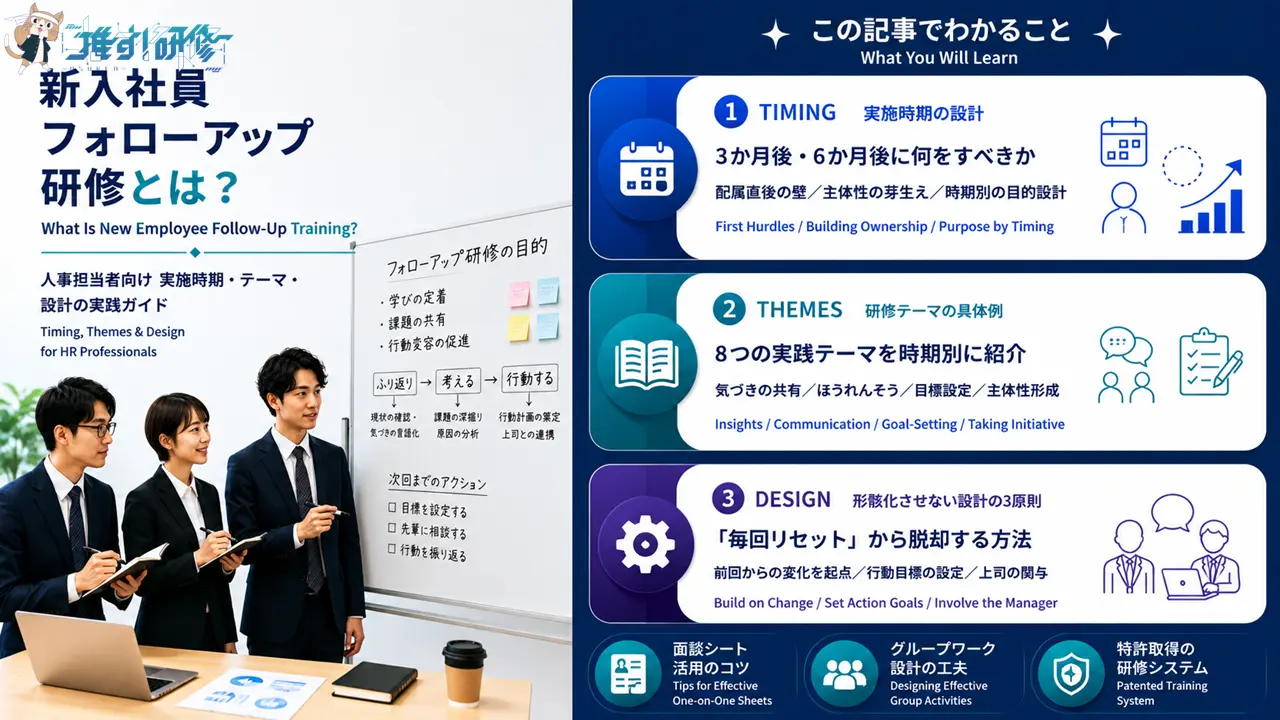
新入社員フォローアップ研修は、入社時研修の「続き」ではありません。配属後の職場で何を経験し、何に行き詰まり、どう成長しているかを確認しながら、次のステップへの後押しをするための機会です。本記事では、フォローアップ研修の目的・実施時期・形式・面談の進め方・形骸化を防ぐ工夫まで、実務に直結する視点から解説します。
New employee follow-up training is not simply a continuation of the initial onboarding program. It is an opportunity to check in on what new hires have experienced in their assigned departments, where they have run into difficulties, and how they are growing — and to give them the encouragement they need to take the next step. This article covers the purpose, timing, format, and structure of follow-up training, along with practical steps to prevent it from becoming a formality — all from a perspective grounded in real HR practice.
目次
フォローアップ研修はなぜ必要か Why Follow-Up Training Matters
入社時研修が終わり、新入社員がそれぞれの職場に配属されると、研修の場で学んだことが実際の業務の中でどこまで活きているかが問われるようになります。しかし現実には、研修で学んだことと、配属後の実務との間には大きなギャップが生じやすいことが知られています。
Once the initial training program ends and new employees are deployed to their departments, the real question becomes how much of what they learned is actually translating into their daily work. In practice, however, a significant gap tends to form between what was learned in training and what new hires encounter in the workplace.
株式会社リクルートマネジメントソリューションズが実施した「新人・若手の早期離職に関する実態調査」によると、入社後1年目に感じた「壁」の1位は「仕事に正解がなく、どうすればよいか分からないことが多かった」(27.1%)でした(出典:株式会社リクルートマネジメントソリューションズ「新人・若手の早期離職に関する実態調査」)。研修で「知識」は得ていても、実際の業務の中で「どう動けばよいか」の判断に迷う場面が多いことを示すこのデータは、配属後のフォローアップの必要性を裏付けるものといえます。
According to the “Survey on the Reality of Early Turnover Among New and Young Employees” conducted by Recruit Management Solutions Co., Ltd., the top “barrier” encountered in the first year after joining was “there are no clear right answers to my work, and I often don’t know what to do” (27.1%). (Source: Recruit Management Solutions Co., Ltd., “Survey on the Reality of Early Turnover Among New and Young Employees”) Even when new hires acquire knowledge through training, many find themselves uncertain about how to act in real workplace situations — a finding that underscores the importance of follow-up support after deployment.
また、フォローアップ研修には、もう一つ見逃せない役割があります。配属後の孤立感や不安を和らげ、早期離職を防ぐセーフティネットとしての機能です。マイナビ転職が実施した「新入社員の意識調査(2024)」によると、入社からわずか2か月の時点で「会社を辞めたいと思ったことがある」と回答した新入社員は33.4%にのぼります(出典:マイナビ転職「新入社員の意識調査(2024)」)。入社直後の早い段階から、不安や違和感を抱えている新入社員が少なくないことがわかります。フォローアップ研修は、同期同士が近況を共有し、自分だけが悩んでいるわけではないと気づく場にもなります。
Follow-up training also plays a second role that should not be overlooked: functioning as a safety net that eases the sense of isolation and anxiety that can develop after deployment, helping reduce early turnover. According to a survey of new employees conducted by Mynavi Tenshoku in 2024, as many as 33.4% of new hires said they had considered leaving the company — within just two months of joining. (Source: Mynavi Tenshoku, “New Employee Awareness Survey (2024)”) This finding tells us that a significant number of new hires are already carrying anxiety and a sense of unease from the very early stages of their employment. Follow-up training also creates a space where cohort members can share how things are going and realize they are not alone in their struggles.
実施時期の設計 When to Run Follow-Up Training
フォローアップ研修の効果は、実施時期の設計によって大きく変わります。「いつやるか」に意図を持つことで、各回の研修が異なるテーマと目的を持ち、受講者にとっても「今のタイミングで受けてよかった」と感じられる研修になります。
The impact of follow-up training depends significantly on when it is held. When the timing is intentional, each session carries a distinct theme and purpose — and participants are more likely to feel that it came at exactly the right moment.
入社3か月後:配属直後の壁を乗り越える 3 Months In: Getting Over the First Hurdles
配属から3か月が経過した頃は、初期の緊張感が和らぎ始める一方、「思っていた仕事と違う」「周囲に馴染めない」「何を聞いていいかわからない」といった最初の壁にぶつかりやすい時期です。この時期のフォローアップ研修は、受講者が現状を言語化し、自分の状況を客観視する機会として機能します。同期との対話を通じて「自分だけではない」という安心感を得ることも、この時期のフォローアップにとって重要な意味を持ちます。
Around the three-month mark, the initial sense of tension begins to ease — but this is also when new hires are prone to hitting their first real walls: “this isn’t what I expected,” “I don’t feel like I fit in,” or “I don’t even know what questions to ask.” Follow-up training at this stage functions as a space for participants to put their current situation into words and see it with some perspective. The reassurance of realizing, through dialogue with their cohort, that they are not alone in what they are experiencing is itself a meaningful outcome of follow-up at this point.
入社6か月後:主体性と目標意識を引き出す 6 Months In: Building Ownership and Purpose
入社から半年が経過すると、業務の基本的な流れは掴めてきたものの、「このままでいいのだろうか」「自分はこの仕事を通じて何を目指したいのか」という問いが生まれやすい時期です。この時期のフォローアップ研修では、半年間の振り返りと次の半年の目標設定を組み合わせることで、主体的なキャリア意識の芽生えを促すことができます。上司との面談と連動させることで、目標の具体性と現場への定着力がさらに高まります。
By the six-month point, new hires have typically grasped the basic flow of their work — but this is also a time when questions tend to surface: “Is this really where I want to be?” and “What do I actually want to achieve through this role?” Follow-up training at this stage can pair a structured reflection on the first six months with goal-setting for the next, helping new hires begin to develop a more self-directed sense of their career direction. Linking this session to a one-on-one meeting with their manager sharpens the specificity of those goals and strengthens their connection to the day-to-day work.
フォローアップ研修の形式 Formats for Follow-Up Training
フォローアップ研修の形式には、大きく分けて「グループワーク」と「個別面談」の2つがあります。それぞれの特性を理解したうえで、目的に応じて組み合わせて活用することが重要です。
Follow-up training generally takes one of two main forms: group work and one-on-one interviews. Understanding the strengths of each and combining them according to your objectives is key.
グループワーク Group Work
同期同士が集まり、配属後の経験や気づきを共有するグループワークは、「自分だけが悩んでいるわけではない」という安心感と、他者の経験から学ぶ機会の両方を提供できる形式です。ケーススタディや事例共有、ロールプレイングなどを組み合わせることで、座学だけでは得られない学びを引き出すことができます。一方で、グループワークは発言しやすい雰囲気づくりが成否を左右します。ファシリテーターの力量と、グループ内の心理的安全性の確保が、担当者として意識すべき重要な設計要素です。
Group work brings cohort members together to share their experiences and insights from their assigned departments. It is a format that can provide both the reassurance of realizing “I’m not the only one struggling” and the opportunity to learn from the experiences of peers. Combining case studies, experience-sharing, and role-play exercises can draw out learning that classroom instruction alone cannot. At the same time, the success of group work hinges on creating an atmosphere where participants feel comfortable speaking up. Psychological safety and high-quality facilitation are design elements that deserve careful attention.
個別面談(面談シートの活用) One-on-One Interviews (Using Interview Sheets)
個別面談は、グループワークでは話しにくい悩みや本音を引き出すために有効な形式です。面談の質を高めるうえで、事前に「面談シート」を記入してもらうことが大きな効果を発揮します。面談シートに事前に記入することで、受講者は自分の現状や課題を整理して面談に臨むことができ、面談者(上司・人事担当者)は事前に内容を把握したうえで、より深い対話につなげることができます。
One-on-one interviews are effective for drawing out concerns and honest perspectives that may be difficult to share in a group setting. To raise the quality of these conversations, having participants complete an interview sheet in advance makes a significant difference. Filling in the sheet beforehand helps participants organize their thoughts about their current situation and challenges before the meeting, while giving the interviewer (manager or HR coordinator) advance insight into the content — enabling a deeper and more meaningful dialogue.
面談シートに含めると効果的な項目としては、「入社からこれまでを振り返って、印象に残っていること」「現在の業務でうまくいっていること・難しいと感じていること」「上司や先輩に相談したいこと」「次の目標として取り組みたいこと」などが挙げられます。設問の設計次第で、面談の深度は大きく変わります。
Items that tend to be effective on an interview sheet include: “a memorable moment since joining”; “something going well in your current work, and something you find challenging”; “something you would like to discuss with your manager or a senior colleague”; and “something you want to work on as your next goal.” The depth of the interview changes significantly depending on how the questions are designed.
実施時期別 研修テーマの具体例 Sample Training Themes by Timing
フォローアップ研修の中身を考えるとき、「何をテーマにすればよいか」という問いは、多くの担当者が最初に直面する悩みです。以下に、実施時期別の研修テーマの具体例を挙げます。自社の状況や受講者の課題に合わせて、組み合わせてご活用ください。
One of the first challenges many training coordinators face when planning follow-up training is: “What should we actually cover?” Below are specific theme examples organized by timing. Feel free to combine and adapt them to your organization’s situation and the challenges your participants are facing.
入社3か月後のテーマ例 Themes for the 3-Month Session
①「気づき」の共有ワーク 「研修で学んだことと、職場の現実のギャップ」をグループで言語化するワークです。受講者が感じている「思っていたのと違う」という体験を安全な場で共有することで、孤立感を和らげ、同期間の相互理解を深めます。ファシリテーターは批判や評価をせず、受講者の気づきを引き出す役割に徹することが重要です。
① “What I’ve noticed” sharing workshop — A group activity in which participants put into words the gap between what they learned in training and the reality they have encountered at work. Sharing the experience of “this isn’t quite what I expected” in a safe setting eases the sense of isolation and deepens mutual understanding within the cohort. The facilitator’s role is to draw out participants’ insights without judgment or evaluation.
②報告・連絡・相談の振り返りとロールプレイ 入社時研修で学んだ「ほうれんそう」を、実際の職場場面に即して振り返ります。「どのタイミングで報告すべきだったか」「相談のしにくさを感じた場面はあったか」という実体験を素材に、ロールプレイを交えながら実践力を高めます。座学だけでは定着しにくい行動スキルを、体験を通じて再定着させることが狙いです。
② Reviewing reporting and communication — with role-play — A session that revisits the reporting, communicating, and consulting skills covered in onboarding training, this time grounded in real workplace experiences. Using actual situations as material — “when should I have reported sooner?” or “was there a moment when you found it hard to ask for help?” — role-play exercises help build practical capability. The goal is to reinforce behavioral skills through experience, since these are difficult to embed through instruction alone.
③タスク管理と優先順位のつけ方 複数の業務が重なる中でどう優先順位をつけるか、上司への確認のタイミングをどう判断するかなど、業務の進め方に関する実践的なスキルを扱います。実際に直面した「どうすればよかったか」という場面を素材に、具体的な判断軸を一緒に整理します。
③ Task management and prioritization — This session addresses practical skills for managing work: how to set priorities when multiple tasks overlap, and how to judge when to check in with a manager. Using real situations participants have encountered — “looking back, what would have been a better approach?” — the session works together to develop concrete frameworks for decision-making.
④モチベーションのセルフマネジメント 入社後3か月は「中だるみ」が起きやすい時期でもあります。「やる気が出ない日の自分への向き合い方」「小さな達成感を積み重ねる習慣」など、自分自身のモチベーションを管理するための視点を扱います。精神論ではなく、行動変容に結びつく具体的なアプローチを提供することが大切です。
④ Self-managing motivation — The three-month mark is a time when motivation can dip. This session explores how to deal with low-energy days, and how to build the habit of accumulating small wins. The aim is to offer specific, behaviorally grounded approaches — not motivational messaging — that give participants practical tools for managing their own engagement.
入社6か月後のテーマ例 Themes for the 6-Month Session
①半年間の自己評価と次の目標設定 入社から半年を振り返り、「できるようになったこと」「まだ課題として残っていること」を自己評価したうえで、次の半年の目標を言語化するワークです。自己効力感(「自分はできる」という感覚)を高めながら、主体的なキャリア意識の芽生えを促します。面談シートとセットで運用することで、上司との目標共有にもスムーズにつながります。
① Six-month self-evaluation and goal-setting — Participants look back across the first six months, evaluate “what I have become able to do” and “what I still find challenging,” and then put their goals for the next six months into words. The session builds self-efficacy — the sense of “I can do this” — while encouraging the first signs of proactive career awareness. Running this alongside an interview sheet creates a natural pathway to sharing goals with the manager.
②「新鮮な視点」を活かした業務改善提案 入社半年の新入社員は、業務の基本は理解しつつも、まだ「それが当たり前」という固定観念に縛られていない貴重な時期です。「職場で気になっていること、変えられたらいいと思っていること」をグループで出し合い、改善提案としてまとめるワークは、当事者意識と主体性を引き出す効果があります。組織への貢献感が、定着率の向上にもつながります。
② Using a “fresh perspective” to propose workplace improvements — New hires at the six-month mark understand the basics of their work but have not yet become so accustomed to “how things are done” that they take it for granted. A workshop in which participants share things they have noticed in the workplace — “something I think could be better” — and develop them into improvement proposals is effective at drawing out a sense of ownership and agency. The feeling of contributing to the organization also supports retention.
③ストレスマネジメントとSOSの出し方 仕事に慣れてくる一方で、責任や業務量が増し、知らず知らずのうちに心身に負荷がかかることがあります。自分のストレスサインに気づく方法、上司や相談窓口への相談のしかたなど、セルフケアの基本を扱います。「相談することは弱さではない」というメッセージを、安心して受け取れる場づくりとセットで設計することが重要です。
③ Stress management and knowing when to ask for help — As new hires grow more comfortable in their roles, responsibilities and workload tend to increase, sometimes placing strain on their mental and physical well-being without them fully noticing. This session covers the basics of self-care: recognizing one’s own stress signals, and how to approach a manager or support resource. It is important to design this session alongside a setting where participants feel genuinely safe receiving the message that “asking for help is not a sign of weakness.”
④「受け身」から「主体性」へのシフト 入社後半年が経ち、業務への慣れが出てくると、「指示を待つ」姿勢が定着しやすくなります。このテーマでは、「自分から動く」とはどういうことかを具体的に掘り下げます。指示待ちになりやすい心理的背景を理解したうえで、自分なりの主体的な行動パターンを見つけるワークを通じて、次のステージへの意識転換を促します。
④ Shifting from “waiting to be told” to taking initiative — As new hires settle into their roles after six months, a pattern of waiting for direction can quietly set in. This session digs concretely into what it means to “take the first step yourself.” By first understanding the psychological reasons behind reactive behaviour, and then working through activities to identify personally meaningful patterns of initiative, the session encourages a conscious shift in mindset toward the next stage of growth.
形骸化させないために Keeping Follow-Up Training Meaningful
フォローアップ研修に関して、受講者側からしばしば聞かれる声があります。「グループで近況報告をするだけで、毎回同じ内容になっている」「参加しても業務に追われていて、研修の内容が現場で活かされていない」——こうした声が出るとき、研修が「イベントとして実施されること」自体が目的化してしまっている可能性があります。
Participants in follow-up training sometimes share experiences like these: “It’s just a round of updates every time — the content feels the same.” “Even when I attend, I’m so caught up in work that nothing from the session makes it back to the job.” When these voices emerge, it may be a sign that the training has become an end in itself — something run for the sake of running it.
形骸化を防ぐうえで、担当者として意識したいポイントが3つあります。
There are three points worth keeping in mind to prevent follow-up training from losing its meaning.
①前回からの変化を起点にする。「前回の研修で話したこと、その後どうでしたか?」という問いから始めることで、研修が「毎回リセットされるイベント」ではなく、「継続的な成長の記録」として機能するようになります。面談シートや研修報告書を活用して、前回の内容を参照しながら今回の場を設計することが重要です。
① Start from change since last time. Opening with “How did things go after what we discussed last time?” transforms the training from an event that resets each time into a continuous record of growth. Using interview sheets and training reports to reference what was discussed previously is an important part of designing each session.
②「具体的な行動目標」を設定して研修を終える。「次の研修までに、職場でやってみること」を一つ具体的に言語化して研修を締めくくることで、受講者は日常業務の中に研修の学びを持ち帰ることができます。目標が漠然としていると、研修は「参加した体験」で終わってしまいます。
② Close each session with a specific action goal. Ending the session with each participant articulating one concrete thing they will try in the workplace before the next session gives them something to carry back into their daily work. When goals are vague, training tends to end as an experience attended rather than something applied.
③所属職場の上司を巻き込む。フォローアップ研修で新入社員が設定した目標や気づきを、上司が把握し日常の業務指導に活かすことで、研修の効果は大きく変わります。研修の場だけで完結させるのではなく、上司への情報共有の仕組みを設計段階から組み込んでおくことが大切です。
③ Bring the direct manager into the process. When managers are aware of the goals and insights that new hires have set in follow-up training — and can weave that awareness into their day-to-day coaching — the impact of the training changes considerably. Rather than letting the session exist in isolation, building in a mechanism for sharing information with managers from the design stage is essential.
フォローアップ研修を「仕組み」として設計する Designing Follow-Up Training as a System
フォローアップ研修を単発のイベントとして捉えるのではなく、入社からの成長を継続的に支援する「仕組み」として設計することが、中長期的な定着率と人材育成の質を高めるうえで重要です。
Rather than treating follow-up training as a one-off event, designing it as a system that continuously supports new employees’ growth from the time they join is what makes the difference in building retention and development quality over the medium to long term.
具体的には、入社時研修→3か月後フォローアップ→6か月後フォローアップ…というサイクルを設計し、各回の研修が前回の学びと次のステップを意識した一貫した流れになるよう整えることが理想的です。また、受講者のスコアや達成状況に応じてフォローアップの内容やタイミングを変えるアプローチも、個別対応の精度を高めるうえで有効です。
In practical terms, this means designing a cycle — initial training → three-month follow-up → six-month follow-up — and structuring each session so that it builds consciously on what came before while pointing toward what comes next. Adjusting the content and timing of follow-up based on each participant’s progress and performance is also a valuable approach for improving the quality of individual support.
オスケン株式会社では、研修後のフォローアップを体系的に支援する独自のプログラム(特許第7578861号)を提供しています。4つのアスペクトと7つのフェーズで構成されたフォローアップスケジュールを通じて、受講者の達成状況に応じた継続的な支援を実現します。フォローアップ研修の設計・運営にお悩みの企業のご担当者様は、ぜひお気軽にお問い合わせください。
Osuken Inc. offers a proprietary program (Patent No. 7578861) providing systematic support for post-training follow-up. Through a follow-up schedule structured around four aspects and seven phases, the program delivers continuous, personalized support tailored to each participant’s progress. If you are a training coordinator looking for guidance on designing or running follow-up training, we welcome your enquiry.
まとめ——フォローアップ研修は「育成の仕上げ」ではなく「育成の入口」 Summary: Follow-Up Training Is Not the Finish Line — It Is the Starting Gate
新入社員フォローアップ研修は、入社時研修の締めくくりではありません。配属後の現場で何が起きているかを把握し、一人ひとりの成長を継続的に支えていくための、育成の入口です。
New employee follow-up training is not the conclusion of the onboarding process. It is the entry point into a continuous process of understanding what is actually happening in each new hire’s workplace and supporting their individual growth over time.
実施時期を意図的に設計し、グループワークと個別面談を目的に応じて組み合わせ、上司を巻き込んだフォローアップの仕組みを整える。この一連の設計が整ったとき、フォローアップ研修は「毎年やっているもの」ではなく、「新入社員の定着と成長を組織として支える仕組み」として機能し始めます。
Designing the timing with intention, combining group work and individual interviews according to your objectives, and building in a follow-up structure that involves direct managers — when these design elements come together, follow-up training stops being “something we do every year” and becomes an organizational system for supporting the retention and growth of new employees.
- 研修報告書・レポートの目的と活用法 How to Make the Most of Training Reports: Purpose, Report Design, and Follow-Up
- QC3|相関係数の計算方法・性質・使用上の注意点をわかりやすく解説 QC Level 3 | Correlation Coefficient: Calculation, Properties, and Key Cautions Explained
この記事を書いた人

関連記事
-
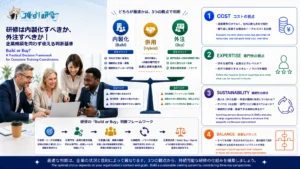
 研修は内製化すべきか、外注すべきか|企業規模を問わず使える判断基準 Build or Buy? A Practical Decision Framework for Corporate Training Coordinators
 -
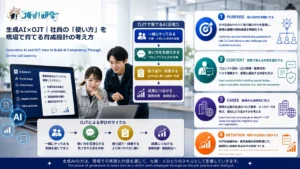
生成AI×OJT|社員の「使い方」を現場で育てる育成設計の考え方 Generative AI and OJT: How to Build AI Competency Through On-the-Job Learning
-
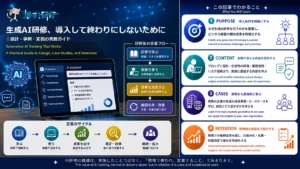
生成AI研修、導入して終わりにしないために|設計・事例・定着の実務ガイド Generative AI Training That Sticks: A Practical Guide to Design, Case Studies, and Retention
-
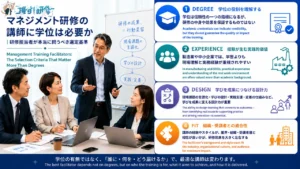
マネジメント研修の講師に学位は必要か|研修担当者が本当に問うべき選定基準 Management Training Facilitators: The Selection Criteria That Matter More Than Degrees
-
夏目漱石『こころ』に学ぶ——職場で「打ち明けられる関係と信頼」を育てる文学研修 Learning from Natsume Sōseki’s Kokoro: Literature-Based Training for Building Trust and Creating Space for Openness at Work
-
芥川龍之介『藪の中』に学ぶ——職場で「事実と解釈を見分ける力」を育てる文学研修 Learning from Akutagawa Ryūnosuke’s Yabu no Naka: Literature-Based Training for Distinguishing Facts from Interpretations at Work
-
森鷗外『最後の一句』に学ぶ——職場で「言うべきことを言える人」を育てる文学研修 Learning from Mori Ōgai’s Saigo no Ikku: A Literary Approach to Developing People Who Speak Up at Work
-
研修報告書・レポートの目的と活用法 How to Make the Most of Training Reports: Purpose, Report Design, and Follow-Up