危険物乙4で覚えるべき「類別」とは?第1類〜第6類の特徴をわかりやすく解説 Hazardous Material Classification for the Class B Exam: Key Characteristics of Groups 1–6 Explained
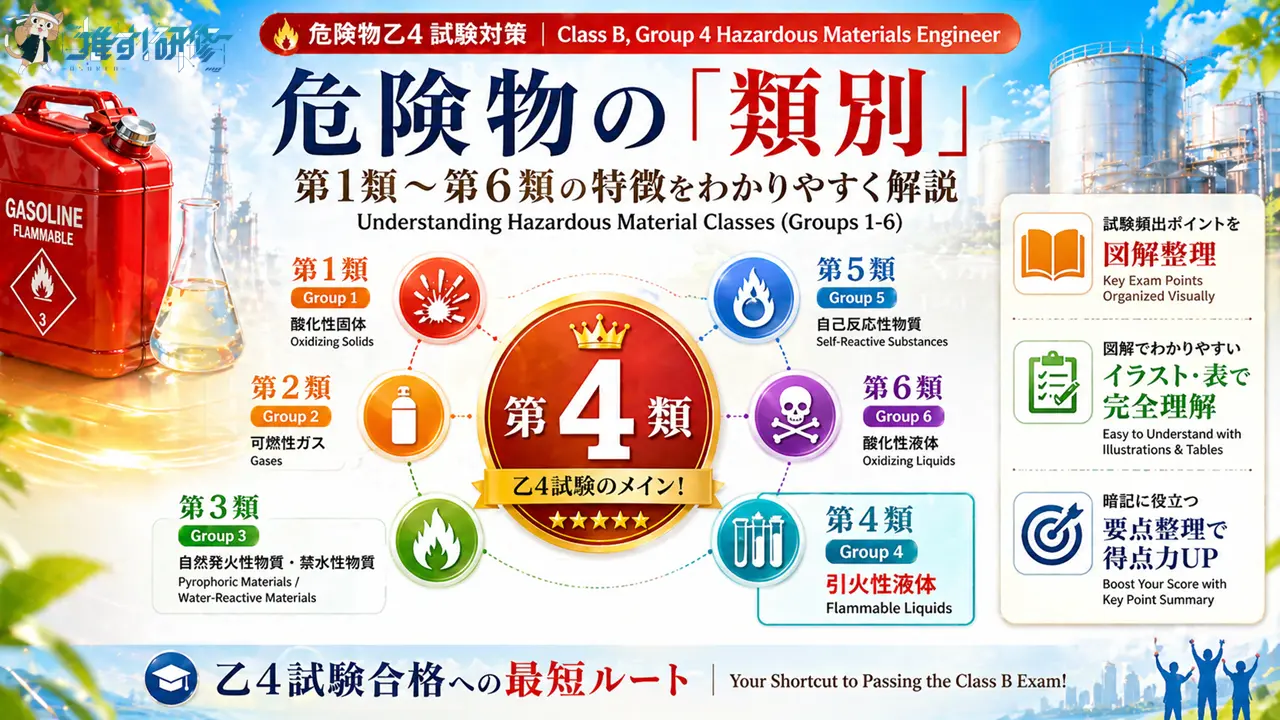
危険物取扱者乙種第4類、通称「乙4」の試験を受けるにあたって、避けて通れないのが「類別」の理解です。危険物は第1類から第6類まで、性質ごとに分類されています。乙4試験では第4類の引火性液体が中心となりますが、他の類についても出題されるため、全体像を把握しておくことが合格への近道となります。
One topic that cannot be avoided when preparing for the Class B, Group 4 Hazardous Materials Engineer exam is understanding the classification system. Hazardous materials are divided into Groups 1 through 6 according to their properties. While the exam focuses primarily on Group 4 flammable liquids, questions covering other groups also appear, making it essential to grasp the overall picture.
この記事では、危険物の類別について初心者の方にもわかりやすく解説していきます。それぞれの類の特徴や覚え方のコツも紹介しますので、試験勉強の参考にしてください。
This article explains the hazardous materials classification system in a way that is easy to understand even for beginners. Tips for remembering the characteristics of each group are also provided, so please use this as a reference for your exam preparation.
目次
危険物の「類別」とは?乙4試験で必ず出る基礎知識 What Is Hazardous Material “Classification”? | Essential Knowledge for the Class B Exam
危険物乙4の試験勉強を始めると、最初に登場するのが「類別」という概念です。聞き慣れない言葉かもしれませんが、危険物を安全に取り扱うための基本となる分類方法であり、試験でも頻出のテーマとなっています。まずは類別の基本的な考え方と、試験での出題傾向を確認していきましょう。
One of the first concepts you will encounter when you begin studying for the Class B, Group 4 Hazardous Materials Engineer exam is classification. It may be an unfamiliar term, but it is the fundamental system for handling hazardous materials safely and is one of the most frequently tested topics in the exam. Let us start by confirming the basic concept of classification and the exam question trends.
類別は危険物を性質ごとに分類したもの Hazardous Materials Are Classified by Their Properties
危険物と一口に言っても、その性質はさまざまです。燃えやすいもの、爆発しやすいもの、水と反応して危険なガスを出すものなど、取り扱いの注意点は物質によって大きく異なります。そこで消防法では、危険物を性質の似たものごとにグループ分けしています。これが「類別」と呼ばれる分類方法です。
Hazardous materials vary widely in their properties. Some ignite easily, some are prone to explosion, and some react with water to release dangerous gases — the precautions required differ greatly depending on the substance. The Fire Services Act therefore groups hazardous materials by shared properties. This grouping system is what is known as classification.
類別は第1類から第6類までの6つに分かれており、それぞれ固有の特徴を持っています。たとえば第1類は「酸化性固体」、第4類は「引火性液体」というように、類ごとに共通する性質があるのです。この分類を理解しておくと、個々の危険物の特徴も覚えやすくなります。
The classification system is divided into six groups, from Group 1 to Group 6, each with its own distinct characteristics. For example, Group 1 is “oxidizing solids” and Group 4 is “flammable liquids” — each group shares a common set of properties. Understanding this classification makes it considerably easier to memorize the characteristics of individual hazardous materials.
乙4試験では第4類が中心だが、他の類も出題される Group 4 Is the Focus of the Exam, but Other Groups Also Appear
乙種第4類の試験では、その名のとおり第4類の引火性液体が主な出題範囲となっています。ガソリンや灯油、軽油といった身近な物質が第4類に含まれており、これらの性質や取り扱い方法を深く学ぶことが求められます。
As its name suggests, the Class B, Group 4 exam focuses primarily on Group 4 flammable liquids. Familiar substances such as gasoline, kerosene, and diesel fall under Group 4, and a thorough understanding of their properties and handling methods is required.
しかし、試験では第4類以外の類についても問われることがあります。「第1類の酸化性固体と第4類の引火性液体を一緒に保管してはいけない理由は?」といった形で、他の類との関係性を問う問題が出題されるのです。そのため、第4類だけでなく、第1類から第6類までの全体像を把握しておくことが大切になります。
However, the exam also tests knowledge of groups other than Group 4. Questions examining relationships between groups — such as “Why must Group 1 oxidizing solids not be stored together with Group 4 flammable liquids?” — do appear. It is therefore important to have an overall understanding of all groups, from Group 1 through Group 6, not just Group 4.
第1類〜第6類の特徴を一覧で理解しよう Understanding the Characteristics of Groups 1–6 at a Glance
ここからは、第1類から第6類までの特徴を順番に見ていきます。それぞれの類には固有の性質があり、取り扱い上の注意点も異なります。各類の特徴をしっかりと理解しておけば、試験問題にも自信を持って対応できるようになるでしょう。以下の6つの類について、順番に解説していきます。
In this section, we will go through the characteristics of Groups 1 to 6 in order. Each group has its own distinct properties and requires different precautions during handling. A solid understanding of each group’s characteristics will allow you to approach exam questions with confidence. The following six groups are explained in sequence.
- 第1類 酸化性固体
Group 1 — Oxidizing Solids - 第2類 可燃性固体
Group 2 — Flammable Solids - 第3類 自然発火性物質及び禁水性物質
Group 3 — Spontaneously Combustible and Water-Reactive Substances - 第4類 引火性液体
Group 4 — Flammable Liquids - 第5類 自己反応性物質
Group 5 — Self-Reactive Substances - 第6類 酸化性液体
Group 6 — Oxidizing Liquids
第1類 酸化性固体|それ自体は燃えないが、他の物質を燃やす Group 1 | Oxidizing Solids | Non-Combustible but Promotes Combustion in Other Substances
第1類に分類されるのは「酸化性固体」と呼ばれる物質です。代表的なものとして、塩素酸塩類、過塩素酸塩類、過マンガン酸塩類、硝酸塩類などがあります。これらの物質には共通した特徴があり、それを理解することが試験対策の第一歩となります。
Group 1 consists of substances known as oxidizing solids. Representative examples include chlorates, perchlorates, permanganates, and nitrates. These substances share common characteristics, and understanding them is the first step in exam preparation.
第1類の最大の特徴は、物質そのものは燃えないという点です。一見すると安全そうに思えますが、実はそうではありません。第1類の物質は、他の物質を強く酸化させる性質を持っています。酸化とは、簡単に言えば「燃焼を助ける働き」のこと。つまり、可燃物と混ぜて衝撃や熱、摩擦を加えると、激しい燃焼が起こる危険性があるのです。
The defining characteristic of Group 1 is that the substances themselves do not burn. This might seem to make them safe, but that is not the case. Group 1 substances have a strong oxidizing effect on other materials. Oxidation, simply put, is the action of promoting combustion. When mixed with flammable materials and subjected to shock, heat, or friction, there is a risk of intense combustion occurring.
第2類 可燃性固体|火がつきやすく、低温でも引火する Group 2 | Flammable Solids | Highly Ignitable and Flammable Even at Low Temperatures
第2類は「可燃性固体」に分類される物質です。硫化りん、赤りん、硫黄、金属粉、マグネシウム、鉄粉、引火性固体などが含まれます。名前のとおり、火がつきやすい固体の物質がこのグループに属しています。
Group 2 consists of substances classified as flammable solids. This group includes phosphorus sulfide, red phosphorus, sulfur, metal powders, magnesium, iron powder, and flammable solids. As the name suggests, this group comprises solid substances that ignite readily.
第2類の特徴は、火炎で着火しやすいこと、または比較的低温(40℃未満)で引火しやすいことです。第1類とは対照的に、第2類の物質はそれ自体が燃える性質を持っています。特に金属粉やマグネシウムは、火がつくと水をかけても消えにくく、むしろ危険な場合もあるため、消火方法にも注意が必要となります。
The characteristics of Group 2 are that the substances ignite easily when exposed to a flame, or are flammable at relatively low temperatures (below 40°C). In contrast to Group 1, Group 2 substances are combustible in themselves. Metal powders and magnesium in particular are difficult to extinguish with water once ignited — water can actually make the situation more dangerous — so the extinguishing method requires careful attention.
第3類 自然発火性物質及び禁水性物質|空気や水に触れると危険 Group 3 | Spontaneously Combustible and Water-Reactive Substances | Dangerous on Contact with Air or Water
第3類は少し長い名前で「自然発火性物質及び禁水性物質」と呼ばれています。カリウム、ナトリウム、アルキルリチウム、黄りんなどが代表的な物質です。この類の物質は、特に取り扱いに注意が必要なものばかりとなっています。
Group 3 has the somewhat lengthy name “spontaneously combustible and water-reactive substances.” Representative substances include potassium, sodium, alkyllithium, and yellow phosphorus. Every substance in this group requires particularly careful handling.
第3類の特徴は2つあります。1つ目は、空気にさらされると自然に発火するおそれがあること。2つ目は、水と接触すると発火したり、可燃性のガスを発生させたりすることです。つまり、空気も水も避けなければならない、非常に扱いにくい物質なのです。保管や運搬の際には、空気や水との接触を防ぐための特別な対策が求められます。
Group 3 has two key characteristics. The first is that the substances may ignite spontaneously when exposed to air. The second is that contact with water can cause ignition or the generation of flammable gases. In other words, these are extremely difficult substances to handle, as both air and water must be avoided. Special measures to prevent contact with air and water are required during storage and transport.
第4類 引火性液体|乙4試験のメインテーマ Group 4 | Flammable Liquids | The Main Focus of the Class B Exam
第4類は「引火性液体」であり、乙4試験の中心となる類です。特殊引火物、第1〜4石油類、アルコール類、動植物油類といった区分があり、ガソリン、灯油、軽油、重油などの身近な物質が含まれています。
Group 4 consists of flammable liquids and is the central group in the Class B exam. It is divided into subcategories including special flammable substances, Category 1–4 petroleum products, alcohols, and animal and vegetable oils, and includes familiar substances such as gasoline, kerosene, diesel, and heavy oil.
第4類の特徴は、引火性があり、蒸気を発生させて引火や爆発のおそれがあることです。液体そのものが燃えるわけではなく、液体から発生した蒸気が空気と混ざり、火源があると引火します。この仕組みを理解することが、第4類の問題を解くうえで非常に重要となります。ガソリンスタンドや工場など、日常生活でも接する機会が多い物質だからこそ、正しい知識が求められるのです。
The characteristic of Group 4 is that the substances are flammable and generate vapors, creating a risk of ignition or explosion. It is not the liquid itself that burns — rather, the vapor produced by the liquid mixes with air and ignites when exposed to an ignition source. Understanding this mechanism is critically important for answering Group 4 questions. Precisely because these are substances encountered frequently in daily life — at gas stations and in factories — accurate knowledge is essential.
第5類 自己反応性物質|加熱で爆発的に反応する Group 5 | Self-Reactive Substances | React Explosively When Heated
第5類は「自己反応性物質」と呼ばれるグループです。有機過酸化物、ニトロ化合物、硝酸エステル類などが該当します。この類の物質は、外部からの酸素供給がなくても反応が進むという特殊な性質を持っています。
Group 5 consists of substances known as self-reactive substances. Organic peroxides, nitro compounds, and nitrate esters fall into this category. These substances have the special property of being able to undergo reactions without any external supply of oxygen.
第5類の特徴は、比較的低温で加熱や分解などの自己反応を起こし、爆発や多量の熱を発生させること。または爆発的に反応が進行することです。自分自身の中に酸素を含んでいるため、一度反応が始まると止めることが難しく、非常に危険な物質といえます。取り扱いには細心の注意が必要となります。
The characteristics of Group 5 are that the substances undergo self-reactive processes such as heating or decomposition at relatively low temperatures, generating explosions or large amounts of heat, or that reactions proceed explosively. Because these substances contain oxygen within themselves, once a reaction begins it is very difficult to stop, making them extremely hazardous. The utmost care is required during handling.
第6類 酸化性液体|不燃性だが、可燃物と混ぜると危険 Group 6 | Oxidizing Liquids | Non-Combustible but Dangerous When Mixed with Flammable Materials
第6類は「酸化性液体」に分類されます。過塩素酸、過酸化水素、硝酸などが代表的な物質です。第1類の「酸化性固体」と似た性質を持っていますが、こちらは液体という点が異なります。
Group 6 consists of substances classified as oxidizing liquids. Representative substances include perchloric acid, hydrogen peroxide, and nitric acid. These share similar properties with the Group 1 oxidizing solids, but differ in that they are liquids.
第6類の特徴は、物質そのものは不燃性ですが、他の物質を強く酸化させる性質を持っていることです。可燃物と混ぜると燃焼を促進させてしまいます。第1類と同様に、それ自体は燃えなくても、他の物質と組み合わさることで大きな危険が生じる可能性があるのです。保管の際は、可燃物との接触を避けることが重要となります。
The key characteristic of Group 6 is that the substances themselves are non-combustible, but they have a strong oxidizing effect on other materials. When mixed with flammable substances, they accelerate combustion. As with Group 1, although they do not burn on their own, combining them with other substances can create significant hazards. Avoiding contact with flammable materials during storage is essential.
試験に出やすいポイントと覚え方のコツ Frequently Tested Points and Tips for Memorization
第1類から第6類までの特徴を見てきましたが、これだけの情報を一度に暗記するのは大変です。しかし、試験に合格するためには、各類の特徴をしっかりと頭に入れておく必要があります。ここでは、効率よく覚えるためのコツをご紹介します。
We have now looked at the characteristics of Groups 1 through 6, but memorizing this much information all at once is a challenge. However, passing the exam requires a solid grasp of each group’s characteristics. Here are some tips for memorizing them efficiently.
「燃えるか、燃えないか」で分類を整理する Organize the Groups by “Combustible or Non-Combustible”
6つの類を覚えるときに役立つのが、「その物質自体が燃えるかどうか」という視点です。この観点で整理すると、類別の特徴がすっきりと頭に入ってきます。
A useful perspective when memorizing the six groups is to ask “does the substance itself burn?” Organizing the groups from this angle makes the classification characteristics much easier to retain.
まず、物質自体が燃えない類は第1類と第6類です。第1類は酸化性固体、第6類は酸化性液体で、どちらも「酸化性」という共通点があります。これらは自分自身は燃えませんが、他の物質の燃焼を助ける働きを持っています。一方、第2類、第3類、第4類、第5類は、それ自体が燃える性質を持つ物質です。このように「燃える・燃えない」で大きく2つに分けると、覚えやすくなります。
The groups whose substances do not burn are Groups 1 and 6. Group 1 consists of oxidizing solids and Group 6 of oxidizing liquids — both share the common property of being “oxidizing.” These substances do not burn on their own, but they promote combustion in other materials. Groups 2, 3, 4, and 5, on the other hand, consist of substances that are themselves combustible. Dividing the groups broadly into “combustible” and “non-combustible” makes memorization considerably easier.
語呂合わせで類別の特徴を暗記する方法 Using Memory Aids to Memorize the Classification Characteristics
試験勉強でよく使われるのが語呂合わせです。第1類から第6類までの性質を覚えるための語呂合わせとして、「酸固(さんこ)、可固(かこ)、自禁(じきん)、引液(いんえき)、自己(じこ)、酸液(さんえき)」というものがあります。
A popular study technique is the use of Japanese memory aids (mnemonic devices). One commonly used mnemonic for memorizing the properties of Groups 1 through 6 is “Sanko, Kako, Jikin, In’eki, Jiko, San’eki” (酸固・可固・自禁・引液・自己・酸液).
これは各類の性質の頭文字を並べたもので、「酸化性固体、可燃性固体、自然発火性及び禁水性、引火性液体、自己反応性、酸化性液体」の順番を表しています。最初は覚えにくいかもしれませんが、何度も口に出して繰り返すことで、自然と身についてきます。試験本番で類別を思い出すときに、きっと役立つはずです!
This mnemonic is formed from the initial characters of each group’s properties, representing “oxidizing solid, flammable solid, spontaneously combustible and water-reactive, flammable liquid, self-reactive, oxidizing liquid” in order. It may be difficult to memorize at first, but repeating it aloud many times will make it stick naturally. It will surely come in handy when recalling the classification system during the actual exam.
まとめ 類別の理解が乙4合格への第一歩 Summary | Understanding Classification Is the First Step to Passing the Class B Exam
今回は、危険物乙4試験で必須となる「類別」について解説してきました。第1類から第6類まで、それぞれに固有の特徴があり、取り扱い上の注意点も異なります。
This article has explained the classification system that is essential knowledge for the Class B, Group 4 Hazardous Materials Engineer exam. Groups 1 through 6 each have their own distinct characteristics, and the precautions required during handling differ accordingly.
重要なポイントを振り返ると、第1類と第6類は「酸化性」で自分自身は燃えないが他の物質の燃焼を助けること、第2類から第5類は物質自体が燃える性質を持つこと、そして第4類の引火性液体が乙4試験のメインテーマであることが挙げられます。
To recap the key points: Groups 1 and 6 are “oxidizing” and do not burn on their own but promote combustion in other substances; Groups 2 through 5 consist of substances that are themselves combustible; and Group 4 flammable liquids are the main focus of the Class B exam.
類別の基礎をしっかりと理解しておけば、個々の危険物の特徴も覚えやすくなります。この記事で学んだ内容を土台にして、さらに詳しい知識を積み重ねていってください。乙4試験の合格を目指して、一歩ずつ着実に勉強を進めていきましょう。
A solid understanding of the classification fundamentals will make it much easier to memorize the characteristics of individual hazardous materials. Use what you have learned in this article as a foundation and continue building more detailed knowledge on top of it. Work steadily through your studies, one step at a time, towards passing the Class B exam.
練習問題 類別の理解を確認しよう Practice Questions | Test Your Understanding of Classification
ここまで学んだ内容を確認するため、試験形式の練習問題に挑戦してみましょう。解答は各問題の下に記載しています。
To consolidate what you have learned, try the following exam-style practice questions. The answers are provided below each question.
問題1 Question 1
次の危険物の類別と性質の組み合わせのうち、正しいものはどれか。
Which of the following combinations of hazardous material group and property is correct?
- 第1類 ― 引火性液体 / Group 1 — Flammable Liquids
- 第3類 ― 自然発火性物質及び禁水性物質 / Group 3 — Spontaneously Combustible and Water-Reactive Substances
- 第4類 ― 酸化性固体 / Group 4 — Oxidizing Solids
- 第6類 ― 可燃性固体 / Group 6 — Flammable Solids
解答:2 / Answer: 2
第3類は「自然発火性物質及び禁水性物質」が正しい組み合わせです。第1類は酸化性固体、第4類は引火性液体、第6類は酸化性液体です。語呂合わせ「酸固・可固・自禁・引液・自己・酸液」で整理しておきましょう。
The correct combination for Group 3 is “spontaneously combustible and water-reactive substances.” Group 1 is oxidizing solids, Group 4 is flammable liquids, and Group 6 is oxidizing liquids. Use the mnemonic “Sanko, Kako, Jikin, In’eki, Jiko, San’eki” to keep these organized.
問題2 Question 2
第1類(酸化性固体)の性質について、正しいものはどれか。
Which of the following correctly describes the properties of Group 1 (oxidizing solids)?
- それ自体が燃えやすく、火源があると爆発する。 / The substances themselves burn readily and explode when exposed to an ignition source.
- 水と接触すると、可燃性ガスを発生させる。 / Contact with water generates flammable gases.
- それ自体は燃えないが、他の物質の燃焼を助ける。 / The substances themselves do not burn, but they promote combustion in other materials.
- 加熱すると自己反応を起こし、多量の熱を発生させる。 / When heated, the substances undergo self-reactive processes and generate large amounts of heat.
解答:3 / Answer: 3
第1類の最大の特徴は「それ自体は燃えないが、他の物質を強く酸化させる(燃焼を助ける)」ことです。選択肢1は第2類、選択肢2は第3類、選択肢4は第5類の特徴です。第1類と第6類はどちらも「酸化性」でそれ自体は不燃性という共通点があります。
The defining characteristic of Group 1 is that “the substances themselves do not burn, but they strongly oxidize other materials (promoting combustion).” Option 1 describes Group 2, option 2 describes Group 3, and option 4 describes Group 5. Both Group 1 and Group 6 share the common characteristic of being “oxidizing” and non-combustible in themselves.
問題3 Question 3
第4類(引火性液体)の燃焼の仕組みについて、正しいものはどれか。
Which of the following correctly describes the combustion mechanism of Group 4 (flammable liquids)?
- 液体そのものが直接燃える。 / The liquid itself burns directly.
- 液体から発生した蒸気が空気と混合し、火源によって引火する。 / Vapors produced by the liquid mix with air and ignite when exposed to an ignition source.
- 空気に触れるだけで自然発火する。 / The substances ignite spontaneously on contact with air.
- 加熱しなければ引火することはない。 / Ignition cannot occur without heating.
解答:2 / Answer: 2
第4類の引火性液体は、液体そのものが燃えるのではなく、液体から発生した蒸気が空気と混合し、火源があると引火します。この仕組みを理解しておくことは、第4類の問題全般を解くうえで非常に重要です。選択肢3は第3類(自然発火性物質)の特徴です。
With Group 4 flammable liquids, it is not the liquid itself that burns — rather, vapors produced by the liquid mix with air and ignite when an ignition source is present. Understanding this mechanism is critically important for answering Group 4 questions in general. Option 3 describes Group 3 (spontaneously combustible substances).
この記事を書いた人

関連記事
-
 危険物乙4|第一石油類の性状を徹底解説【ガソリン・ベンゼン・トルエン・アセトンほか】 Class B, Group 4 Hazardous Materials Engineer | Properties of Category 1 Petroleum: Gasoline, Benzene, Toluene, Acetone, and More Explained
 -
危険物乙4|特殊引火物の性状を徹底解説【ジエチルエーテル・二硫化炭素・アセトアルデヒド・酸化プロピレン】 Class B, Group 4 Hazardous Materials Engineer | Properties of Special Flammable Liquids: Diethyl Ether, Carbon Disulfide, Acetaldehyde, and Propylene Oxide Explained
-
危険物乙4|酸と塩基・酸化と還元・金属腐食の基礎知識 Class B, Group 4 Hazardous Materials Engineer | Acids and Bases, Oxidation and Reduction, and Metal Corrosion
-
危険物乙4|単体・化合物・混合物と状態変化の基礎知識 Class B, Group 4 Hazardous Materials Engineer | Simple Substances, Compounds, Mixtures, and Changes of State
-
危険物乙4|保安距離と保有空地の対象施設・数値基準をわかりやすく解説 Class B Group 4 Hazardous Materials Engineer | Safety Distances and Open Space Requirements Explained
-
危険物乙4|免状の交付・書換え・再交付の申請先と手続きをわかりやすく解説 Class B Group 4 Hazardous Materials Engineer | License Issuance, Amendment, Reissuance, and Surrender: Application Authorities and Procedures Explained
-
危険物乙4|熱の移動の基礎知識 伝導・対流・放射 Class B, Group 4 Hazardous Materials Engineer | Heat Transfer Fundamentals: Conduction, Convection, and Radiation
-
危険物乙4|静電気の基礎知識と防止対策 Class B, Group 4 Hazardous Materials Engineer | Static Electricity: Fundamentals and Prevention Measures